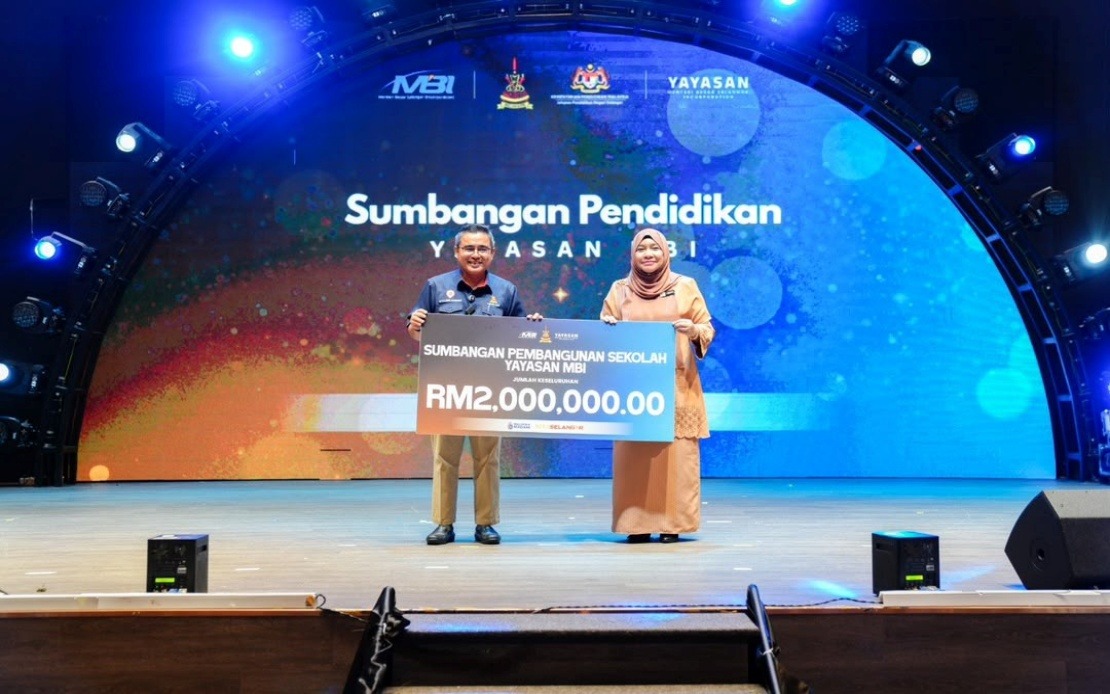
Selangor's Yayasan Menteri Besar Selangor (Incorporated) has channelled RM2 million into educational development across the state, marking a significant financial commitment to enhancing classroom infrastructure and student support systems. The foundation made the announcement at the Yayasan MBI Education Aspiration 2026 event, underscoring its view that strategic investment in schools directly strengthens the broader education ecosystem. This disbursement through the School Development Contribution scheme represents part of a sustained effort to create learning environments where both educators and pupils can thrive.
According to the foundation's head Ahmad Azri Zainal Nor, education constitutes a cornerstone of the organisation's mission, with approximately two-thirds of all initiatives concentrated in this sector. Rather than viewing education assistance as temporary relief, Yayasan MBI positions itself as a long-term investor in human capital development that will shape Selangor's future competitiveness and social stability. This philosophical approach distinguishes the foundation's work from purely charitable interventions, instead framing educational spending as essential infrastructure for the state's development trajectory.
The RM2 million allocation prioritises tangible improvements to school facilities and learning infrastructure while creating spaces conducive to effective teaching and learning. By targeting physical environments directly, the initiative acknowledges a reality often overlooked in policy discussions: adequate classrooms, libraries, laboratories, and recreational facilities significantly influence student engagement and academic outcomes. Teachers benefit equally, as improved working conditions and properly resourced schools enhance job satisfaction and retention rates within a profession facing increasing pressures.
Yayasan MBI operates multiple educational programmes that extend beyond infrastructure investment to provide direct learning support. The Back to School Tour Programme brings resources and mentorship directly to participating institutions, while the Selangor People's Tuition Programme (PTRS) offers free coaching to students requiring academic reinforcement. The Didik Kasih Programme (PDK) further expands this safety net by providing assistance to families struggling with educational costs. These initiatives collectively create a support ecosystem that addresses educational inequality at multiple pressure points.
Parent-Teacher Association partnerships represent another strategic dimension of the foundation's approach. By collaborating with PTAs, Yayasan MBI taps into community-level organisation structures that can identify local school needs with greater precision than top-down assessments. This collaborative model recognises that parents and educators understand their school environments intimately and can channel resources where they deliver maximum impact. It also builds stakeholder ownership of improvement efforts, ensuring programmes remain responsive to evolving conditions.
The foundation's coordination with the Selangor State Education Department (JPNS) addresses a common implementation challenge in educational philanthropy: ensuring donations align with actual institutional needs rather than donor preferences. By aligning Yayasan MBI initiatives with JPNS strategic priorities and needs assessments, the foundation minimises duplication and maximises coverage of underserved areas. This institutional partnership model allows for better targeting of resources to schools facing genuine constraints, whether in rural districts or underperforming urban neighbourhoods.
For Malaysian and Southeast Asian observers, Yayasan MBI's approach offers relevant lessons about the role government-linked foundations can play in education funding. As federal education budgets face competing pressures across infrastructure, personnel, and technology, complementary funding sources become increasingly valuable. The foundation demonstrates how such supplementary investment, when strategically directed, can improve educational quality without undermining public sector responsibility or creating parallel education systems benefiting only privileged communities.
The RM2 million disbursement reflects broader recognition within Malaysia's education stakeholder community that school infrastructure significantly correlates with learning outcomes. Research consistently demonstrates that students in well-maintained facilities with adequate teaching materials demonstrate higher achievement levels and better attendance records. By concentrating resources on environmental improvements alongside academic support programmes, Yayasan MBI addresses both immediate barriers to learning and longer-term capacity building within institutions.
The timing of this announcement, framed within the Education Aspiration 2026 vision, suggests the foundation views education development as a multi-year commitment requiring sustained funding. As Selangor experiences rapid urbanisation and demographic change, school systems must accommodate growing student populations while maintaining quality standards. Strategic investments in infrastructure and programmes today create capacity to absorb population increases without compromising educational standards, addressing a challenge facing several Malaysian states managing rural-to-urban migration patterns.
Moving forward, the foundation's emphasis on creating an inclusive, quality, and sustainable education ecosystem positions it as increasingly important to Selangor's competitiveness. As regional economies compete for talent and investment based partly on workforce capability, states with robust education systems attract higher-value opportunities. Yayasan MBI's work thus transcends charitable concern, connecting educational quality directly to economic development prospects that benefit all Selangor residents through improved employment opportunities and reduced social costs associated with educational disadvantage.
The foundation's commitment to ongoing collaboration with multiple stakeholders signals recognition that complex educational challenges require coordinated responses across government agencies, community organisations, and private entities. This multi-stakeholder approach may offer a replicable model for other Malaysian states seeking to strengthen education systems through partnership rather than competition between funding sources. As Malaysia navigates education reform amid demographic and technological change, examples of effective collaborative investment merit study and potential adaptation across regions.

