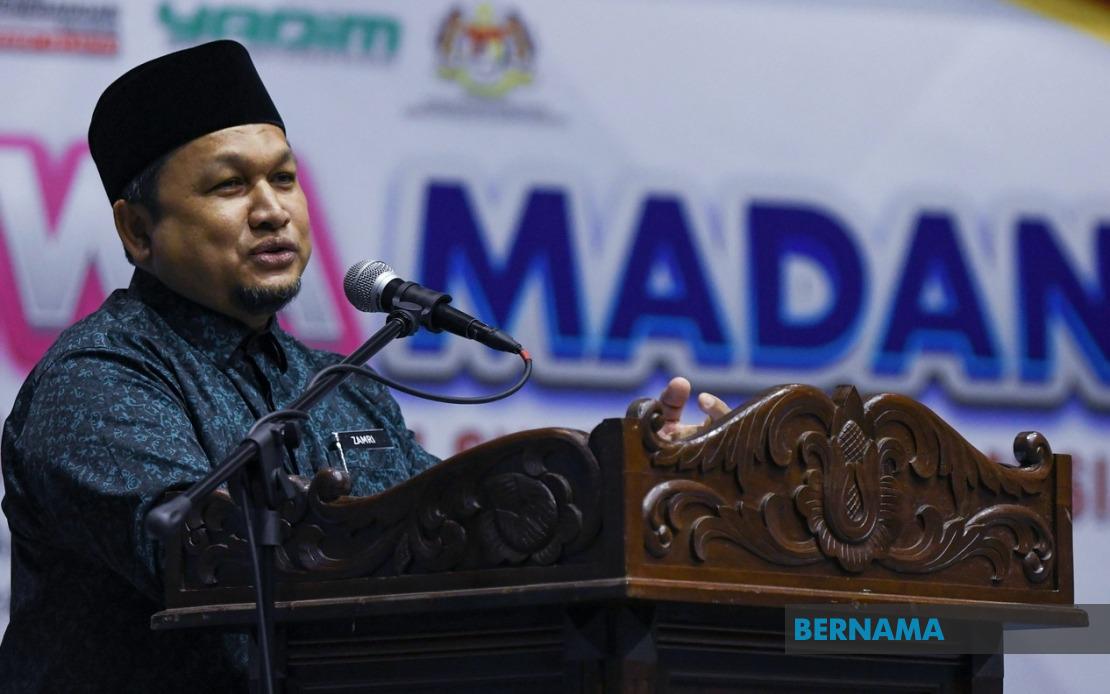
The government's initiative to establish a formal accreditation system for religious speakers operating across online platforms and social media has gained significant backing from Yayasan Dakwah Islamiah Malaysia (YADIM), which describes the measure as essential to maintaining the integrity of Islamic teachings in an increasingly digital religious landscape. The endorsement comes as authorities grapple with the proliferation of self-appointed preachers and religious commentators whose qualifications and theological grounding remain unverified, raising concerns about the quality and authenticity of religious instruction reaching millions of Malaysians through social media channels.
Zamri Zainal Abidin, chief executive of YADIM, articulated the foundation's position in a statement released this week, emphasising that the proposed framework represents a prudent step rather than a restrictive measure intended to suppress legitimate dakwah activity. He underscored that the accreditation system would serve to distinguish qualified religious scholars from unqualified individuals who exploit the accessibility of digital platforms to position themselves as religious authorities without possessing adequate Islamic knowledge or proper theological training. The distinction matters considerably in a social media environment where follower counts and engagement metrics often overshadow credentials and scholarly rigour.
The absence of standardised verification mechanisms for online preachers has created what YADIM identifies as a critical vulnerability in Malaysia's religious information ecosystem. Without gatekeeping measures, anyone with a smartphone and social media account can adopt the title of 'ustaz' or religious preacher, regardless of their educational background or understanding of Islamic jurisprudence. This democratisation of religious teaching authority, while appearing inclusive on the surface, has enabled the circulation of theologically questionable content that contradicts established Islamic scholarship and Malaysian Islamic orthodoxy as articulated through official channels and trained scholars.
Young Malaysians represent a particularly vulnerable demographic in this context, with surveys consistently demonstrating that younger generations increasingly source religious guidance from social media rather than traditional institutions like mosques, madrasahs, or formal Islamic educational settings. When the content they encounter lacks rigorous theological foundation, the cumulative effect potentially distorts their understanding of Islamic principles and practice. Zamri warned that such exposure to inaccurate religious messaging could progressively erode public confidence in formal Islamic institutions and the scholars who staff them, creating a parallel religious authority structure that operates outside state oversight and quality control mechanisms.
The government's proposal, which was recently announced by Minister in the Prime Minister's Department (Religious Affairs) Dr Zulkifli Hasan, envisions a systematic approach to evaluating the qualifications and theological competence of individuals seeking to present themselves as religious educators on digital platforms. Rather than imposing blanket restrictions on dakwah activities, the framework would establish clear standards that sincere practitioners of Islamic education could readily meet, thereby streamlining rather than blocking legitimate religious discourse. YADIM has positioned itself as a willing institutional partner in implementing this initiative, leveraging its existing infrastructure and expertise in preacher training and accreditation.
YADIM's readiness to serve as a strategic implementation partner reflects the foundation's long-standing track record in preacher accreditation and Islamic educational credentialing. The organisation already operates an accreditation system for its trained preachers and participants in its Daie Muda (Young Preacher) programme, who receive formal credentials from the Federal Territories Mufti Department. This existing model provides a template for how a broader national system might function, demonstrating that accreditation need not be bureaucratic or burdensome but rather can enhance a preacher's professional standing and public credibility.
The initiative carries particular significance for Malaysia's broader religious governance framework, which has historically emphasised state authority over Islamic affairs through institutions like the Mufti offices and Shariah courts. The extension of this authority into the regulation of digital religious content represents an evolution in how Malaysian authorities conceptualise Islamic oversight in an age where informal religious teaching potentially reaches larger audiences than formal institutions. The accreditation framework effectively brings digital dakwah within the purview of state Islamic management, ensuring consistency with official interpretations of Islam and preventing the emergence of competing religious authorities that could fragment religious authority structures.
From a Southeast Asian perspective, Malaysia's approach to regulating online religious content offers insights into how Muslim-majority democracies attempt to balance religious freedom with institutional stability and theological orthodoxy. Unlike more authoritarian approaches that might simply censor unaccredited preachers, the Malaysian model emphasises accreditation and credentials as the regulatory mechanism. This preserves space for diverse Islamic expression while establishing quality benchmarks, though questions remain about whether accreditation itself might inadvertently exclude legitimate voices or impose particular theological interpretations as mandatory rather than optional frameworks for understanding Islam.
The practical implementation of such a system will require decisions about who determines accreditation standards, what specific theological or pedagogical qualifications must be demonstrated, and how platforms such as TikTok, Instagram, YouTube, and Facebook will enforce compliance. YADIM's involvement suggests that Malaysia may develop a system where recognised Islamic institutions validate credentials rather than government directly policing content, a delegation that could prove both more flexible and potentially more politically acceptable to diverse Islamic stakeholders. However, the reliance on institutional gatekeeping also carries inherent tensions with the decentralised nature of social media and the difficulty of enforcing standards across borderless digital spaces where Malaysian preachers' content circulates internationally.
For Malaysian religious institutions and the Ministry of Islamic Affairs, the accreditation initiative represents an opportunity to reassert institutional authority over Islamic teaching at a moment when technological change has substantially diminished their monopoly on religious instruction. By establishing and promoting credentialed alternatives to unvetted online preachers, state-backed institutions can compete more effectively for the attention and trust of Malaysian Muslims navigating an overwhelming volume of religious content. Success would require not merely establishing accreditation standards but actively promoting accredited preachers and ensuring their content reaches audiences through effective digital marketing and platform partnership strategies that match the sophistication of unaccredited competitors.

