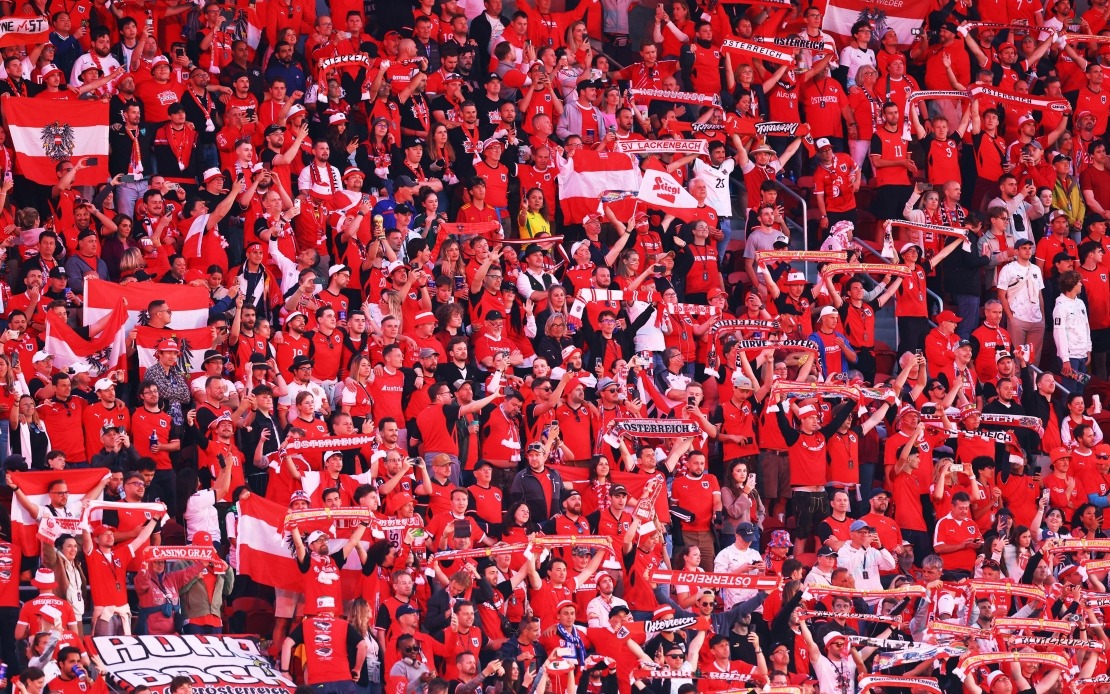
The FIFA World Cup unfolding across North America has already rewritten the record books with its enlarged format, shattering previous benchmarks for attendance and fan engagement during the tournament's group stage. According to FIFA, the 72 group-stage matches attracted a combined attendance of 4.644 million spectators, marking a significant jump from historical precedent and underscoring the expanded tournament's capacity to captivate audiences in the region.
This unprecedented attendance figure towers over the previous record established at the 1994 United States World Cup, which drew 3.587 million fans across its 52-match tournament. The contrast becomes even sharper when considering that the 1994 edition featured only 24 teams competing in half the total number of matches compared to this expanded 48-team format. The structural differences between the two tournaments make direct comparisons complex, as the current edition's additional teams and matches have fundamentally altered the competitive landscape and fan experience.
Despite the massive overall attendance jump, the average attendance per match tells a more nuanced story. The 1994 United States tournament averaged 68,991 fans per game, while the current North American World Cup is averaging 64,508 spectators per match. This dip in per-match averages suggests that while the expanded format has dramatically increased total viewership through sheer volume of games, individual matches have drawn somewhat smaller crowds. For Malaysian sports fans and analysts, this demonstrates how tournament structure significantly influences attendance patterns, with more matches spread across larger geographic areas potentially diluting per-venue crowds.
The expanded format has also produced explosive goal-scoring action. FIFA reported that 215 goals have been scored across the group stage, establishing a new record and averaging exactly three goals per match. This attacking football stands in sharp contrast to the 2022 Qatar World Cup, which featured 32 teams playing 64 matches and produced 179 goals at an average of 2.8 per game. The increased goal tally reflects how the expanded 48-team format, with its different group structures and additional matches, may be creating more open, expansive play compared to the traditional knockout-heavy tournament structure.
The tournament has also set a remarkable milestone for player participation. The 48 competing nations have collectively fielded 999 players throughout the group stage, with Canada's captain Alphonso Davies becoming the symbolic 1,000th player when he entered the match during his nation's Round of 32 victory over South Africa. This figure underscores the tournament's unprecedented scale and its expansion beyond the traditional World Cup parameters that have governed international football competition for decades.
Beyond the matches themselves, the hospitality infrastructure supporting the World Cup has demonstrated substantial consumption patterns. FIFA disclosed that stadiums have sold 2.8 million beers and nearly one million bottles of water to spectators throughout the group stage. The organization also recorded sales of 300,000 hot dogs across all venues, reflecting the massive logistical operation required to feed and service nearly 4.6 million fans attending matches in three countries simultaneously.
The official fanfests established in the three host nations have proven equally popular, drawing more than 5.5 million visitors to designated celebration areas outside stadiums. These gatherings, designed to create inclusive football experiences for fans unable to attend matches, have generated substantial food and beverage consumption. Visitors to the fanfests have consumed more than 2 million alcoholic beverages and nearly 2 million soft drinks, demonstrating how the tournament extends its economic and cultural impact far beyond the confines of competition venues.
For Southeast Asian observers, these statistics illuminate several important trends in international sports governance and event management. The expansion of the World Cup format represents FIFA's deliberate strategy to broaden participation and accessibility, moving away from the traditional 32-team structure that had remained standard since 1998. This decision directly reflects evolving global economic realities, where emerging football markets demand greater inclusion and representation on sport's biggest stage.
The North American hosting arrangement also reveals shifting patterns in how major sporting events are organized across geographical boundaries. With matches distributed across the United States, Canada, and Mexico, the tournament has required unprecedented coordination among multiple nations and sports authorities. For Malaysia and other Southeast Asian nations, this model offers valuable lessons about international sporting collaboration and the infrastructure investments necessary to host major events.
The consumption figures and fanfest attendance demonstrate how modern World Cup tournaments function as entertainment ecosystems extending well beyond competitive matches. The scale of hospitality operations, from beverage sales to dedicated fan celebration zones, represents sophisticated event management that transforms entire regions into football-focused economies for the tournament's duration. Such comprehensive approaches to fan engagement have become essential for justifying the enormous investments required to host World Cup events.
These record-breaking attendance and consumption figures carry implications for future tournament planning. The expanded 48-team format has generated substantial revenue through ticket sales and ancillary spending, demonstrating the commercial viability of larger tournaments. However, the slightly lower per-match averages suggest that expanding the tournament may have trade-offs regarding individual match intensity and fan concentration, considerations that FIFA and future host nations will need to balance when planning subsequent editions.
The diverse consumption patterns, from stadium concessions to fanfest beverages, also highlight how major sporting events generate multiplier effects throughout host economies. The millions of beers, soft drinks, and hot dogs sold represent not merely transaction data but economic activity extending through local supply chains, hospitality workers, and vendor networks across three countries. For developing sports tourism sectors, these figures demonstrate the substantial economic opportunity embedded in successfully hosting and promoting world-class sporting competitions.

