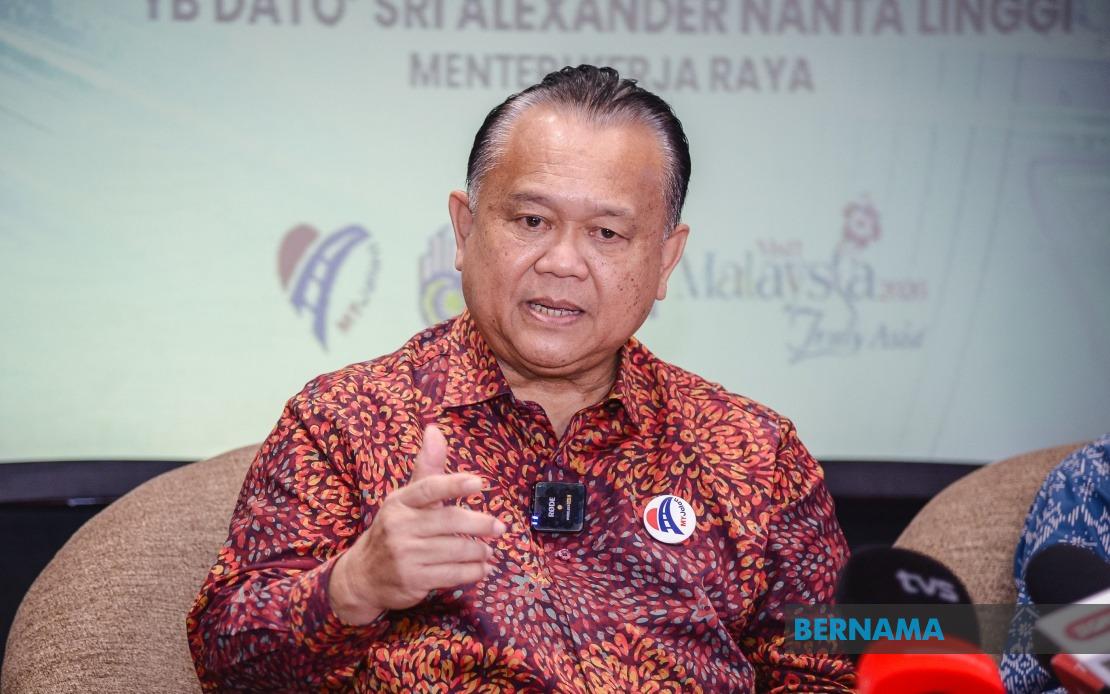
Malaysia's construction sector is positioning itself for a significant overhaul as the Works Ministry (KKR) evaluates 30 strategic recommendations from industry players ahead of Budget 2027. Minister Datuk Seri Alexander Nanta Linggi revealed that these proposals will be assessed against the broader MADANI Economy framework, which aims to generate substantial economic returns while preserving the sector's long-term health. The dialogue between government and industry signals an evolving approach to infrastructure development—one that prioritizes measurable impact over raw expenditure levels, a shift with profound implications for how Malaysia constructs and finances its built environment in the coming years.
The KKR has identified five interconnected transformation pillars that will guide its budget allocation strategy. Strengthening the national road network and executing high-impact infrastructure projects form the foundation, complemented by sustainable development initiatives aligned with Malaysia's energy transition goals. The ministry's emphasis on digitalisation through Building Information Modelling, Internet of Things integration and artificial intelligence reflects regional and global infrastructure trends. Additionally, the government plans to empower contractors at grades G1 through G4—typically smaller and medium-sized firms—while simultaneously enhancing road safety through the MYJalan initiative. Rather than treating these as isolated policies, Nanta framed them as interconnected elements of a comprehensive infrastructure modernization strategy affecting planning, construction, management and maintenance operations nationwide.
The fundamental recalibration lies in how the ministry measures success. Rather than focusing on budgetary input, KKR intends to shift emphasis toward tangible outcomes generated by every ringgit of government investment. This efficiency-first mindset pressures the construction industry to elevate its competitive advantages beyond cost considerations. Malaysian firms must demonstrate capabilities in advanced technologies including Building Information Modelling, artificial intelligence applications, green building systems and the Industrialised Building System. Such technological sophistication enables companies to compete internationally on the basis of productivity, quality and innovation rather than price alone—a critical repositioning for an industry seeking to move up the global value chain.
The feedback compiled from 117 total proposals, including 87 directly from industry stakeholders, reveals widespread concerns across the construction ecosystem. Governance and contract management improvements rank among priority requests, alongside workforce development initiatives that address skill gaps and inclusion challenges. Industry respondents emphasized the necessity of managing operating costs, material expenses and logistics expenses more effectively. Concurrently, there is strong momentum toward faster adoption of sustainability frameworks and environmental, social and governance practices. Industry players have also advocated for preferential sourcing of local materials, recognizing both economic and supply-chain resilience benefits this approach offers to Malaysia's construction sector.
Small and medium contractors face particular challenges that the ministry acknowledges require targeted attention. Beyond large-scale infrastructure projects, KKR recognizes that smaller consulting firms, construction workers and localized industry operators confront specific obstacles relating to cash flow management, technological access and skills development. Approval timelines, utilities infrastructure and road maintenance emerge as practical barriers affecting operational efficiency for enterprises of varying scales. Nanta's observation that contractors operate from unequal starting positions underscores the need for strategic intervention—building foundational support systems enables more industry participants to advance to higher operational tiers, thereby broadening Malaysia's construction capacity and competitiveness.
Budget constraints themselves need not constrain development ambitions, according to the minister's philosophy. Rather than accepting financial limitations as immovable boundaries, Nanta advocated for creative prioritization and maximum resource optimization. The government and industry must collaborate on identifying which initiatives generate the greatest returns relative to investment. This pragmatic approach resonates particularly in Malaysia's current economic climate, where fiscal discipline intersects with infrastructure demands. The challenge involves distinguishing between essential capacity-building investments and discretionary spending—a distinction that fundamentally shapes how RM10.692 billion received under Budget 2026 and future allocations translate into competitive advantages for Malaysian companies.
The KKR's Budget 2026 allocation of RM10.692 billion represented a 3.3 percent increase from the preceding year, with RM9.607 billion directed toward development expenditure funding both new infrastructure projects and continuations of established initiatives. These figures establish the baseline for Budget 2027 discussions, though the strategic reorientation toward impact measurement may reshape how these resources flow through the construction sector. Development expenditure's dominance in the portfolio indicates government commitment to sustained infrastructure expansion, yet the emphasis on productivity and technological adoption suggests that future increases may hinge on demonstrable capacity improvements within the industry itself.
The construction industry's integration with Malaysia's broader economic strategy becomes apparent through the MADANI Economy framework lens. High-impact growth objectives require infrastructure enabling digital transformation, renewable energy transitions and enhanced connectivity—all domains where construction serves as the foundation. Protecting the industry ecosystem means ensuring that local firms, particularly smaller contractors and support services, possess the tools and market conditions to thrive rather than simply survive. This holistic perspective acknowledges that sustainable economic growth depends on healthy supply chains and competitive domestic enterprises capable of delivering quality projects efficiently.
International competitiveness pressures intensify these considerations. Malaysian construction companies increasingly compete against regional and global competitors capable of deploying advanced technologies and sustainable practices. Budget 2027 decisions about technology subsidies, skills development funding and green infrastructure incentives will determine whether local firms can credibly compete in international markets or remain constrained to domestic opportunities. The emphasis on moving beyond price-based competition reflects this reality—Malaysian firms cannot compete on labor costs alone against Asian competitors with lower wage structures, requiring instead differentiation through technological sophistication, project management excellence and innovation.
The timeline for Budget 2027 tabling on October 9 provides limited implementation runway before the fiscal year begins, yet the extensive consultation process signals genuine commitment to industry-responsive planning. The 30 wishlists and broader 117 proposals represent thousands of industry professionals' collective input on sector challenges and opportunities. This bottom-up engagement approach contrasts with top-down budget formulation, potentially generating greater industry buy-in for whatever policies ultimately emerge. However, the challenge remains translating proposals into concrete budget allocations that address the most pressing barriers to construction sector productivity and competitiveness.
For Malaysian readers and businesses, the construction sector reorientation carries implications extending far beyond the industry itself. Infrastructure quality and delivery timelines affect manufacturing competitiveness, residential affordability, transportation logistics and business investment decisions. Technological advancement requirements in construction mirror broader economic digitalization imperatives, positioning the sector as a proving ground for Industry 4.0 adoption. Similarly, the sustainability and environmental focus aligns with Malaysia's renewable energy targets and international climate commitments. Ultimately, Budget 2027 construction decisions will significantly influence whether Malaysia achieves its ambitious economic and sustainability goals or faces persistent infrastructure limitations constraining broader development.

