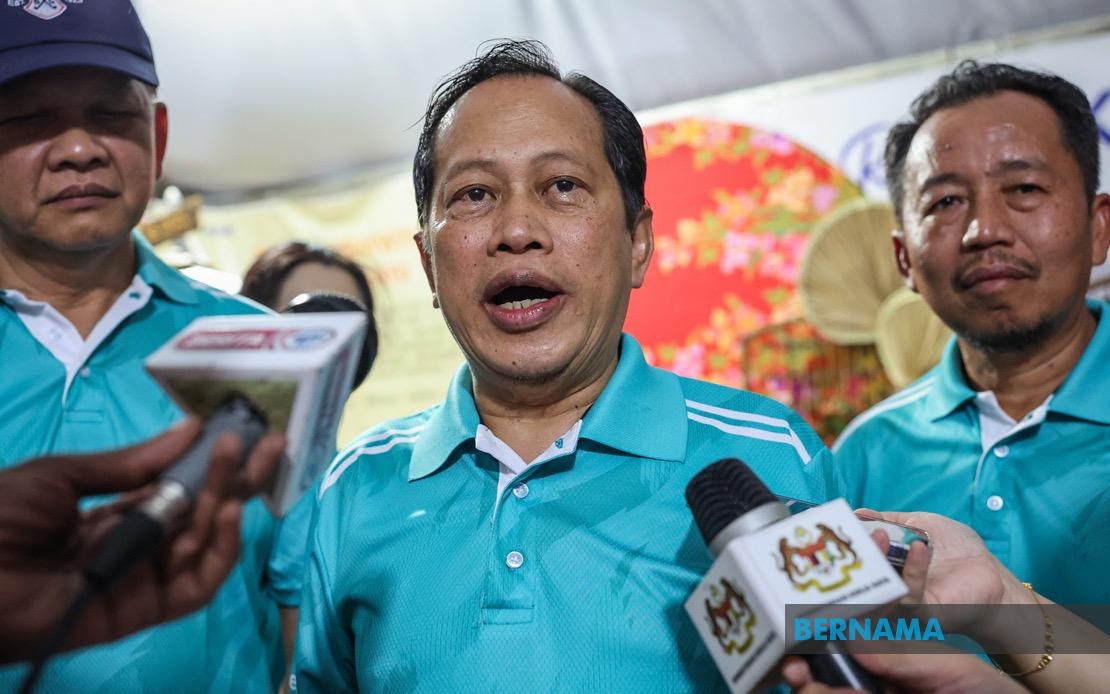
The Malaysian Works Ministry (KKR) has signalled its ambition to secure the largest development budget allocation among all federal ministries in 2027, reflecting the government's commitment to infrastructure expansion and maintenance across the country. Deputy Works Minister Datuk Seri Dr Ahmad Maslan revealed the ministry's budgetary aspirations while addressing participants at the Cultural Night Run near Kuala Lumpur, underscoring the strategic importance placed on transportation and public works development in the coming fiscal year.
Currently preparing comprehensive submissions for the Finance Ministry, KKR is consolidating input from its subsidiary agencies and departments, including the Malaysian Highway Authority (LLM), Construction Industry Development Board Malaysia (CIDB), and Public Works Department (JKR). This coordinated approach aims to present a unified case for substantially elevated funding compared to the previous allocation. Ahmad noted that the ministry received approximately RM10 billion in the preceding budget cycle, with RM9 billion directed toward developmental initiatives, suggesting the target likely exceeds these figures significantly.
The ministry faces a critical August 28 deadline when it will present its budgetary case to the Finance Minister II, requiring all divisions and agencies to finalize their spending proposals and infrastructure priorities beforehand. This timeline indicates serious preparation is underway, with detailed justifications being formulated at departmental levels to support the request for elevated funding. The outcome could substantially determine the pace and scope of infrastructure improvements undertaken nationwide throughout 2027.
Beyond raw funding levels, Ahmad emphasized KKR's strategic focus on modernizing Malaysia's highway infrastructure through cutting-edge digital technologies. The ministry is advancing what it terms smart highway initiatives, leveraging artificial intelligence, digital surveillance systems, and real-time traffic management capabilities. These technological investments represent a shift toward preventive maintenance and enhanced user safety rather than purely reactive infrastructure repairs, positioning the sector toward international best practices in transportation management.
Central to this modernization effort is TuJu, a locally-developed navigation application designed to compete with established international platforms like Waze and Google Maps. Developed by the Malaysian Highway Authority, TuJu distinguishes itself by providing highway-specific intelligence including live CCTV footage from across Malaysia's 34 highway networks, current toll pricing structures, locations of rest and recreation facilities, emergency service availability, and real-time traffic congestion updates. The application directly integrates with the LLM Traffic Control Centre, which continuously monitors hundreds of CCTV installations across the nation's highway infrastructure.
The TuJu ecosystem extends beyond standalone navigation functionality, operating as part of an interconnected digital infrastructure that also incorporates KKR and MYJalan applications. This integration enables highway users to directly report road hazards, maintenance deficiencies, and safety concerns through multiple channels, creating a feedback loop that theoretically allows authorities to respond more rapidly to emerging infrastructure problems. The system represents Malaysia's attempt to develop domestic technological capacity in smart transportation infrastructure rather than remaining dependent on foreign platforms.
Malaysia's highway network presents substantial management challenges that justify increased budgetary attention. The nation operates 34 distinct highway corridors stretching over 2,000 kilometres in combined length, managed by 28 different concessionaires with varying operational standards and investment capacities. This fragmented governance structure complicates coordinated maintenance and modernization efforts, explaining why consolidated federal funding becomes essential for achieving uniform service standards and safety protocols across all corridors.
Among these operators, PLUS Malaysia Berhad alone manages more than 1,000 kilometres of highway infrastructure, representing roughly half the nation's total highway network. This concentration of infrastructure under a single major concessionaire creates significant leverage points for implementing nationwide initiatives such as Multi Lane Free Flow (MLFF) technology. However, Ahmad clarified that MLFF implementation proceeds primarily through private sector collaboration rather than government funding, with individual concessionaires selecting either internal subsidiaries or external service providers to deploy the technology.
The MLFF system eliminates the need for vehicles to stop at physical toll plazas by enabling seamless electronic toll collection at highway speeds. PLUS Malaysia has already begun deploying this capability through its JustGo service, demonstrating proof-of-concept for a system that could eventually transform Malaysia's entire toll collection infrastructure. The business-to-business arrangement approach indicates the government views its role as regulatory and coordinating rather than providing direct capital, allowing market mechanisms to drive technology adoption among competing operators.
This mixed approach—government funding for foundational infrastructure and smart systems coordination, private funding for technology deployment—reflects pragmatic budget management in an environment of competing demands. By securing the highest development allocation, KKR could concentrate resources on upgrading core highway assets, expanding the CCTV surveillance network, extending digital monitoring capabilities, and maintaining the physical pavement and bridge infrastructure that underpins all subsequent technology investments. Without robust underlying infrastructure, sophisticated smart highway systems remain mere overlays on deteriorating foundations.
For Malaysian motorists and the broader logistics sector, increased infrastructure investment carries significant implications. Improved highway maintenance reduces congestion-related delays and accident frequency, directly lowering transportation costs and delivery times for freight operators. The TuJu application and real-time traffic monitoring systems enable better route planning and more informed travel decisions, generating efficiency gains across both commercial and personal transport sectors. Small and medium enterprises dependent on reliable road networks would particularly benefit from accelerated infrastructure maintenance programs.
Regionally, Malaysia's infrastructure development strategy signals competitive positioning within Southeast Asia's transport corridors. As ASEAN increasingly focuses on cross-border logistics and economic integration, countries with superior highway networks and digital traffic management systems gain advantage in attracting regional trade flows and investment. Malaysia's push toward smart highways positions it as a leader in transportation infrastructure innovation within the regional context, potentially enhancing its attractiveness for multinational logistics operations and supply chain hubs.
The outcome of KKR's budgetary negotiations will ultimately reflect government priorities regarding infrastructure investment during a period when multiple competing demands exist for limited fiscal resources. Securing the highest ministerial allocation would represent a clear political signal that infrastructure modernization ranks among the administration's top priorities. For readers and stakeholders monitoring Malaysia's development trajectory, this budgetary round represents a critical inflection point determining whether the nation's transportation infrastructure receives investments commensurate with economic growth demands or faces continued maintenance backlogs.

