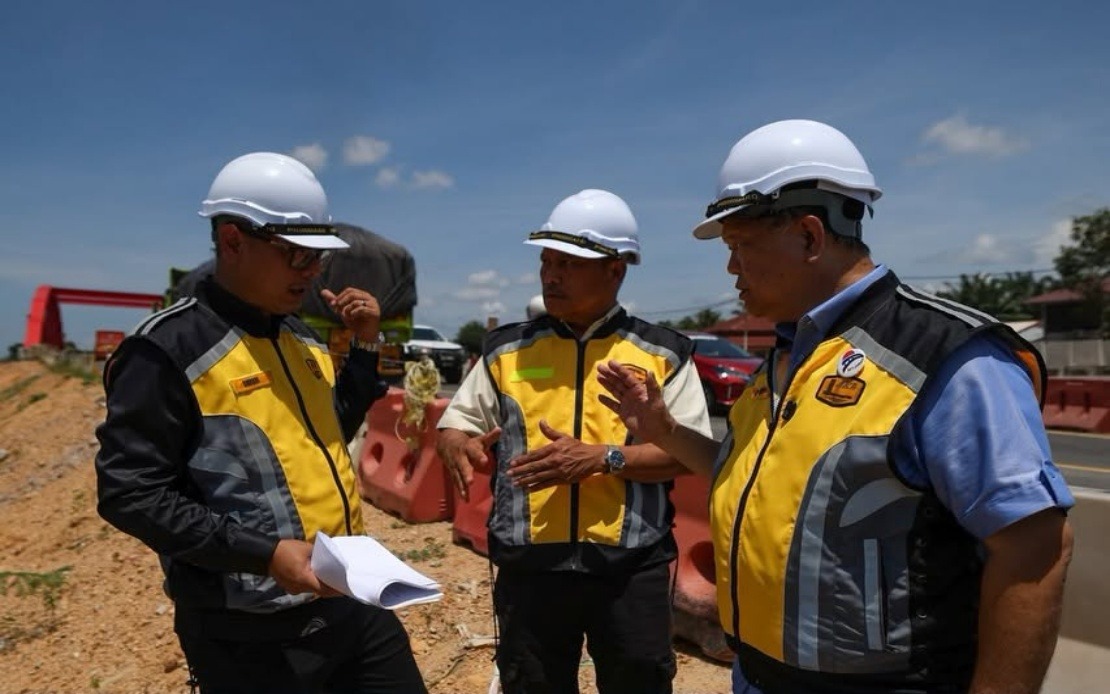
The Ministry of Works has moved to crack down on ongoing delays plaguing the Sungai Durian Bridge Replacement Project in Kuala Krai, directing the contractor to immediately intensify efforts and complete construction according to the revised timeline. Works Minister Datuk Seri Alexander Nanta Linggi conveyed the instruction during an unannounced site inspection in Kota Bharu on July 17, where he personally reviewed work progress and identified the factors contributing to the persistent setbacks.
The bridge replacement initiative has become a test case for infrastructure delivery in Malaysia's East Coast, having already received six Extensions of Time since commencement. Despite these provisions, the project remains substantially behind the current schedule, raising questions about both contractor capability and project management oversight. The accumulation of delays has frustrated local stakeholders and undermined public confidence in the works ministry's ability to deliver critical transportation infrastructure within reasonable timeframes.
According to Nanta's statement, the delays stem from multiple technical complications rather than simple administrative oversights. Borepile installation works encountered unforeseen obstacles when existing utility pipelines were discovered in the vicinity of intended drilling locations, necessitating design adjustments and coordination with utility operators. Simultaneously, the contractor grappled with technical challenges related to the temporary support structure required for installing the steel bridge components, a critical phase that demands precision and cannot be rushed without compromising structural integrity.
However, Nanta made explicitly clear that these legitimate technical obstacles do not justify indefinite delays or a culture of passive acceptance. His public statement carrying a notably stern tone signals that the ministry will no longer tolerate implementation weaknesses or project management failures. The decision to conduct a surprise site visit and issue a forceful directive underscores mounting political pressure on the works ministry to demonstrate tangible progress on visible infrastructure projects that have captured public attention.
The minister instructed the contractor to deploy substantially increased resources at the site, including additional personnel, equipment, and materials to compress the construction timeline. This injection of resources represents the typical response when projects fall significantly behind, though it also raises questions about why such deployment was not prioritized earlier in the project lifecycle. Nanta simultaneously called for immediate resolution of all outstanding technical issues through enhanced collaboration between the contractor and the Public Works Department, positioning the latter as an active monitor rather than a passive administrator.
For Malaysian readers, the Sungai Durian Bridge project exemplifies broader infrastructure delivery challenges that have periodically plagued major public works initiatives across the country. The accumulation of time extensions reflects systemic issues including inadequate pre-construction surveys, underestimation of technical complexity, and sometimes insufficient contractor experience with comparable projects. Kelantan, as an East Coast state with strategic importance for regional connectivity, deserves infrastructure that meets both quality and timeliness standards.
The repeated delays also carry practical implications for Kuala Krai residents and commercial interests dependent on improved transportation links. Each extension postpones economic benefits the bridge was designed to deliver, from reduced commute times to enhanced access for commerce and emergency services. The lengthy gap between project announcement and completion erodes public confidence in government institutions' capacity for effective project execution, a concern that extends beyond this single bridge to broader perceptions of public sector efficiency.
Nanta's firm stance reflects a broader pattern within Malaysia's infrastructure agencies to impose stricter accountability measures on contractors exhibiting poor performance. The Works Ministry appears determined to shift from accepting delay excuses to demanding demonstrable acceleration. This approach aligns with international best practices where project managers maintain stringent milestone compliance and reserve contractual penalties for consistent underperformance.
Looking ahead, the bridge project faces a critical juncture where contractor performance will directly determine whether the current schedule proves achievable or whether additional extensions become inevitable. The Public Works Department's enhanced monitoring role should include weekly progress reporting and escalation protocols for emerging technical obstacles. Success requires genuine collaboration between all parties—something that appeared lacking during the period of repeated delays.
The Sungai Durian Bridge situation also highlights the importance of robust project planning during initial phases. Pre-construction geotechnical surveys, utility mapping, and structural feasibility studies must be comprehensive enough to identify potential complications before construction commences. Learning from this project's experience should inform how Malaysia plans and awards contracts for future infrastructure developments, particularly in regions where subsurface conditions or existing utility networks present known complexities.
Ultimately, the bridge replacement project represents a test of whether intensified ministerial oversight can overcome implementation challenges that might otherwise have generated indefinite postponements. Kelantan residents and Malaysian taxpayers await results that demonstrate whether this latest intervention produces genuine acceleration or merely continues the pattern of delayed completions.

