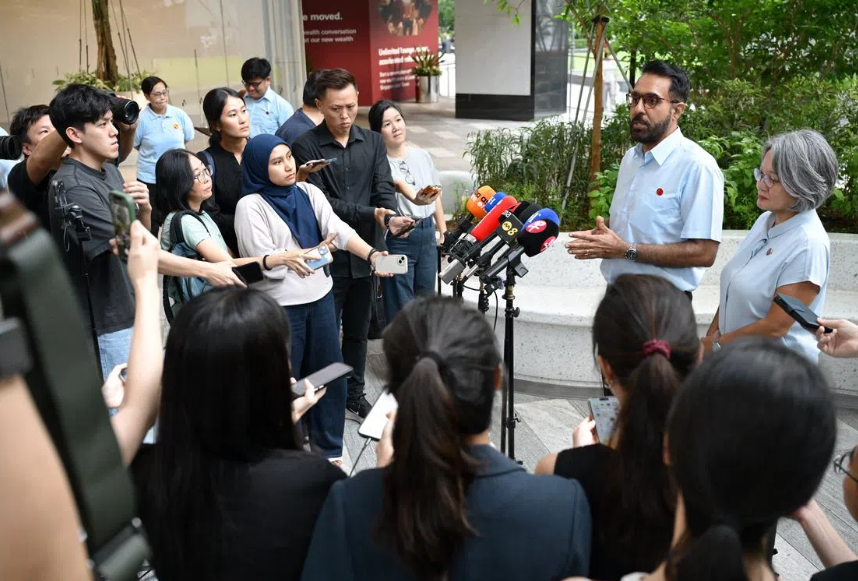
The Workers Party's internal leadership battle has ended decisively, with opposition chief Pritam Singh emerging from back-to-back meetings on June 28 with overwhelming support from party cadres. After facing a vote of no confidence and a biennial party election in meetings lasting nearly six hours, Singh demonstrated calm confidence before the media, asserting that the party remained substantially united. The result—82 of 106 cadres voting to retain him as secretary-general—represents a supermajority that effectively settles months of turbulent uncertainty within Singapore's main opposition movement.
Singh's reelection marks a significant moment for a party that has struggled with leadership questions since the 2021 Raeesah Khan affair, when the former Sengkang GRC MP fabricated an account of police misconduct in Parliament. The subsequent revelations that Singh had allegedly played a role in prolonging Khan's deception led to his conviction for lying to Parliament, a guilty verdict upheld by Singapore's High Court in December 2025. Prime Minister Lawrence Wong subsequently removed Singh from his formal role as Leader of the Opposition, a move that created an opening for party rivals to challenge his continued leadership. Despite these legal and political obstacles, Singh faced no formal challenger at Sunday's election, suggesting a lack of internal alternative candidates with sufficient standing to mount a credible bid.
The absence of a challenger reflects deeper realities within the party's organizational structure. Workers Party sources indicate that dissatisfied cadres had actively lobbied throughout the preceding weeks to encourage someone to run against Singh, yet their efforts yielded no candidate willing to step forward. This speaks to Singh's entrenched position within the party hierarchy and the limited roster of public figures within the opposition who possess the parliamentary experience and public recognition necessary to lead a national political movement. Even among those cadres who had signed the letter calling the special conference to hold Singh accountable, the momentum for removing him failed to crystallize into decisive action.
The internal meetings themselves proved less confrontational than some had anticipated. While Singh was questioned by cadres concerned about his conviction and the broader implications for the party's reputation, accounts suggest that the inquisition remained measured and that several speakers actually rose to defend him. This mixed response indicates that while reservations exist within the party about Singh's legal troubles and their political consequences, sufficient support remained to preclude any successful leadership challenge. Former party chief Low Thia Khiang's public endorsement ahead of the votes carried particular symbolic weight, given his status as architect of the modern Workers Party and his continued influence over veteran members and institutional memory.
The party's handling of Singh's infractions through internal disciplinary channels has drawn scrutiny from political observers. While a disciplinary panel concluded that Singh had violated the party's constitution, the party leadership opted for a formal letter of reprimand rather than more severe sanctions. For critics, this response appeared disproportionately lenient given the gravity of misleading Parliament. Nonetheless, party chair Sylvia Lim's comments at the doorstep interview suggested that the internal apparatus views the matter as settled, with Lim emphasizing the need for leadership renewal and indicating that her two-decade tenure as chair may yield to younger figures in coming communications.
The consolidation of support around Singh carries both practical and strategic implications for the opposition's trajectory. Internally, the show of solidarity effectively eliminates the prospect of public infighting, a vulnerability that has plagued rival opposition movements globally and across Southeast Asia. Singapore's electoral landscape has historically punished divisions within opposition ranks, and the Workers Party's cadre-level unity represents a protective buffer against such damage. Moreover, the biennial election cycle is now resolved, removing a source of distraction that could have undermined the party's parliamentary effectiveness over the coming term. With leadership questions addressed, the party can theoretically redirect energy toward parliamentary work and organizational development.
Yet the broader political challenge facing the Workers Party extends beyond internal organizational stability to the critical question of voter persuasion. The May 2025 general election, held while Singh was already convicted in the lower court, demonstrated that the party's electoral performance remained resilient—the opposition not only consolidated existing strongholds but expanded to secure two Non-Constituency MP seats. For party supporters and strategists, this result constitutes evidence that voters either discount Singh's legal troubles or view them through primarily political rather than judicial lenses. However, the May election also revealed the limits of the party's current appeal: despite growth, the Workers Party remains a considerable distance from challenging the People's Action Party's dominance, and the extent to which Singh's conviction may have constrained the party's reach among swing voters remains unmeasured and contested.
The question of whether the Workers Party can broaden its appeal to middle-ground voters—those who might sympathize with opposition perspectives but harbor concerns about the party's leadership credibility—remains unresolved by Sunday's internal proceedings. Singh's brief response when asked about critics who might characterize his leadership as that of a "convicted liar" demonstrated the limits of defensive posturing: he directed questioners to his website and reiterated that his position remained consistent with prior parliamentary statements. This response exemplifies the strategic challenge facing the opposition. Internal party unity, while organizationally necessary, does not automatically address public perception or rebuild trust among persuadable voters who may view the Raeesah Khan affair and its aftermath as emblematic of deeper governance or accountability concerns.
The Workers Party's relative status as political underdog confers certain tactical advantages in the current environment. Voter scrutiny of opposition movements typically intensifies as they approach competitive viability, yet the party presently faces less intensive media and electoral pressure than would a governing party or a credible alternative government. This reprieve provides opportunity for the opposition to rehabilitate Singh's public image and rebuild institutional credibility before such heightened scrutiny materializes. However, the window for such rehabilitation remains contingent on the party's ability to demonstrate parliamentary competence and policy vision that extends beyond simply opposing government initiatives. Sylvia Lim's reference to forthcoming leadership transitions also hints at recognition within the party that Singh's long-term political sustainability may depend on progressive generational transition rather than indefinite entrenchment at the apex of party hierarchy.
The resolution of the internal leadership challenge thus represents a tactical victory that may obscure strategic vulnerabilities. While the Workers Party has achieved the organizational closure necessary for coherent parliamentary opposition, the fundamental challenge of convincing middle-ground voters that the party and its leader merit expanded electoral support persists unaddressed by the cadre votes. Singapore's electorate has demonstrated capacity for nuanced political judgment, rewarding opposition growth while declining to deliver comprehensive power transition. Whether that trajectory continues or whether the party's leadership questions have begun a slow erosion of electoral momentum remains an open question that Sunday's internal unity vote does not resolve. The coming months will require Singh and the party to move beyond internal consolidation toward the harder work of substantive political persuasion across a broader constituency.

