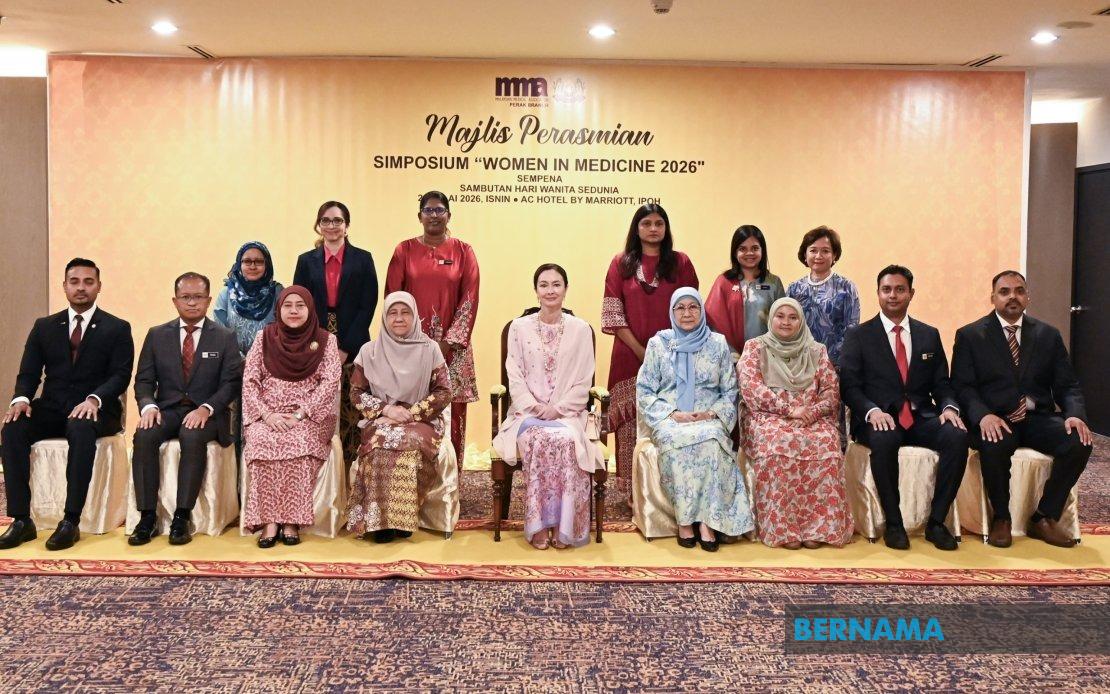
The healthcare profession in Malaysia stands at a pivotal juncture where the advancement of women into leadership positions has become not merely an equity concern but a strategic imperative for the sector's future effectiveness. This perspective emerged clearly during the opening of the Women in Medicine 2026 Symposium in Ipoh, where medical professionals and policy stakeholders gathered to examine how gender diversity strengthens clinical practice and healthcare governance.
Dr Monesh Pillai, chairman of the Perak Malaysian Medical Association, articulated a compelling case for accelerating women's ascent to decision-making tables within the medical establishment. His argument transcended symbolic representation, instead framing female leadership as a functional necessity given the multifaceted pressures confronting Malaysia's healthcare infrastructure. The sector faces converging crises: escalating mental health complications, the persistent expansion of lifestyle-related diseases among the working and middle-aged populations, demographic shifts as the nation ages, the imperative to modernise clinical and administrative systems through digital tools, and the profound disruption posed by artificial intelligence applications across diagnostics and treatment protocols.
These interconnected challenges, Dr Pillai suggested, demand leadership approaches that extend beyond conventional hierarchical models. Women bring demonstrably different problem-solving orientations to complex organisational environments, characterised by heightened empathy, collaborative instincts, and a pronounced focus on holistic patient outcomes rather than purely technical metrics. In a healthcare context where patient satisfaction, care continuity, and community trust increasingly determine institutional reputation and effectiveness, these qualities represent competitive advantages rather than peripheral considerations.
The symposium, held under the patronage of Tuanku Zara Salim, Raja Permaisuri of Perak, and organised in conjunction with International Women's Day observances, reflected institutional recognition of this principle. The attendance of senior state health officials and the Perak Menteri Besar's spouse signalled governmental endorsement of the symposium's central message: that women's professional elevation benefits not merely women themselves but the entire healthcare ecosystem and the communities it serves.
Dr John Emmanuel, chairing the symposium's organising committee, expanded on this framework by emphasising that empowerment operates on multiple registers. Beyond creating entry-level opportunities or achieving numerical parity, genuine empowerment requires constructing organisational environments where women exercise substantive influence over strategic direction, clinical protocols, and institutional culture. The historical tendency to concentrate women in subordinate clinical roles—nursing, midwifery, allied professions—while restricting senior administrative and policy positions to male incumbents represents not merely injustice but inefficiency, squandering vast reservoirs of talent and perspective.
This year's International Women's Day theme—'For All Women and Girls: Rights. Equality. Empowerment.'—provided the conceptual scaffolding for these discussions, though the symposium's speakers advanced beyond abstract principle into concrete analysis of how healthcare systems evolve when women inhabit leadership roles. Dr Emmanuel specifically noted the broadening conception of women's roles within medicine, moving beyond the binary of female physicians versus female support staff to encompass researchers, educators, administrators, public health advocates, and indeed patients themselves as active participants in healthcare transformation rather than passive recipients.
The symposium featured substantive contributions from recognised healthcare scholars, including Monash University Malaysia's president and pro vice-chancellor Datuk Dr Adeeba Kamarulzaman, whose presentation titled 'From Clinic to Global Policy: Women Leading the Change in Healthcare' connected individual clinical practice to transnational health policy formation. This framing carries particular significance for Malaysia, positioned within Southeast Asia's complex health diplomacy landscape and increasingly engaged in regional disease surveillance, pharmaceutical regulation harmonisation, and pandemic response coordination. The presence of women at these policy interfaces shapes which health priorities gain traction, whose perspectives inform regulatory frameworks, and ultimately which populations receive adequate research and resource allocation.
Parallel presentations from specialists such as Dr Sangeetha Siniah, a consultant paediatric immunologist and infectious disease expert at Sunway Velocity Medical Centre, demonstrated the technical depth these symposium conversations encompassed. Discussions of allergic and immune disorders in women and children illustrated how gender-informed clinical practice reveals patterns previously overlooked or misattributed within traditional male-dominated medical knowledge frameworks. Women's health conditions often present atypically; female-led research increasingly documents these variations, improving diagnostic accuracy and treatment protocols across entire patient populations.
For Malaysian healthcare administrators and policymakers, the Perak MMA's advocacy carries immediate practical implications. Medical school curricula require examination for gender bias in case presentations and clinical examples; hospital leadership recruitment processes demand interrogation for hidden criteria that disadvantage female candidates; mentorship structures must be deliberately constructed to accelerate women's advancement rather than relying on informal networks that historically advantaged privileged groups. The symposium represented one moment of institutional visibility for these issues, yet sustained structural reform requires ongoing commitment from medical associations, hospital boards, regulatory bodies, and the Ministry of Health.
The convergence of women's leadership advocacy with urgent healthcare system challenges creates a moment of strategic opportunity. As Malaysia confronts mounting pressure to improve mental health outcomes, manage chronic disease burdens efficiently, and harness emerging technologies responsibly, leadership diversity offers demonstrable advantages. Research across healthcare systems internationally demonstrates that organisations with greater gender diversity at senior levels report improved clinical outcomes, lower staff turnover, higher patient satisfaction ratings, and more innovative service delivery models. These outcomes reflect the complementary cognitive styles and communication patterns women leaders frequently bring to complex problem-solving environments.
Beyond institutional benefits, advancing women throughout the medical hierarchy aligns Malaysia's healthcare sector with the nation's broader commitments to inclusive economic development and gender equality. Young women considering medical careers will encounter a profession where advancement pathways remain visibly open at all levels; this visibility influences recruitment and retention, addressing known physician shortages in specialties and geographic areas where motivation extends beyond salary to include institutional culture and career trajectory clarity.
The Perak symposium ultimately articulated a position increasingly mainstream among healthcare leadership: that women's advancement in medicine represents not a concession to equity demands but an investment in the profession's capacity to meet contemporary challenges. As Malaysia's healthcare system navigates technological disruption, demographic change, and evolving disease patterns, institutional wisdom demands that decision-making authority reflect the full spectrum of the profession's talent and perspective. The conversation initiated in Ipoh requires amplification across Malaysia's medical institutions and policy structures to translate symposium recommendations into concrete institutional transformation.

