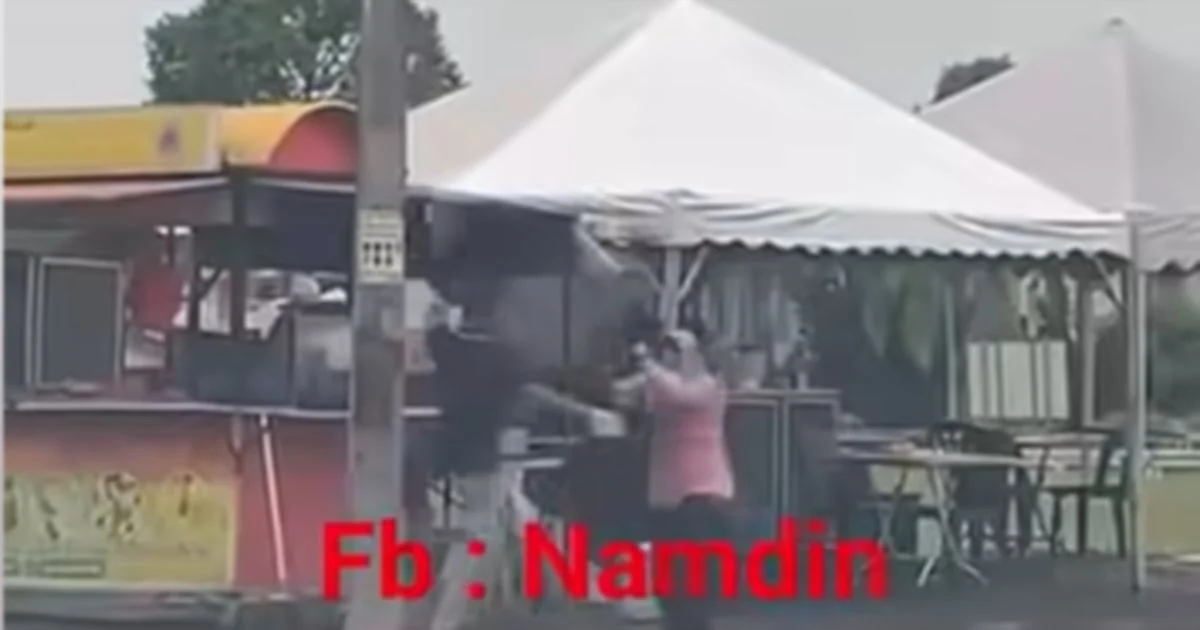
A viral video showing a woman being attacked by a man at a food stall in Gelang Patah has prompted Johor police to launch a formal investigation into the matter. The footage, which circulated rapidly across social media platforms, captured what appears to be an unprovoked physical altercation at a public eating establishment, sparking immediate public concern and calls for swift police action.
The incident highlights a troubling trend of violent confrontations occurring in public spaces, particularly at food outlets where families and workers gather daily. Gelang Patah, a residential area in Johor, is typically home to numerous food courts and hawker stalls that serve as community gathering points. The assault's occurrence in such a setting adds another layer of concern, as it raises questions about security measures and the safety protocols in place at these informal dining establishments.
The decision by police to investigate following the video's viral spread underscores how social media has become a critical tool in bringing criminal matters to authorities' attention. When incidents occur in public spaces and are documented, the rapid dissemination of footage can mobilize enforcement action more quickly than traditional reporting methods alone. However, this also reflects a broader challenge: the extent to which police resources are directed toward incidents gaining online visibility compared to those that remain unreported or unrecorded.
For Malaysian readers, this incident reinforces an uncomfortable reality about personal safety in everyday environments. Many Malaysians frequent food stalls and small eating establishments multiple times weekly, making the security of these spaces relevant to a substantial portion of the population. The assault raises practical questions for both business owners and patrons about what preventive measures might reduce the likelihood of such violence occurring.
The circulation of assault footage online carries additional implications beyond the immediate criminal investigation. Witnesses to the incident—whether present at the stall or seeing the video—may possess crucial information that could assist police in identifying and locating the perpetrator. The viral nature of the content creates both opportunity and obligation; while public awareness can facilitate investigation, it also necessitates careful handling to protect the victim's privacy and dignity during what is undoubtedly a traumatic period.
Police investigations into assaults typically involve gathering statements from the victim and witnesses, reviewing available footage and evidence, and conducting interviews with individuals who may have information about the suspect's identity or whereabouts. In this case, the existence of the video should substantially aid these investigative processes, though authorities must also consider whether the footage captures the complete context of what preceded the visible altercation.
From a regional perspective, this incident connects to broader Southeast Asian conversations about public safety and violence prevention. Countries throughout the region have grappled with increasing reports of assaults in public spaces, with responses ranging from enhanced security infrastructure to community awareness campaigns. Understanding what triggers such incidents and how to prevent them remains an ongoing challenge for law enforcement and community leaders across the region.
The experience of the assault victim deserves particular attention. Beyond the physical injuries that may have been sustained, psychological trauma from experiencing violence in a public space can have lasting effects. Support services, including counseling and medical assistance, become important components of the response to such incidents, yet these are often inadequately promoted or accessible to victims in Malaysia.
Business owners operating food stalls face an uncomfortable position when such incidents occur on their premises. While they cannot be held responsible for criminal acts perpetrated by patrons or outsiders, they may face reputational damage and customer apprehension. This creates incentives for developing enhanced safety measures, though the practical implementation varies widely depending on available resources and local conditions.
The police investigation will likely focus on establishing clear identification of the assailant, determining the motive behind the attack, and gathering sufficient evidence for potential prosecution. Authorities will need to balance their investigation's urgency with thoroughness, ensuring that any charges brought are substantiated by credible evidence that would withstand judicial scrutiny.
As this investigation proceeds, it serves as a reminder to the public about the importance of reporting criminal activity and cooperating with police. While social media virality can prompt official attention, formal reports remain the most reliable mechanism for ensuring investigations are properly documented and prioritized within law enforcement systems.