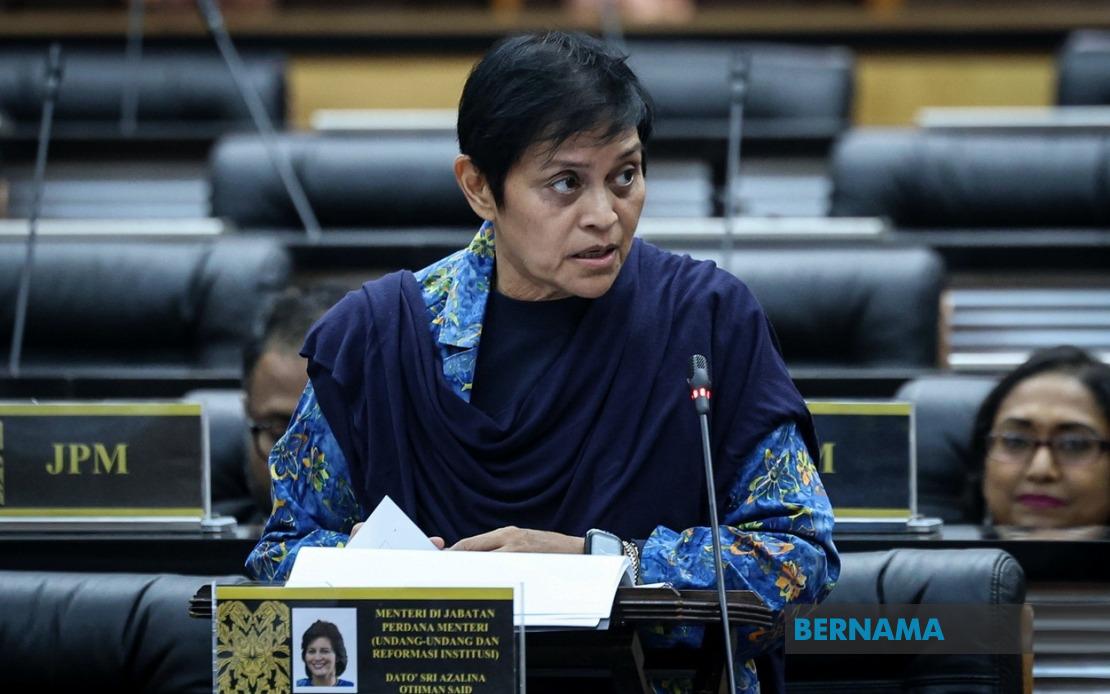
Malaysia's legislative agenda has moved forward with the tabling of the Witness Protection (Amendment) Bill 2026, a measure designed to fortify the nation's system for safeguarding witnesses involved in legal proceedings. Datuk Seri Azalina Othman Said, the Minister in the Prime Minister's Department overseeing Law and Institutional Reform, presented the Bill for its first reading in the Dewan Rakyat on July 13, with plans for advancement to the second reading phase during the same parliamentary sitting. The legislation represents a significant refinement of existing protections established under the Witness Protection Act 2009, addressing contemporary needs in criminal justice administration and victim support.
One of the most consequential amendments addresses a longstanding gap in the protective framework concerning minors and individuals without independent legal standing. The proposed changes to the Act 2009 would formally permit parents and legal guardians to submit applications for witness protection programme admission on behalf of children under eighteen years of age or adults who lack the legal capacity to manage their own affairs. This modification acknowledges the practical reality that many vulnerable witnesses—whether children traumatised by witnessing crime or adults with cognitive or mental health challenges—cannot independently navigate bureaucratic processes. The amendment inserts the phrase "or lacks legal capacity" into the relevant subsection, creating clearer pathways for dependent individuals to access protective measures without procedural obstacles that might otherwise exclude them from safety provisions.
The legislative package introduces binding procedural safeguards through the establishment of formal written agreements between programme participants and the state. These documents, designated for execution before appointed government officers, would clearly delineate the scope of protection extended, the conditions under which assistance operates, the obligations incumbent upon witnesses, and other material terms governing the relationship. Such contractual clarity serves multiple functions: it establishes transparent expectations, prevents disputes regarding entitlements and duties, and creates documentation that can address future disagreements about programme continuation or modification. Notably, the Bill includes provisions ensuring continuity for existing participants, stipulating that agreements already executed before the amendment takes effect remain valid and enforceable, with both parties retaining their previously established rights and benefits under the modified legislative framework.
Perhaps most significantly for vulnerable witnesses, the amendment formally incorporates psychological and mental health support as an authorised component of programme benefits. The expanded definition explicitly permits provision of counselling services and broader psychological assistance to participants, recognising the often-severe trauma experienced by individuals who have witnessed serious crimes. Malaysian witnesses testifying in cases involving organised crime, gang violence, sexual assault, or human trafficking frequently suffer lasting psychological harm. Previous legislative language left ambiguity regarding whether psychological services constituted permissible expenditure within witness protection budgets. This amendment removes that uncertainty, effectively mandating consideration of mental health dimensions alongside physical safety. The inclusion reflects international best practices, where countries including Australia, Canada, and the United Kingdom have integrated trauma-informed psychological support as standard components of witness protection operations.
For Malaysian stakeholders and enforcement institutions, the amendments address practical challenges that have emerged during operation of the existing 2009 Act. Law enforcement agencies and prosecutors have encountered difficulties where minors or mentally incapacitated adults required protection but lacked standing to apply independently. Guardians faced legal uncertainty about their authority to enrol wards into protective programmes. Similarly, the absence of explicit psychological support authority created ambiguity when witness welfare needs extended beyond physical security to encompass mental health crisis management. The standardised written agreement mechanism also addresses administrative deficiencies by creating auditable records of programme participation, reducing disputes between participants and government agencies regarding the nature and duration of protections provided.
The Bill's advancement comes as Malaysia continues evaluating its institutional responses to witness vulnerability and intimidation in major criminal investigations. The witness protection programme has operated since 2009 under the original statutory framework, but legislative experience and evolving crime patterns have revealed requirements for refinement. Transnational criminal enterprises, drug trafficking organisations, and networks involved in financial crimes increasingly target witnesses, making robust protection mechanisms essential to prosecution success. Additionally, Malaysia's commitment to regional cooperation on serious crime investigation requires confidence in the integrity of witness protection mechanisms, as international law enforcement partnerships depend on reliable safeguards for cooperative witnesses.
The psychological support expansion particularly reflects contemporary understanding of witness capability and reliability. Research in forensic psychology demonstrates that witnesses experiencing untreated trauma demonstrate reduced recall accuracy, heightened suggestibility, and compromised ability to testify coherently. Programmes that integrate psychological intervention demonstrably improve both witness wellbeing and evidentiary reliability. By formally authorising counselling services, Malaysia enhances not merely humanitarian response to witness trauma but also the effectiveness of its criminal justice system in securing convictions and protecting community safety through reliable testimony.
Implementation of these amendments will require coordination between multiple institutions. The Attorney General's Chambers, police services, and specialised witness protection units will require updated operational protocols reflecting the new legal framework. Guidelines governing the admission process for dependent witnesses, the content of protective agreements, and the scope of psychological services will require development. Training programmes for designated officers authorised to execute agreements must ensure consistent application across jurisdictions. Budget allocations for psychological support services require projection and allocation through government finance processes.
Regional implications merit consideration, as ASEAN nations face increasing sophistication in witness intimidation and protection challenges. Malaysia's amendments may serve as a model for neighbouring jurisdictions reviewing their own witness protection legislation. The formal incorporation of psychological support and clearer guardian-based admission procedures address problems common across the region, where vulnerable witnesses often lack effective recourse to protection. The legislative developments also signal Malaysia's alignment with international standards for witness protection, potentially facilitating criminal justice cooperation in transnational investigations.
The Bill's progression through parliament represents measured institutional evolution in response to documented gaps in protective frameworks. Rather than wholesale legislative replacement, the amendments incorporate specific enhancements addressing identified vulnerabilities while maintaining the operational structure of the existing 2009 Act. This approach minimises disruption to ongoing protections while systematically improving the framework's capacity to serve vulnerable witnesses and support prosecution of serious crime. The advancement to second reading during the current parliamentary sitting indicates legislative priority and likelihood of passage during this session.

