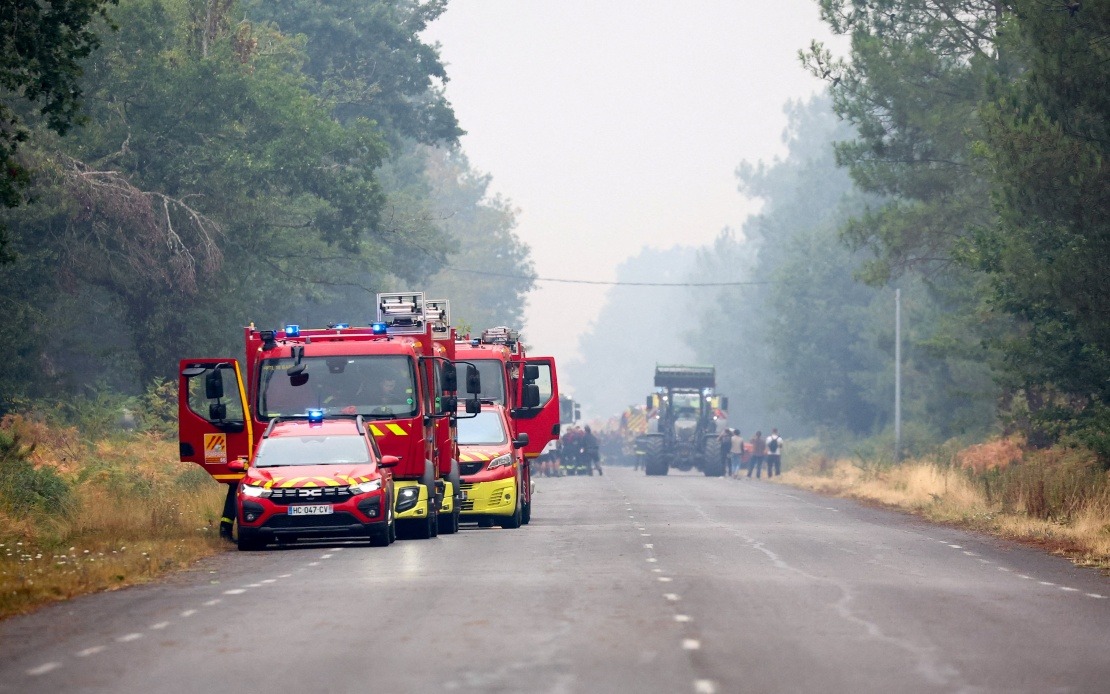
The destructive wildfire campaign sweeping through southwestern France and central Spain has entered a phase of relative stability this week, though emergency responders and meteorologists caution that respite may prove temporary. The fires that have scorched vast tracts of countryside and prompted mass evacuations across both nations are showing early signs of containment, yet the looming arrival of another severe heatwave threatens to undermine firefighting progress and potentially spark fresh disasters across the region.
In the Gironde department of southwestern France, officials reported that the primary wildfire had stabilised by Wednesday morning despite occasional flare-ups that crews successfully suppressed overnight. The prefecture statement underscored the intensity of ongoing operations, with more than 2,000 firefighters still actively defending the fire perimeter and working to eliminate remaining burning areas beneath the surface. The human toll of the campaign has been significant: 126 firefighters have sustained injuries since the Gironde fire commenced, reflecting the hazardous conditions that personnel face when battling such large-scale blazes in extreme heat.
Tuesday marked a turning point for the Var department in France's southeast, where firefighting teams successfully contained a blaze that had consumed nearly 4,800 hectares of forest and farmland. The Landes department in the southwest similarly achieved containment on Monday, though only after flames had ravaged 3,600 hectares. Despite these achievements, the scale of the emergency remains apparent: authorities had designated 65 French departments as orange alert zones, indicating heightened forest fire danger for Wednesday. The national meteorological service issued additional orange alerts across 16 departments specifically due to the approaching heat conditions, signalling that current fire danger would persist or intensify.
The Spanish experience parallels that of France in both scope and challenge. The Sierra Oeste wildfire in the Madrid region remained stable overnight without reported new flare-ups, according to local reporting. However, this stability masks the broader picture of ongoing operations across multiple fronts. Active firefighting campaigns continued Wednesday in Madrid, Avila, Toledo, Castellon and Almeria as Spain simultaneously braced for the anticipated heatwave. The scale of evacuation and displacement demonstrates the severity: residents from 15 municipalities in Madrid and Avila returned to their homes late Tuesday, while 9,000 people in Castellon and 6,000 residents from 11 municipalities in Toledo received permission to resume normal life. These figures represent thousands of families whose lives had been disrupted by the immediate danger.
The Vall d'Uixo wildfire in Castellon province presents the most concerning scenario for Spanish authorities. Having burned continuously since Saturday, this single fire has charred 10,000 hectares—an area equivalent to roughly 14,000 football fields—and forced 10,000 residents to evacuate. Despite substantial firefighting resources deployed to the region, the blaze remains uncontrolled and continues to pose significant risk. This ongoing situation illustrates how individual fires can outpace suppression capacity even with massive resource commitment, particularly when weather conditions favour rapid fire spread.
The infrastructure disruption caused by these fires extends well beyond the immediate flames. Thirty roads remained closed across the affected provinces of Avila, Castellon, Madrid, Toledo and Leon as of Wednesday, hampering regional commerce, emergency response and civilian movement. Recovery of road access represents a crucial step toward normalcy, as closed transportation networks isolate affected communities and prevent economic activity resumption. Clearing these routes requires confirmation that adjacent areas are fire-safe and that reopening will not expose road workers to active fire danger.
For Malaysian and Southeast Asian observers, these events carry particular relevance as climate patterns increasingly produce extreme weather phenomena across the globe. The combination of extended droughts, record temperatures and massive wildfires now represents a regular occurrence in southern Europe rather than an anomalous catastrophe. The scale of resource mobilisation—thousands of firefighters, aircraft support, coordinated cross-regional response—illustrates the infrastructure demands that climate-driven disasters impose on developed nations. As Southeast Asia grapples with its own increasing vulnerability to extreme weather, including transboundary haze from regional fires, the European experience demonstrates both the scale of resources required and the difficulty of achieving complete prevention through preparation alone.
The incoming heatwave presents perhaps the most significant threat to current progress. Forecasters warning of another heat surge suggest that temperatures will remain elevated well above seasonal norms, potentially creating conditions where contained fires reignite and new blazes emerge. Heatwave conditions accelerate vegetation drying, reduce humidity that naturally suppresses fire spread, and increase the likelihood of ignition from both natural and human sources. For firefighters already exhausted from weeks of continuous operations, another surge in heat and fire danger threatens burnout and reduced operational effectiveness precisely when sustained effort proves most critical.
The broader context of these fires within European climate patterns cannot be ignored. Scientists have consistently linked the frequency and intensity of such events to anthropogenic climate change, with Mediterranean regions experiencing particular vulnerability due to their transitional climate characteristics. The convergence of drought, heat and massive fires now occurs with sufficient regularity that emergency management frameworks must plan for annual rather than decennial crises. For regions like Southeast Asia vulnerable to analogous climate impacts, the European experience suggests that adaptation strategies must anticipate escalating rather than stabilising disaster frequencies.
Looking ahead, the critical question remains whether the anticipated heatwave will derail the containment progress achieved over recent days or whether responders have achieved sufficient control that new weather patterns will not reignite major new catastrophes. The coming days will determine whether the current stabilisation represents genuine progress toward resolution or merely a temporary pause in what may become a recurring summer phenomenon across Mediterranean Europe. For emergency management professionals globally, and particularly for those preparing Southeast Asia's response capacity to climate-driven disasters, these ongoing events provide crucial real-time lessons in resource allocation, cross-border coordination and the limits of firefighting infrastructure when confronting nature's most powerful forces.

