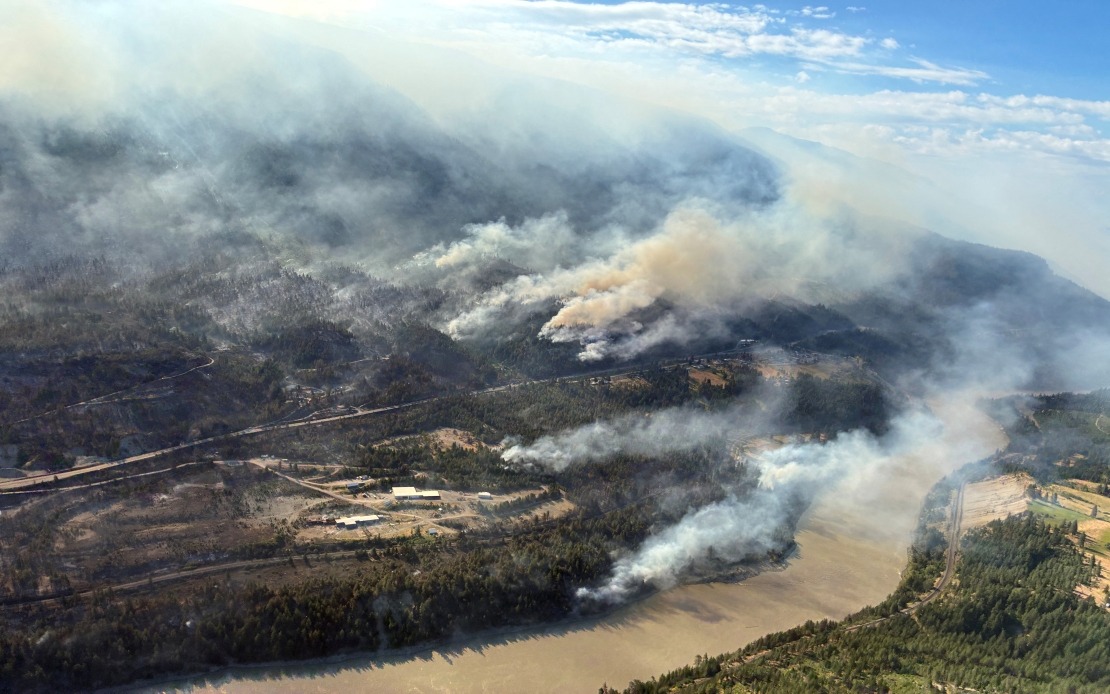
A Cessna O-1 "Bird Dog" aircraft operating a wildfire suppression mission in Canada's Northwest Territories has crashed, claiming the lives of all three people aboard, authorities confirmed Thursday. The incident occurred in the remote northern region near Fort Simpson, where the aircraft was deployed to combat an active and rapidly spreading fire. The tragedy marks a sobering reminder of the hazards inherent in aerial firefighting operations, particularly in challenging terrain and climatic conditions that characterize Canada's boreal regions.
NWT Fire, the territories' official wildfire management agency, announced the confirmation through a social media statement after initially treating the incident as a "serious incident" requiring investigation. The agency clarified that the three occupants were operating the aircraft while engaged in suppressing wildfire FS009-26, a conflagration currently advancing across the Marten Hills region within the Dehcho area. The exact identity and professional roles of those aboard remain under investigation, though personnel engaged in aerial wildfire suppression typically include pilots, observers, and fire management specialists.
Responding swiftly to the emergency, the Royal Canadian Mounted Police mobilized personnel to the crash location in coordination with the Northwest Territories' Environment and Climate Change Ministry. Their dual mandate involves both conducting a formal investigation into the crash's causation and assessing the situation of the aircraft's occupants. Such investigations are critical for understanding whether mechanical failure, adverse weather conditions, navigational error, or other factors contributed to the catastrophe.
The wildfire being suppressed at the time of the crash, FS009-26, originated naturally on June 23 and currently spans approximately 100 hectares. Environmental and climate authorities have assessed the fire as entirely out of control, presenting an escalating threat to surrounding communities and resources. The blaze's location in the Marten Hills area of Dehcho makes suppression efforts particularly challenging given the region's sparse population density and limited ground access infrastructure.
The crash occurs amid an increasingly severe wildfire season across the Northwest Territories. As of June 25, active fires numbered 28 across the jurisdiction, with these blazes collectively affecting nearly 91,400 acres of land. The distribution of fire status indicates a deteriorating situation: 19 fires remain out of control, four are being actively held at containment lines, five are classified as controlled, and eight have been extinguished. This distribution demonstrates that resource allocation has been heavily strained, with more than two-thirds of active fires beyond suppression capacity.
The broader context of Canada's wildfire challenges extends beyond the Northwest Territories, reflecting patterns of increasingly intense fire seasons across the nation. Climate change has lengthened fire seasons, elevated fuel moisture volatility, and created conditions where fires spread with greater speed and intensity. Aerial firefighting assets, including specialized aircraft like the Cessna O-1 and larger water-bombing operations, have become essential infrastructure for managing fires in remote areas inaccessible by ground crews.
For Malaysia and Southeast Asian observers, the tragedy underscores the vulnerability of aerial firefighting personnel operating in demanding environments. The region faces its own wildfire challenges, particularly during dry seasons affecting Indonesia, Malaysia, and neighboring areas. Understanding the hazards that Canadian firefighters encounter provides valuable perspective on the occupational dangers inherent in regional wildfire management operations, particularly as climate pressures intensify across tropical and subtropical zones.
The Cessna O-1 "Bird Dog," a veteran reconnaissance and observation aircraft with origins dating to the Cold War era, has been repurposed for civilian wildfire management across North America. While relatively simple in design and amenable to operations from unprepared surfaces, the aircraft operates in conditions where sudden weather changes, wind shear over mountainous terrain, and pilot fatigue present constant hazards. The aircraft's use in this capacity reflects both the limitations of available resources and the necessity of deploying whatever assets can effectively reach remote fire zones.
Investigation teams will likely examine critical factors including aircraft maintenance records, weather conditions at the time of the incident, pilot experience and training certifications, and operational procedures governing aerial firefighting missions. The findings could influence how wildfire agencies balance operational urgency against safety protocols, a perpetual tension in emergency response environments where delayed action allows fires to spread dangerously.
The incident will inevitably prompt reflection within Canada's firefighting community regarding resource adequacy and personnel safety protocols. As wildfire seasons extend and intensity increases, agencies face mounting pressure to deploy more personnel and assets into increasingly hazardous conditions. The three fatalities represent not merely an operational failure but a human tragedy with rippling consequences for families, colleagues, and the broader firefighting workforce.

