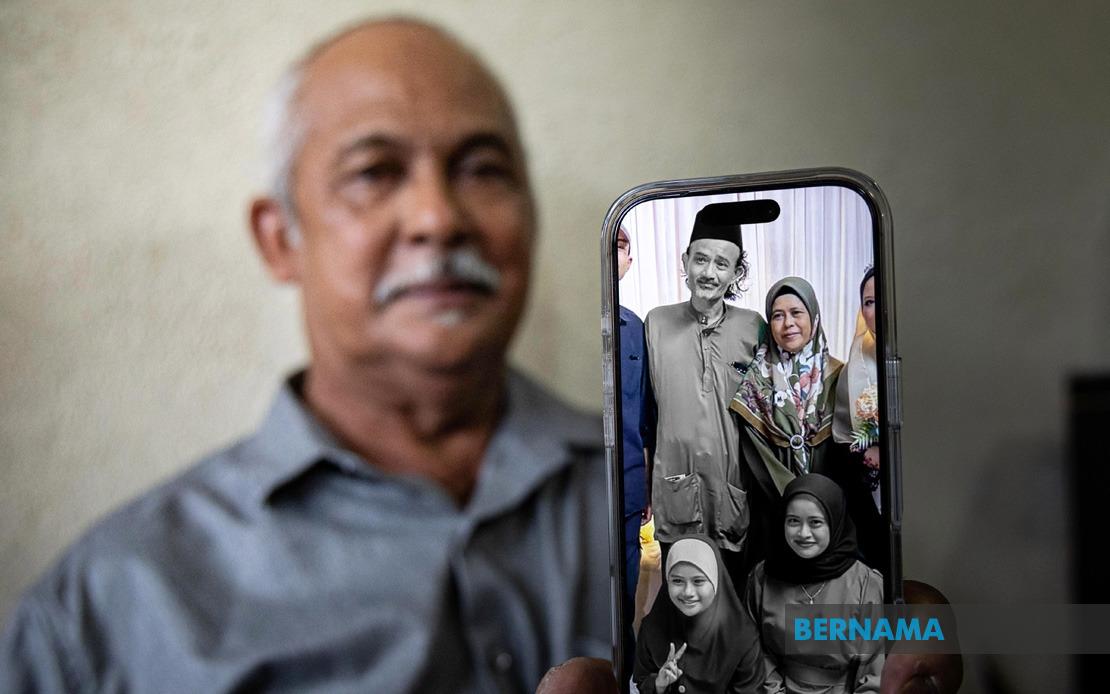
Norhayati Razali, 55, is emerging from critical care following a devastating collision involving a Malaysian Immigration Department truck on Jalan Sultan Ismail in Kuala Lumpur on Wednesday. The accident claimed the lives of her husband and two children, leaving the survivor in a precarious psychological state as she grapples with both physical injuries and the trauma of losing her entire immediate family. Having been transferred from the Intensive Care Unit to a standard ward at Kuala Lumpur Hospital, Norhayati has achieved some positive milestones in her recovery, notably regaining the ability to consume food and liquids independently without tube assistance.
Despite these physical improvements, the emotional and neurological toll of the incident has created a deeply troubling situation for Norhayati and her extended family. Her brother, Mohd Nadzri Razali, 69, disclosed that she continues to experience significant memory impairment stemming from her head injuries and the severe trauma sustained in the collision. The family has already attempted to inform her of the deaths multiple times, bringing her to view the bodies of her deceased relatives and explaining the circumstances, yet these efforts appear to have made limited impression on her consciousness.
The cognitive disconnection is particularly evident in her behaviour patterns. When family members explained what had transpired, Norhayati simply nodded without verbal response, giving no indication of comprehension or emotional reaction. However, the following day, she inquired about the whereabouts of her husband and children, suggesting that the information either failed to register or has since faded from her recovering memory. This cyclical confusion about fundamental family relationships raises serious questions about the trajectory of her cognitive rehabilitation and the psychological support required moving forward.
Mohd Nadzri outlined the extent of his sister's injuries, which extend far beyond the head trauma affecting her cognition. Norhayati has sustained significant physical damage to her hands, waist, knees, legs, and other body areas that require ongoing hospital treatment. The combination of these injuries with her neurological complications has created a complex medical situation requiring specialised care that currently only Kuala Lumpur Hospital appears equipped to provide. Medical professionals have yet to determine whether she can safely be transferred to a facility closer to her family home in Perak, a potential move that would ease the burden on relatives attempting to maintain consistent bedside support.
The practical challenges of maintaining family contact underscore the broader difficulties emerging from this tragedy. Mohd Nadzri has been unable to visit his sister due to transportation constraints and unfamiliarity with Kuala Lumpur's road network, a common barrier faced by families from smaller towns dealing with accidents in the capital. He expressed hope of making the journey this weekend with assistance from someone familiar with the route, highlighting how such incidents ripple outward to affect not just the immediate victims but their entire support networks.
The circumstances surrounding the accident itself remain contentious and have become a focal point for the family's pursuit of accountability. The JIM truck was operating under official capacity while en route to Chow Kit for an immigration enforcement operation targeting undocumented migrants when the collision occurred on Wednesday afternoon. According to available reports, the empty truck was travelling with its beacon and siren activated—suggesting official priority status—when it allegedly entered an intersection against a red traffic light. A Proton Saga vehicle with right-of-way under a green signal collided with the truck, causing it to lose control, veer across the roadway, and strike multiple pedestrians and vehicles including an Inokom Matrix car.
This sequence of events has prompted the family to call for rigorous and transparent investigation procedures. Mohd Nadzri emphasised the need for justice, particularly through examination of any traffic camera footage that might clarify the exact circumstances of the collision. His request reflects broader public concerns about accountability when government vehicles are involved in accidents, especially where official operations and safety protocols may intersect with tragic outcomes. The presence of surveillance equipment at the traffic intersection could provide definitive evidence about traffic light status, vehicle speeds, and whether proper safety procedures were followed.
The investigation's importance extends beyond this single family, as it touches on systemic questions about how government agencies operate emergency vehicles in populated urban areas. The use of sirens and beacons is intended to facilitate rapid response to official duties, but these privileges also carry responsibilities regarding public safety. When such vehicles are involved in fatal accidents, particularly those resulting in civilian deaths, the investigation becomes a matter of public interest and institutional accountability rather than merely a traffic incident.
For Norhayati herself, the path forward remains uncertain and emotionally fraught. Beyond her physical rehabilitation, she faces the eventual necessity of confronting and processing the permanent loss of her immediate family once her cognitive recovery permits genuine comprehension. Psychologically, she may never fully escape the trauma of learning this information repeatedly, as her memory difficulties potentially force her to re-experience the shock of loss multiple times. This unique form of suffering—where grief must be relearned due to neurological injury—represents a particularly cruel dimension of her injuries.
The case has resonated within Malaysian discourse about road safety, government accountability, and the protection of ordinary citizens navigating public spaces. The convergence of an official vehicle on an enforcement operation with fatal consequences for uninvolved civilians raises questions about operational protocols, driver training, and the prioritisation of safety over mission urgency. Regardless of investigation findings, the human cost is already evident in Norhayati's ongoing struggle, her family's grief, and the broader loss of innocent lives.

