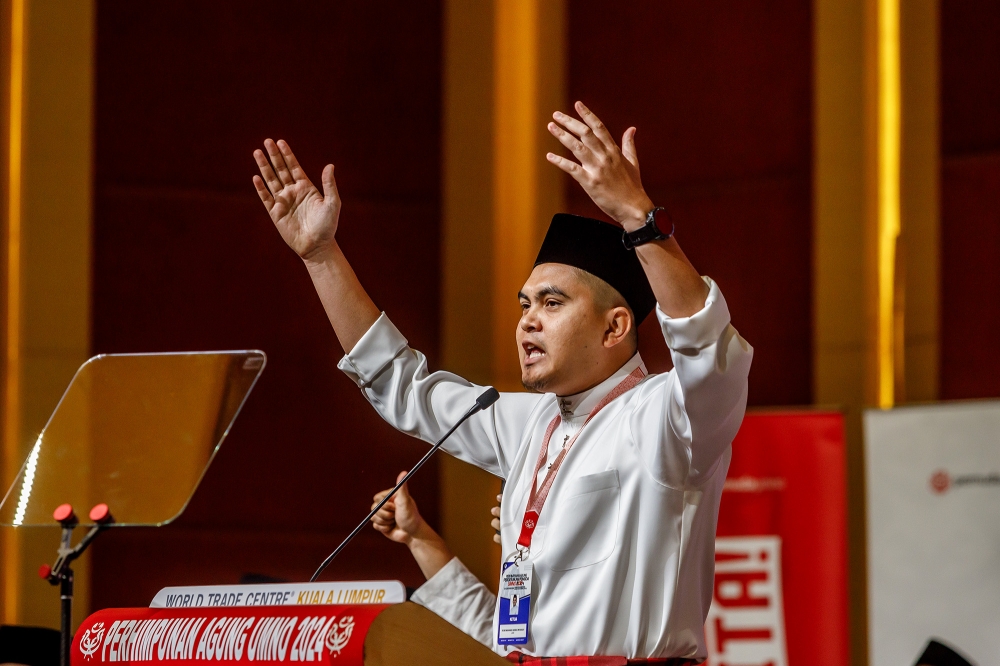
Umno Youth chief Datuk Dr Akmal Saleh has escalated intra-coalition tensions by publicly questioning the fairness of calls for Barisan Nasional to quit the government over electoral arrangements, turning the spotlight onto Pakatan Harapan's own coalition obligations and partnership structures. The challenge, articulated in Kuala Lumpur on July 19, reflects deepening friction within Malaysia's ruling framework as parties grapple with managing competing political interests and coalition stability ahead of potential electoral contests.
The remarks pivot around a fundamental asymmetry in political accountability. Umno Youth argues that if the government's legitimacy is contested based on which parties enter electoral alliances and how coalitions are constructed, then all participating organizations—not merely those in Barisan Nasional—should face equivalent scrutiny and consequences. This line of reasoning exposes fault lines in how Malaysia's multi-party governing arrangement operates and the uneven application of political principles across different camps.
Packatan Harapan's internal composition and electoral strategies have themselves evolved considerably since the 2018 general election, when the coalition first took national power. The bloc has navigated significant realignments, including the departure of UMNO members who crossed over and the complex negotiations required to maintain parliamentary majorities. Yet Umno Youth's challenge suggests these maneuvers have attracted comparatively less public criticism than similar tactical moves within Barisan Nasional, a disparity that party youth leaders view as politically motivated.
For Malaysian observers, the dispute underscores persistent tensions within the broader government framework. The current administration requires careful management of multiple coalition partners with distinct agendas, and questions about electoral pacts directly implicate the legitimacy and durability of this arrangement. Every partnership agreement, candidate selection process, and electoral cooperation framework potentially reshapes the parliamentary mathematics that sustains executive power.
Umno Youth's intervention also reflects internal Barisan Nasional dynamics, where component parties negotiate their individual roles and collective strategy. By challenging Pakatan Harapan publicly, Umno Youth simultaneously sends signals to Barisan Nasional allies about the need for unified resistance to external pressure and to party moderates about the costs of perceived double standards in Malaysian politics. The rhetorical thrust—demanding consistency in how coalitions are evaluated—appeals to principles of fairness while advancing factional interests.
The broader context involves recurring debates about government formation and coalition legitimacy in Malaysia's Westminster-derived system. Previous transitions between ruling coalitions have involved complex negotiations, defections, and realignments that complicate simple narratives about electoral mandates. Contemporary politics increasingly features coalition governments where no single party commands an outright parliamentary majority, making questions of partnership terms and accountability increasingly salient to governance stability.
For Malaysian voters and civil society, these internal political disputes raise substantive questions about transparency in coalition agreements and the mechanisms through which such pacts affect policy-making and resource allocation. When multiple parties must govern together, their respective electoral commitments, campaign promises, and coalition negotiations directly influence which policies receive priority and how government benefits are distributed across constituencies.
Regionally, Malaysia's experience with coalition governance resonates across Southeast Asia, where multiparty democracies increasingly struggle with similar challenges. The region has witnessed numerous instances of coalition realignment, defection, and the strategic use of electoral alliances to achieve or maintain power. How Malaysia manages these dynamics—and whether principles of consistency and fairness shape accountability—carries implications for democratic practice across the subregion.
Umno Youth's challenge, while framed as a demand for consistency, also reflects calculation about the political calendar. If general elections approach, clarity about which coalitions can govern, on what terms, and with whose participation becomes strategically critical. Parties must simultaneously prepare electoral platforms, manage internal discipline, and signal credibility to potential coalition partners and undecided voters.
The substance of Umno Youth's grievance—that electoral alliance decisions should not unilaterally determine governmental participation—points to underlying questions about how Malaysian democracy should operate when coalition governments become the norm rather than exception. Should parties that form electoral pacts bear equal responsibility for governance outcomes? Should voters be entitled to know in advance which specific coalitions will govern if elections produce no clear majority? These questions remain unresolved in Malaysian political practice.
Packatan Harapan's likely response will involve either dismissing the challenge as deflection from Barisan Nasional's governance record or articulating why current coalition arrangements reflect distinct historical circumstances and democratic legitimacy. The rhetorical battle reflects genuine disagreements about coalition responsibility and the principles that should govern Malaysian politics, even as both sides pursue conventional factional advantage and electoral positioning.
Looking forward, Umno Youth's intervention may influence how other component parties within both coalitions approach similar issues, potentially triggering broader discussions about coalition governance frameworks, transparency requirements, and accountability standards. Whether these debates ultimately yield institutional reforms or remain largely symbolic depends on whether broader political momentum coalesces around systemic change.

