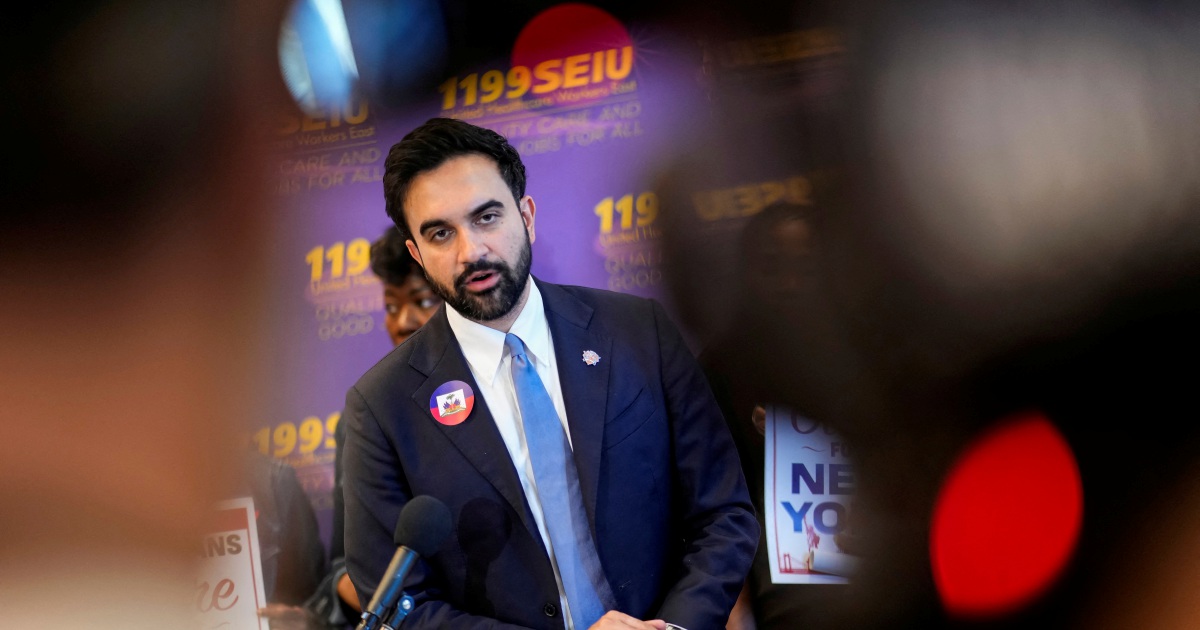
New York Mayor Zohran Mamdani has concluded that municipal law provides no legal foundation for arresting Israeli Prime Minister Benjamin Netanyahu should he travel to New York City on war crimes allegations, reversing an earlier position where he appeared to be considering such action. The clarification represents a significant moment in the ongoing tension between progressive city officials and Israeli government policy, whilst highlighting the limits of mayoral power in the United States' largest city.
Mamdani's initial suggestion that he was examining options to detain Netanyahu reflected growing international calls for accountability over Israel's military operations in Gaza. However, his subsequent acknowledgement that he lacks such authority underscores a fundamental principle of American law: municipal governments cannot unilaterally arrest foreign dignitaries or invoke international justice mechanisms without federal involvement and specific legal grounds. The distinction matters considerably for understanding how the US legal system actually functions, particularly when international law and domestic jurisdiction intersect.
The mayor's reversal demonstrates the complexity facing elected officials who wish to respond to constituents' demands for accountability whilst navigating the constraints of their actual legal power. Mayors in American cities exercise significant authority over local matters—from housing to public safety—but criminal law involving visiting heads of state sits squarely in federal jurisdiction. Federal law, international protocols, and diplomatic conventions all create barriers that a city executive simply cannot overcome through mayoral decree or local ordinance.
For context, New York City has increasingly become a focal point for pro-Palestinian activism and criticism of Israeli policy following the October 2023 conflict escalation. Mamdani himself represents a highly progressive district and has been responsive to constituent concerns about civilian casualties in Gaza. His initial consideration of arresting Netanyahu, regardless of its legal viability, reflected the political pressure facing Democratic officials in heavily Democratic urban areas where pro-Palestinian sentiment runs strong.
The practical reality is that any arrest of Netanyahu would require action by federal authorities—specifically the US Department of Justice and the Federal Bureau of Investigation—working in conjunction with international legal mechanisms. The United States is not a signatory to the International Criminal Court's Rome Statute, which limits how American courts can engage with ICC proceedings. Even if the US were a party to that treaty, federal law would govern how such matters proceed, not municipal ordinance.
Moreover, diplomatic immunity protections further complicate scenarios involving sitting heads of state. While such immunity is not absolute in international law, invoking exceptions requires careful legal and diplomatic coordination at the federal level. A city mayor attempting unilateral action would likely face immediate legal challenges and injunctions that would prevent any such detention.
Mamdani's acknowledgement reflects a broader pattern where progressive officials express strong moral and political positions regarding international conflicts, yet ultimately must defer to existing legal structures. This tension has appeared repeatedly in American politics—city officials making statements of solidarity with various global causes whilst recognizing they lack enforcement mechanisms beyond their jurisdictions.
The episode also reveals how international law intersects messily with American federalism. The US constitutional system deliberately concentrates foreign policy authority in federal hands, leaving states and municipalities to handle local affairs. This division exists partly to prevent chaotic situations where different American cities or states adopt contradictory foreign policies, but it also limits democratic responsiveness at the municipal level on issues of deep concern to residents.
For Malaysian observers, this situation offers instructive parallels regarding how federal systems distribute power over international matters. Malaysia's own structure, where foreign policy rests firmly with federal authorities, reflects similar principles that international relations and diplomatic protocols cannot operate effectively when fragmented across numerous local jurisdictions. Cities cannot credibly conduct independent foreign policy regardless of their size or political orientation.
The Mamdani incident also illustrates how public pressure on elected officials, particularly in majorly progressive urban areas facing significant pro-Palestinian constituencies, forces them to demonstrate responsiveness even when their actual powers prove limited. His initial exploration of arrest options, however legally unfounded, served a political function—acknowledging constituent concerns—even though the ultimate outcome was foreordained.
Moving forward, Mamdani and other progressive officials may redirect their efforts toward measures actually within their authority, such as municipal divestment campaigns, boycott advocacy within city procurement decisions, or formal expression of solidarity with Palestinian communities. These alternatives remain controversial but operate within legitimate mayoral powers, unlike attempting to unilaterally arrest foreign leaders.
The episode ultimately reinforces that American local government, despite its significant power over urban affairs, remains genuinely constrained when international matters and federal prerogatives come into play. For global observers watching American political tensions play out, this serves as useful reminder that mayoral statements—however passionate—cannot simply override federal law and international diplomatic conventions.

