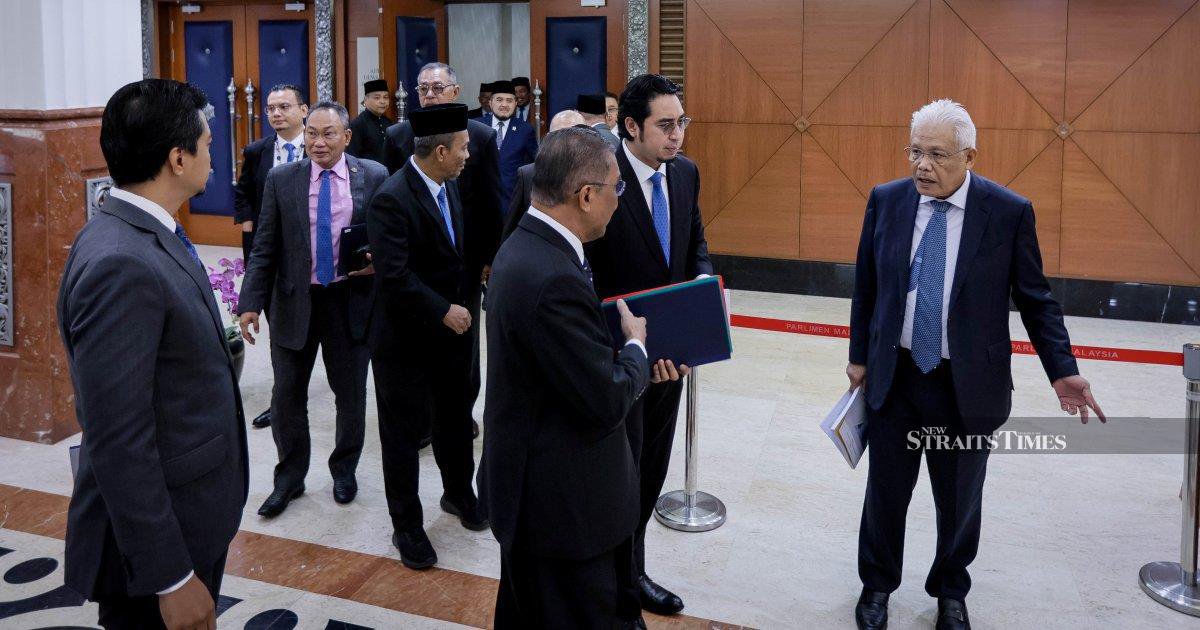
The latest parliamentary walkout, prompted by the opposition's response to the Royal Commission of Inquiry report on Tabung Haji, has crystallised a persistent paradox in Malaysian politics. The staging of such protests within the legislature reflects not merely a disagreement over policy, but a deeper tension about what constitutes legitimate dissent in a democratic institution. What remains striking is the selective application of standards — the very conduct that one faction defends as principled resistance another swiftly labels as performative dramatics designed to distract from substantive debate.
Parliament has long served as the primary arena for contentious political battles in Malaysia, but the nature of dissent within its chambers has evolved considerably. Walkouts represent a more public and visible form of protest than traditional legislative manoeuvres such as procedural objections or boycotts of committee work. They command immediate media attention, generate headlines, and create visual narratives that shape public perception far more effectively than nuanced arguments delivered across parliamentary benches. This visibility, however, cuts both ways. While it amplifies the message of those departing, it also invites scrutiny of their motivations and tactics in ways that more subdued forms of opposition rarely experience.
The Tabung Haji inquiry report provided the immediate trigger for this particular manifestation of parliamentary discontent. The pilgrimage fund, which manages investments and savings for Malaysian Muslims preparing for the hajj, operates at the intersection of religious significance and financial management — a combination that inevitably draws intense public interest and political attention. When a Royal Commission of Inquiry delivers findings on such matters, the results seldom satisfy all stakeholders, and the opposition's decision to walk out reflected a judgment that the conclusions were insufficiently critical or failed to address systemic issues adequately. Yet the walkout itself became the story, overshadowing the actual substance of the commission's report in news cycles and public discourse.
This phenomenon reveals an uncomfortable truth about modern parliamentary governance in Malaysia and beyond. The medium increasingly dominates the message. A legislator who remains seated while delivering a blistering critique of government policies may influence fellow parliamentarians, but the departing colleague who dramatically exits the chamber influences the broader public conversation. This dynamic has gradually shifted incentive structures within parliament. Lawmakers discover that theatrical gestures often prove more effective at mobilising their political base than substantive legislative work, which inherently lacks the immediacy and visual impact that sustains contemporary political movements.
The hypocrisy that accompanies such tactics deserves particular examination. Government backbenchers routinely condemn opposition walkouts as disrespectful to parliamentary institutions, yet many of these same figures have participated in or remained silent during instances when government supporters have engaged in comparable conduct. The Malaysian parliament has witnessed numerous occasions when both government and opposition members have staged exits, absented themselves from proceedings, or otherwise disrupted normal business. Yet the characterisation of these actions diverges sharply depending on political affiliation. This selective moral accounting undermines the credibility of both sides and suggests that parliamentary rules exist less as consistent principles than as flexible instruments deployed to advantage or disadvantage opposing factions.
For ordinary Malaysians observing these scenes unfold, the impact extends beyond immediate parliamentary procedure. Public confidence in legislative institutions erodes when citizens perceive that rules apply inconsistently and that institutional norms bend according to political convenience. The parliament's effectiveness as a forum for national dialogue diminishes when its proceedings become primarily vehicles for partisan theatre rather than authentic deliberation. Southeast Asian democracies, including Malaysia's, face persistent questions about whether their legislatures truly represent popular will or merely serve as stages for elite power plays. Parliamentary walkouts, while superficially about specific policy disputes, actually reflect this deeper institutional crisis.
The Tabung Haji case illustrates how walkouts, once deployed as rare emergency measures signifying profound principle, have become normalised responses to routine political disagreements. This inflation of the tactic diminishes its potency. When opposition members exit parliament over a commission report, observers may reasonably ask whether the circumstances truly warrant such dramatic rupture or whether habitual protest has simply become accepted parliamentary practice. The threshold for what constitutes a walkout-worthy issue has clearly descended, suggesting that the tactic has lost some of its original moral force through overuse.
Contextual factors specific to Malaysia's political landscape deserve consideration. The country's multiracial, multi-religious composition means that certain parliamentary disputes carry heightened sensitivity, particularly those involving religious institutions or communal interests. The opposition's Tabung Haji walkout, therefore, cannot be divorced from broader tensions surrounding governance of Muslim-related institutions and the communal anxieties that such governance questions can trigger. Opposition lawmakers may have calculated that visibly departing parliament sent an important signal to their constituents about the seriousness with which they treat these matters, regardless of whether the tactic proved substantively effective.
The institutional response to parliamentary walkouts also warrants scrutiny. Malaysia's Standing Orders contain procedures for addressing disorderly conduct, yet enforcement of these rules appears inconsistent. The Speaker's authority to reprimand, suspend, or otherwise discipline members who breach parliamentary decorum exists on paper, but actual application depends partly on political considerations and the composition of the parliamentary leadership. This enforcement inconsistency further demonstrates how parliamentary rules function not as universal principles but as contested terrain where power relations determine their application.
Looking forward, Malaysian parliamentarians might benefit from candid examination of whether walkouts genuinely serve legislative purpose or merely provide satisfying gestures that damage institutional credibility without advancing substantive change. Other Commonwealth parliaments have grappled with similar questions and developed various approaches to channeling dissent through formally recognised mechanisms that carry political weight without requiring dramatic exits. The challenge for Malaysia lies in creating parliamentary culture where principled opposition can manifest effectively without descending into performative cycles that ultimately disadvantage the legislature itself.
The Tabung Haji walkout ultimately exemplifies a broader malaise in Malaysian parliamentary politics — the substitution of visible protest for patient institutional engagement, the prioritisation of headline-generating tactics over substantive deliberation, and the selective application of standards based on political advantage. Until parliament becomes a space where all members, regardless of affiliation, agree on basic rules of conduct and commit to consistent enforcement thereof, such incidents will continue to punctuate proceedings. The real story of these walkouts concerns not the immediate political dispute, but the institutional decay they represent.

