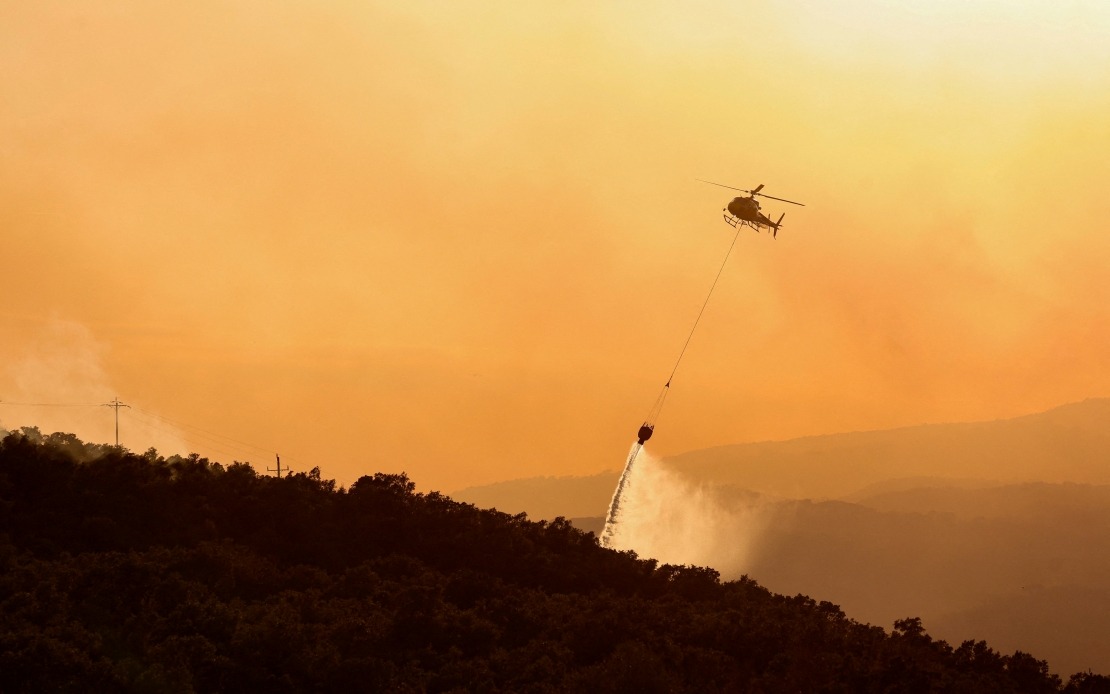
The American west faces an unprecedented climate crisis that has fundamentally disrupted the traditional Fourth of July celebrations this year. As the United States marked the 250th anniversary of its founding with nationwide festivities on July 4, many communities in the western states were forced to abandon or dramatically scale back their iconic fireworks displays due to catastrophic drought conditions and raging wildfires that pose an immediate threat to public safety.
According to a national incident report released on Friday, the country is grappling with 41 large fires that remain uncontained, pushing the nation to its second-highest wildfire preparedness level. This alarming situation reflects the scale of the environmental challenge facing the region, where weather patterns have created a perfect storm for rapid fire spread and expansion. The convergence of severe drought, extreme heat, low humidity, and strong winds across the southwest has created conditions that officials describe as uniquely dangerous for open flame activities.
Utah has become a focal point of the crisis, with Governor Spencer Cox issuing a statewide temporary restriction on fireworks use in response to escalating wildfire threats. The executive order permits local authorities to designate narrow geographical zones where fireworks may continue through July 5, essentially converting the celebration into a highly regulated and geographically fragmented event. The scale of Utah's drought situation cannot be understated—data shows that 94 percent of the state is experiencing either severe or extreme drought conditions, creating an extraordinarily parched landscape vulnerable to rapid combustion.
State Forester Jamie Barnes described the current wildfire environment as fundamentally different from anything witnessed in recent history, noting that fires are advancing at velocities significantly faster than in previous years. To underscore the severity, Utah has already consumed more land through wildfires in 2024 than across the entire four-year period from 2020 to 2023. This acceleration reflects climate change impacts and a lengthening fire season that extends well beyond traditional parameters.
Colorado is facing similarly severe challenges, with the Division of Fire Prevention and Control reporting more than a dozen active wildfires spreading across the state during the week of July 4. This unprecedented outbreak has compelled several municipalities to abandon their fireworks celebrations entirely. Communities including Durango, Vail, and Pueblo all cancelled displays, with Colorado Springs, the state's second-largest city, joining them in suspending all fireworks activities. Colorado Springs officials cited extreme fire danger levels comparable to conditions immediately preceding the devastating 2012 Waldo Canyon Fire, which destroyed over 300 residences and forced thousands of evacuations.
The pattern of cancellations reflects the genuine danger posed by recreational pyrotechnics in drought-stricken regions. Vail's situation exemplifies this ongoing vulnerability, having cancelled its fireworks celebration six times since 1998 during dangerous fire seasons, with the most recent cancellation occurring in 2021. Colorado Springs Mayor Yemi Mobolade acknowledged the disappointment inherent in this year's decision while emphasizing public safety priorities, stating that the risk calculation simply did not favour proceeding with the event despite the historical significance of the 250th anniversary.
Beyond Colorado and Utah, fireworks restrictions rippled across Wyoming, Nebraska, and New Mexico, where officials implemented limitations due to compounding drought and wildfire hazards. However, most professionally-managed fireworks displays operated by experienced pyrotechnicians continued as planned, suggesting that the threat level for controlled, purpose-built displays is markedly different from consumer fireworks used in residential areas and open spaces.
Scientific research increasingly demonstrates the connection between pyrotechnic activities and wildfire ignition, particularly on high-volume occasions like Independence Day. Philip Higuera, a fire ecology professor at the University of Montana, emphasized that fireworks create numerous ignition points across the landscape on a single day, compounding existing fire risk. This occurs precisely when atmospheric conditions in the west are typically most conducive to rapid fire development.
The research dimension adds crucial context for Malaysian and Southeast Asian policymakers monitoring climate change impacts. Lauren Lowman, an associate professor at Wake Forest University, has documented that approximately half of all land burned in the western United States since 2001 has occurred during or immediately following heat waves. Her analysis of historical records reveals that roughly 15,000 wildfires were recorded on July 4 alone between 1992 and 2020 across the nation. More broadly, fireworks devices were responsible for an estimated 32,000 fires nationwide in 2023, highlighting the cumulative danger posed by pyrotechnic activities during fire season.
The National Weather Service warned that the southwest would experience strong winds and exceptionally low humidity levels during the July 4 period, conditions that substantially elevate fire propagation potential. Simultaneously, much of eastern and central America endured dangerously elevated temperatures, with heat indexes exceeding 46 degrees Celsius in certain locations. This geographic breadth of extreme conditions underscores how climate disruption is creating simultaneous hazards across diverse regions.
For Malaysian observers, this crisis illustrates how climate change increasingly forces difficult tradeoffs between cultural celebrations and environmental protection. The forced cancellations represent a tangible cost of climate volatility that extends beyond ecological damage to encompass social and cultural disruptions. As Southeast Asia continues developing its own climate adaptation strategies, the American experience provides valuable lessons regarding how extreme weather can necessitate rethinking traditional practices and how coordinated governmental action becomes essential when public safety hangs in balance.

