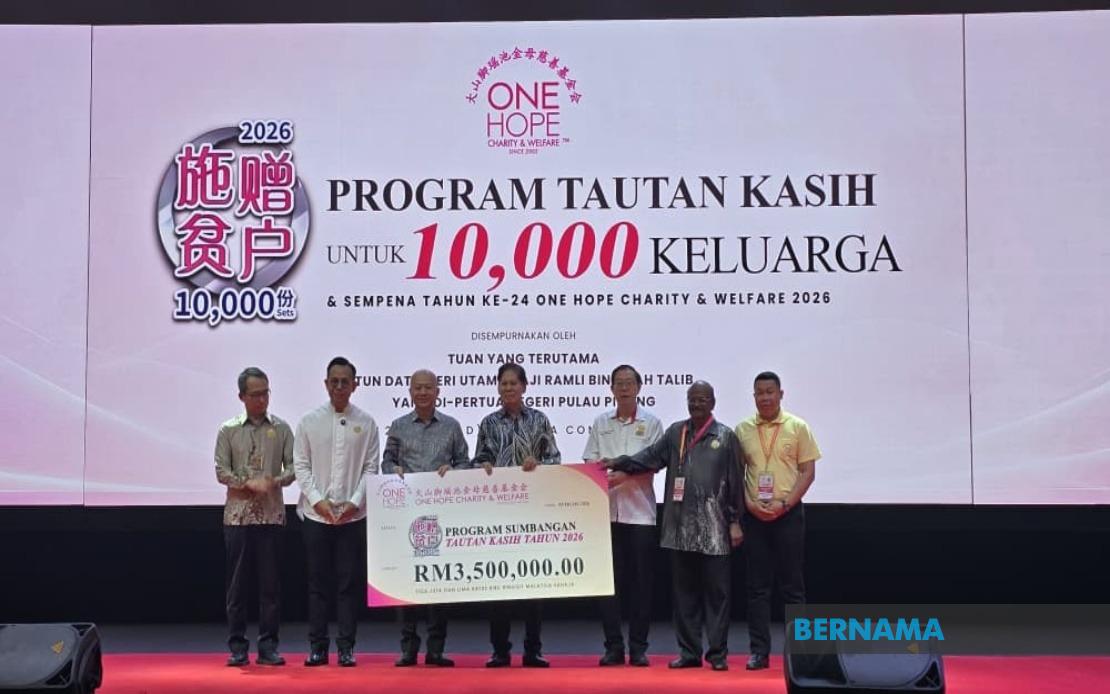
Minister of Entrepreneur Development and Cooperatives Steven Sim Chee Keong has called for sustained investment in welfare policies to ensure disadvantaged Malaysians receive adequate support during periods of hardship. Speaking at an event in Butterworth on August 9, Sim stressed that advancing a state's economic progress must run parallel with protecting citizen wellbeing, acknowledging that life circumstances vary significantly across the population. His remarks underscore growing recognition within government circles that social safety nets form an integral component of inclusive development, particularly as economic pressures mount on low-income households across the country.
The minister articulated a vision of prosperity that extends beyond GDP growth metrics, emphasising that true national advancement requires simultaneous attention to social welfare mechanisms. Drawing connections between economic development and social stability, Sim argued that periods of financial distress or personal misfortune demand responsive government frameworks. For Penang specifically, he noted that welfare provisions must be robust enough to cushion residents against unexpected shocks, whether medical emergencies, job loss, or other crises. This framing reflects broader acknowledgment that vulnerability transcends geographic boundaries within Malaysia, affecting families in both urban and rural settings across all states.
Sim highlighted welfare's crucial role in fostering social cohesion across Malaysia's diverse population. He positioned comprehensive support systems as tools for strengthening unity among Malaysians of different racial and religious backgrounds, suggesting that inclusive welfare policies carry broader societal benefits beyond immediate material assistance. By emphasising universal social protection, the minister implicitly critiqued an approach that might restrict support along demographic lines. This perspective gains significance in the Malaysian context, where historically welfare access has sometimes reflected political or administrative inconsistencies. The emphasis on race and religion-neutral assistance represents an important normative statement about how social protection should function in a plural society.
One Hope Charity emerged as the centrepiece of Sim's remarks, exemplifying how private sector engagement can complement government welfare efforts. The organisation's journey from a modest Bukit Mertajam initiative to one of Penang and Malaysia's foremost welfare providers demonstrates the potential for civil society organisations to scale social impact significantly. With annual distributions exceeding RM20 million, One Hope Charity operates at a scale comparable to some government programmes, yet functions with the agility and responsiveness often associated with non-governmental entities. The organisation's growth trajectory suggests substantial demand for welfare services within Malaysian communities, raising questions about whether current government provisions adequately address vulnerability levels across the country.
The charity's operational model reveals important insights about contemporary welfare delivery in Malaysia. During 2025's assistance cycle, One Hope Charity supported more than 10,000 families through a combined approach of essential goods packages and direct cash transfers. Each family received approximately RM320 in non-cash assistance—food items and daily necessities—supplemented with RM200 in cash grants offering recipients autonomy in addressing their specific needs. This dual mechanism reflects evidence-based welfare practice, combining in-kind support that ensures basic needs are met with unrestricted cash transfers that acknowledge beneficiaries' capacity to identify their own priorities. The flexibility embedded in this approach stands as a potential model for government programmes seeking to enhance welfare effectiveness.
Between 2021 and 2025, One Hope Charity channelled over RM100 million toward healthcare and community welfare initiatives. This five-year commitment encompassed direct patient medical treatment assistance, equipment donations to government hospitals, and comprehensive welfare programming. The healthcare focus indicates that medical crises represent a significant vulnerability vector in Malaysian communities, often triggering financial catastrophe for families lacking adequate insurance or savings. By directing substantial resources toward medical assistance, One Hope Charity addresses a gap in Malaysia's healthcare safety net—informal sector workers, gig economy participants, and self-employed individuals frequently lack employment-based medical coverage, creating exposure to crushing debt during health emergencies.
Looking ahead to the organisation's 25th anniversary in 2026, One Hope Charity intends to launch welfare initiatives valued at approximately RM30 million, including expansion of its Medical Assistance Programme. This commitment signals confidence in continued community need for welfare services and suggests the organisation views current demand as sustainable or potentially increasing. The planned expansion indicates that existing provision levels remain insufficient to meet identified need, whether among current beneficiaries or newly vulnerable populations. For Malaysian policymakers, such signals from experienced welfare practitioners offer valuable insight into structural gaps in existing social protection architecture.
The presence of Penang Governor Tun Ramli Ngah Talib and his wife, Toh Puan Raja Noora Ashikin Raja Abdullah, at the event underscored governmental recognition of One Hope Charity's social significance. This official representation acknowledged the organisation's legitimacy and importance within Penang's welfare ecosystem, effectively endorsing its work through high-level presence. The participation reflects how welfare provision in Malaysia increasingly relies on formal collaboration between government actors and established civil society organisations, blurring traditional boundaries between public and private responsibility for social protection.
Sim's broader message positioned welfare strengthening not as discretionary enhancement but as essential infrastructure for social stability. By framing welfare policy as inherent to national progress rather than ancillary to economic development, he articulated an economic case for social spending—that vulnerable populations require protection to remain economically productive and socially stable. This reasoning counters austerity arguments that deprioritise welfare during fiscal constraints, instead suggesting welfare expansion generates returns through reduced poverty-related dysfunction, improved health outcomes, and enhanced consumer spending capacity among low-income households.
For Malaysian readers across income levels, these discussions carry direct relevance. Welfare policy design affects not only current beneficiaries but establishes social insurance principles that potentially protect any citizen facing future hardship. The minister's emphasis on comprehensive, inclusive welfare frameworks suggests policy direction favoring universal or near-universal programmes over narrowly targeted assistance. Such approaches historically demonstrate better political sustainability and more efficient service delivery than means-tested systems requiring complex eligibility verification. The One Hope Charity example demonstrates that when welfare systems function effectively, they can serve tens of thousands annually while building social solidarity across demographic boundaries.
Looking forward, the challenge for Malaysian policymakers involves matching rhetoric about welfare expansion with concrete budgetary allocations and programme design. Government welfare expenditure must increase sufficiently to address identified gaps evidenced by organisations like One Hope Charity's consistent expansion. Simultaneously, welfare programmes require continuous evaluation and adaptation to address emerging vulnerability patterns—whether from technological disruption, climate-related shocks, or demographic shifts. The minister's emphasis on welfare as central to national progress creates political opening for such investments, though translating this commitment into sustained funding and effective implementation remains the ongoing policy challenge facing Malaysia's development agenda.

