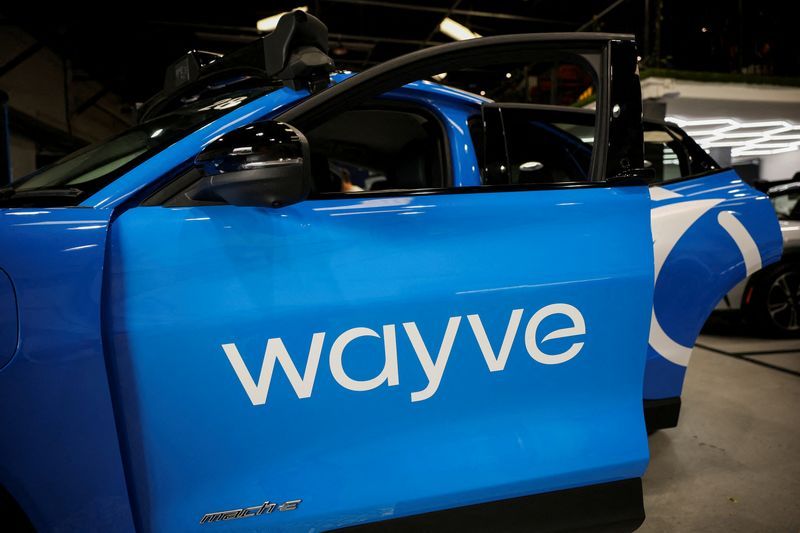
London-based autonomous-driving startup Wayve is capitalizing on a surge of investor enthusiasm for self-driving technologies. The company has amassed $2.8 billion in backing from a constellation of prominent supporters spanning both technology and automotive industries, including Nvidia, Mercedes-Benz, and Nissan. Most recently, Wayve announced a partnership with Stellantis to integrate its driving system into Jeep-branded robotaxis destined for Uber's ride-hailing platform, signaling accelerating momentum toward commercial deployment.
Wayve's technological approach hinges on end-to-end machine learning, an artificial-intelligence methodology that processes sensor data and translates it directly into driving commands—essentially mirroring how human drivers perceive and react to road conditions in real time. This contrasts sharply with the conventional autonomous-driving framework, which combines algorithmic rules with high-definition mapping to preset vehicle responses across various scenarios. The distinction matters considerably because it fundamentally reshapes how vehicles make decisions and, consequently, how engineers evaluate their safety.
The company's strategy parallels Tesla's established methodology, which shifted toward end-to-end learning several years ago. Yet Wayve's implementation differs meaningfully: while Tesla relies exclusively on camera sensors, Wayve's architecture accommodates diverse sensor suites and AI processors. This flexibility opens substantial licensing opportunities. Chief Executive Alex Kendall, a 33-year-old New Zealander who founded the company in 2017 following his Cambridge doctorate in AI deep learning, envisions universal applicability. He articulated this ambition during a demonstration in California's Bay Area, where a Ford Mustang Mach-E equipped with Wayve's autonomous system navigated local neighborhoods independently.
The autonomous-driving sector's trajectory has been marked by repeated disappointments and overstated timelines, but recent developments have rekindled confidence. Alphabet's Waymo expansion over the past two years has proven particularly influential—the company now provides paid passenger services across approximately a dozen cities following more than a decade of intensive development. This tangible progress has persuaded fresh capital to flow toward competitors pursuing alternative technological paths, fundamentally altering investor sentiment across the industry.
End-to-end artificial intelligence represents a striking evolution from obscurity. A decade ago, only a handful of academic researchers, including Kendall, seriously investigated this approach. Contemporary autonomous-driving developers now routinely incorporate at least partial end-to-end learning components into their systems, reflecting the methodology's growing credibility. Nevertheless, the transition raises an uncomfortable technical challenge: these AI-driven systems operate through opaque decision-making processes that resist straightforward interpretation. Engineers struggle to explain precisely why a vehicle selected a particular driving trajectory, a limitation absent from earlier systems relying on transparent software coding.
Wayve addresses this opacity partly through generating safety maps that visualize traffic scenarios and identify permissible vehicle paths. The company's technical leadership maintains that traditional programming-intensive safety architectures actually compromise autonomy system performance in unfamiliar circumstances. Vijay Badrinarayanan, Wayve's vice president of artificial intelligence, explained this reasoning to international media, noting that pre-programmed safety logic becomes brittle when encountering genuinely unexpected situations. Human drivers, he observed, maintain safety precisely because they adjust conservatively when confronting unknown conditions rather than relying on preset responses.
Waymo, despite its pioneering end-to-end model, continues employing conventional rule-based approaches through software engineering and cartographic data—measures the company deems essential for guaranteeing operational safety at scale. This hedging strategy suggests persistent uncertainty about whether end-to-end systems alone can deliver the reliability demanded for widespread deployment. The tension between technological confidence and engineering caution pervades the industry, with manufacturers balancing enthusiasm against responsibility.
Nissan exemplifies this cautious approach. The Japanese automaker's chief technology officer, Eiichi Akashi, characterized Wayve's system as exceptionally sophisticated while simultaneously acknowledging fundamental opacity. Nissan plans deploying the technology in Japan's Elgrand people-mover van by March 2028 but is methodically evaluating the system's safety paradigm beforehand. Akashi's ambivalence—praising technical sophistication while expressing discomfort with interpretability—captures the broader industry tension between recognition that end-to-end AI represents genuine advancement and concern about inability to fully comprehend how it reaches driving decisions.
Wayve's business model depends critically on rapid geographic expansion without requiring exhaustive preliminary infrastructure development. Kendall contends that because the system learns to navigate novel environments through observational experience rather than manual coding and mapping, the company can enter new markets substantially faster than competitors bound by traditional approaches. Wayve reports successfully testing its AI system across hundreds of cities worldwide without pre-deployment mapping exercises. This scalability advantage, if validated commercially, would fundamentally reshape competitive dynamics within the autonomous-driving industry.
Academic perspectives offer qualified support tempered with realistic skepticism. Siddartha Khastgir, a University of Warwick professor specializing in autonomous-system safety, acknowledged that end-to-end models should facilitate faster commercial development and deployment than conventional methodologies. However, he declined declaring either approach inherently safer, suggesting both frameworks present distinct advantages and liabilities. Phil Koopman, a Carnegie Mellon University computer-engineering specialist and autonomous-technology researcher, noted that Wayve's methodology for managing unexpected traffic scenarios represents merely one viable approach among several potential solutions. Even so, Koopman assessed that deploying safe autonomous systems comprehensively across American roads will require at least another decade alongside substantial technological breakthroughs yet to materialize.
The competitive landscape increasingly reflects bifurcated technological philosophies. Waymo's strategy of combining end-to-end and conventional approaches suggests the industry may converge toward hybrid systems incorporating both methodologies' strengths. Wayve's willingness to license technology across multiple automakers and global markets indicates a different competitive strategy—rapid proliferation through partnerships rather than vertical integration. For Malaysian and Southeast Asian automotive manufacturers observing these developments, the implications are profound: whichever approach ultimately proves superior will significantly influence regional vehicle production capabilities, safety standards, and the pace of autonomous-technology adoption across Asian markets.

