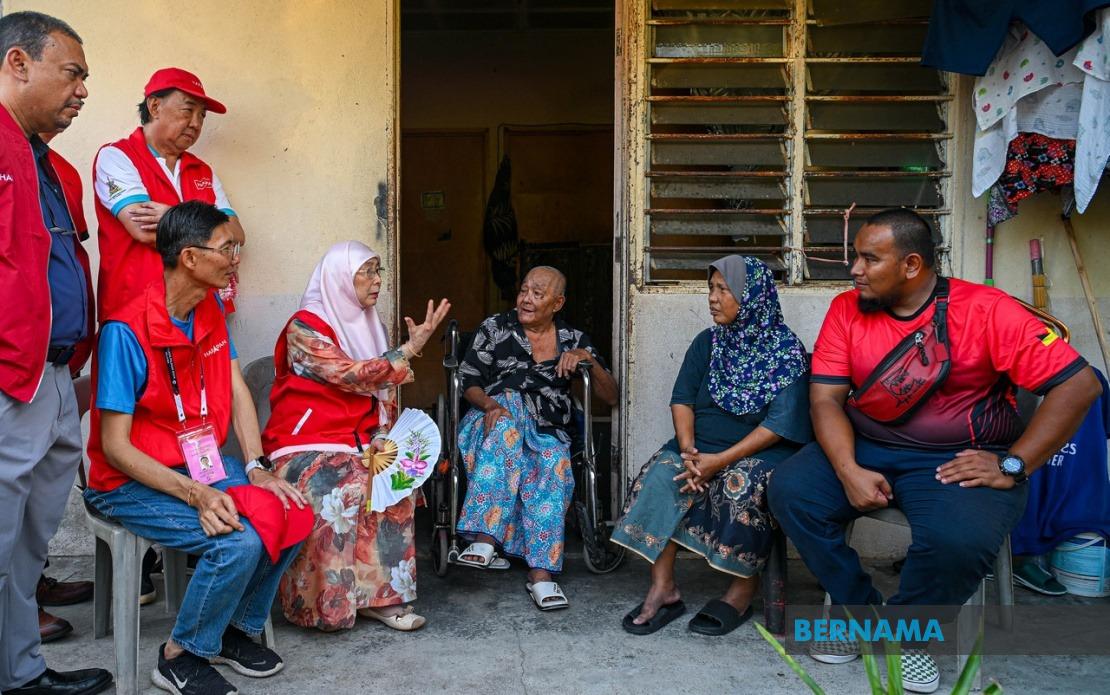
Wan Azizah spent approximately 20 minutes at the home of Zaiton Hasan, 60, and Paimin Sapari, 71, in the Chuah constituency, accompanied by Pakatan Harapan's candidate Datuk Yew Boon Lye. The visit focused on understanding the circumstances facing the elderly couple and addressing their immediate concerns. Both residents contend with chronic health ailments—Zaiton manages high blood pressure while Paimin struggles with diabetes—complicating their ability to maintain financial stability and independence in their advancing years.
The couple expressed profound appreciation for the unscheduled visit, viewing it as an unusual gesture from a senior political figure. Zaiton, speaking to journalists following the meeting, described the encounter as surreal and moving. She noted that this represented the first occasion a prominent leader had visited their residence, underscoring how isolated some constituents can feel from the political establishment despite living in contested electoral districts. The warmth and attentiveness displayed during the interaction appeared to have left a lasting impression on both residents, who emphasised the apparent genuine concern demonstrated by their visitors.
Beyond the social engagement, the visit yielded tangible support for the household. Paimin received a wheelchair donated by the Port Dickson People's Spirit Welfare Association, a charitable contribution that addresses one of his most pressing mobility limitations. For an elderly individual managing diabetes, reduced mobility compounds health risks and restricts access to medical appointments, markets, and social connection. The donation thus represents not merely a gesture but a practical intervention that could materially improve his quality of life and reduce dependency on family members for movement within and outside the home.
The timing of this visit carries political significance in the context of the 16th Negeri Sembilan State Election campaign. Datuk Yew Boon Lye is contesting the Chuah seat against Pau Jeou Ching, the Perikatan Nasional candidate, in what election officials have designated a direct two-way contest. Such door-to-door engagements, particularly those targeting vulnerable voter segments, have become central to electoral strategies across Malaysian politics. By highlighting the plight of elderly constituents facing compounded disadvantages, Pakatan Harapan frames its candidacy around direct responsiveness to marginalised communities within the constituency.
The Negeri Sembilan state election represents a significant political moment for the coalition, as perceptions of grassroots engagement can influence not only individual races but also overall voter confidence in a party's commitment to constituency-level governance. Rural and semi-rural constituencies like Chuah often feature concentrations of elderly voters whose concerns—healthcare access, pension adequacy, and dignity in aging—frequently diverge from urban political discourse. When major party figures directly encounter these constituents, it can recalibrate their sense of political representation, regardless of eventual voting outcomes.
Electoral logistics for Negeri Sembilan have been formally scheduled, with the Election Commission establishing early voting for July 28 and designating August 1 as polling day. This compressed timeframe means campaign activities intensify across all constituencies, with candidates attempting to establish maximum visibility and connection with electors. Visits to vulnerable households serve multiple strategic objectives: they generate human-interest narratives amenable to media coverage, they demonstrate party capacity to mobilise resources for constituent needs, and they counter perceptions of remoteness that opposition parties may attempt to cultivate.
The experience of Zaiton and Paimin reflects broader challenges confronting Malaysia's elderly population. With an aging demographic structure and rising healthcare costs, many retirees find themselves navigating inadequate pension schemes while managing chronic conditions requiring continuous medical intervention. The couple's situation—managing multiple health conditions on presumably limited fixed income—exemplifies patterns observed across urban and semi-urban Malaysian constituencies where real-estate values have appreciated faster than wage growth, meaning long-time residents struggle with housing costs despite owning property.
For Pakatan Harapan's campaign in Chuah, such visits substantiate claims of responsiveness to constituent needs and differentiate its approach from competitors. The Perikatan Nasional challenge from Pau Jeou Ching will likely highlight alternative visions of governance and resource allocation. The contrast between parties will turn partly on demonstrated capacity to assist vulnerable groups, making each candidate's track record and perceived sincerity crucial to voter judgement.
The wheelchair donation illustrates how campaign activities can coincide with genuine welfare provision. Charitable organisations like the Port Dickson People's Spirit Welfare Association operate across constituencies addressing specific needs, and strategic coordination between political campaigns and social welfare entities can amplify impact. Whether such coordination should be scrutinised or celebrated reflects ongoing debates about proper boundaries between electoral activity and social service provision in Malaysian politics.
Constituents in Chuah will ultimately evaluate both candidates on their demonstrated commitment to addressing real hardship rather than merely acknowledging it during campaign periods. Zaiton's comment about feeling touched by a major leader's attention suggests that constituent expectations remain relatively modest—many appear to value recognition of their difficulties as much as material solutions. This reflects a potential disconnect between what politicians can feasibly deliver and what constituents hope to experience from engagement with elected representatives.
The 16th Negeri Sembilan State Election will unfold against a backdrop of national political uncertainties and shifting coalition dynamics. Constituency-level outcomes will partly reflect local personality dynamics, campaign intensity, and constituent responsiveness to different parties' messaging. Victories or defeats in contests like Chuah will reverberate through Negeri Sembilan's coalition calculations, potentially affecting state government composition and parliamentary balance more broadly.

