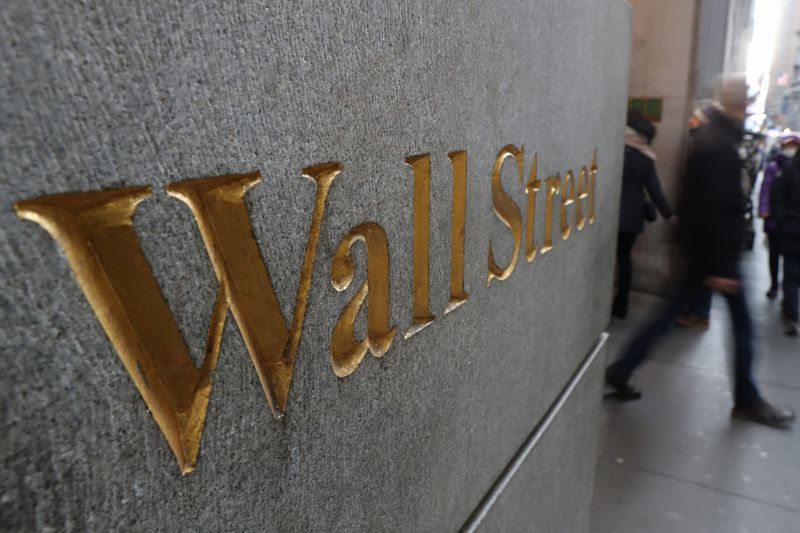
Wall Street opened August with considerable momentum, propelling the Dow Jones Industrial Average to an intraday record high as investors responded to signals of reduced geopolitical tension in the Middle East. The benchmark index climbed 693.38 points, or 1.32%, to finish at 53,178.41, whilst the S&P 500 advanced 110.78 points to 7,600.50 and the technology-heavy Nasdaq Composite surged 540.04 points, representing a 2.13% gain. The rally underscored the market's sensitivity to energy prices and yield movements, both of which retreated sharply on news suggesting diplomatic channels between Washington and Tehran might reopen.
The catalyst for the market's strength came after U.S. President Donald Trump indicated on Sunday that negotiations with Iran regarding the Strait of Hormuz would commence the following day. Although Tehran later disputed whether such talks had been formally scheduled, the mere prospect of dialogue proved sufficient to reverse some of the risk-aversion that has characterised markets through much of July. Crude oil prices declined roughly 5% on the announcement, reflecting investor appetite to move away from recession hedges and back toward risk assets. This reprieve in energy costs rippled through fixed income markets, pushing yields on the 10-year Treasury lower despite the typically offsetting pressure from strong economic data.
The interplay between oil prices, bond yields, and equity valuations has become the dominant theme guiding daily market movements. Art Hogan, chief market strategist at B. Riley Wealth in Boston, captured this dynamic succinctly, noting that market participants now instinctively scan commodity prices and yield levels each morning to gauge the tone for stocks. The observation underscores how macroeconomic crosscurrents—geopolitical risk, Federal Reserve policy expectations, and growth concerns—have overshadowed the typical focus on company-specific fundamentals that usually dominates earnings season. Hogan remarked that normally the reporting period offers respite from macro distractions, but this quarter the anxiety persists regardless of corporate results.
Yet earnings themselves have delivered genuinely impressive performance. Through Friday, 304 companies within the S&P 500 had disclosed results, with earnings expanding at a 29.3% rate and 85.2% of reporters beating consensus analyst expectations. This represents robust execution by corporate management and suggests underlying economic health remains intact despite broader volatility. The strength has been particularly pronounced in communication services, which led the 11 major S&P sectors with a 4.3% gain, buoyed by powerful performances from Meta Platforms and Alphabet. Energy stocks, conversely, suffered the steepest losses with a 1.2% decline, a predictable casualty of falling oil prices that reduce profit margins across the sector.
Technology and artificial intelligence-related equities have commanded particular investor attention. Amazon's share price climbed 4.6% following the firm's latest quarterly results, pushing its market capitalisation above the $3 trillion threshold for the first time in company history. SpaceX, the aerospace manufacturer that recently went public, surged 5.6% in anticipation of reporting inaugural quarterly results as a listed entity on Tuesday. Notably, SpaceX shares have traded below their $135 initial public offering price for nearly three weeks following the mid-June debut, suggesting investors have reassessed valuations downward. Several other companies with significant artificial intelligence exposure, including Advanced Micro Devices and storage providers SanDisk and Western Digital, are scheduled to announce earnings this week, with markets closely monitoring whether they can sustain the momentum evident in the broader technology cohort.
Mergers and acquisitions activity continued to provide a secondary narrative thread through the session. Bristol Myers Squibb edged up just 0.2% despite reports of preliminary merger discussions with AstraZeneca, a combination that could create one of the world's largest pharmaceutical manufacturers with an enterprise value approaching $400 billion. The muted reaction suggests investors harbour questions about deal valuations or strategic rationale. Conversely, Marriott International plummeted 7% after the hospitality operator guided investors toward third-quarter profit below Wall Street expectations, demonstrating that even well-established companies face investor scepticism when forward guidance disappoints.
Federal Reserve policy remains a constant undercurrent to market calculations. New York Federal Reserve President John Williams offered reassuring comments about the trajectory of inflation, suggesting that price pressures are likely to ease gradually over coming months. However, a recent report that Federal Reserve Chair Kevin Warsh has floated the possibility of scheduling fewer rate-setting meetings throughout the year has created anxiety about reduced transparency surrounding monetary policy decisions. Markets currently assign a 64.5% probability to at least a 25 basis point rate increase at the September policy meeting, according to derivatives pricing tracked by the CME FedWatch tool, reflecting genuine uncertainty about the path forward.
The labour market will receive intense scrutiny throughout the coming days, culminating in the government's employment report due Friday. This data holds particular significance for Fed rate-setting deliberations, as the central bank remains acutely focused on labour market health alongside inflation dynamics. Market breadth metrics suggested widespread participation in the rally, with advancing issues outpacing declining ones by 2.62-to-1 on the New York Stock Exchange and by a wider 3.01-to-1 ratio on the Nasdaq. The S&P 500 posted 15 new 52-week highs against just one new low, whilst the Nasdaq recorded 121 fresh highs alongside 96 new lows, indicating that whilst gains were broadly distributed, some weakness persisted in specific quarters.
For Malaysian and Southeast Asian investors and business leaders, the movements in US equity markets carry significance beyond Wall Street. The region's central banks closely track Federal Reserve policy and US interest rates when calibrating their own monetary responses. Multinational corporations headquartered in Southeast Asia that derive earnings from American operations face implications from currency movements tied to yield differentials. Furthermore, technology companies throughout the region that supply components to Silicon Valley giants benefit from buoyant US equity markets that support technology sector investment spending. The easing of Iran tensions also carries implications for energy prices and regional shipping costs through the Strait of Hormuz, a critical maritime chokepoint for Asian trade flows.
Trade volumes during the session reached 19.36 billion shares across US exchanges, modestly exceeding the 17.66 billion share average of the preceding 20 trading days. The additional activity reflected heightened investor engagement with earnings announcements and economic data, alongside the shifting geopolitical backdrop. As markets prepare for another active week featuring labour market information and additional corporate disclosures, participants appear to be moderating near-term pessimism even as longer-term uncertainties about interest rate trajectories and the durability of corporate earnings expansion persist.

