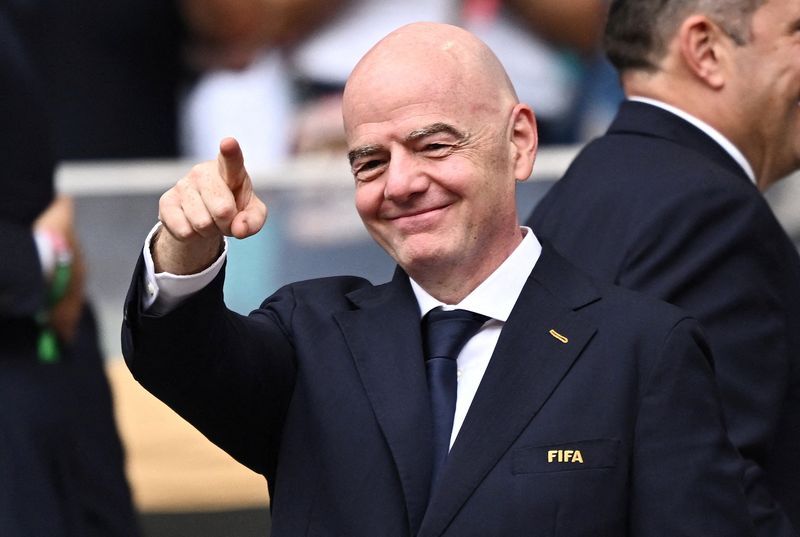
The Football Association of Wales has formally withdrawn its endorsement of FIFA President Gianni Infantino's candidacy for the 2027-2031 term, marking a significant blow to the Swiss administrator's previously assured path to re-election. Wales becomes the first national federation to publicly rescind its support in response to Infantino's handling of a failed initiative to generate up to $4.2 billion from private investors by selling roughly a fifth stake in a newly created entity that would oversee major competitions including the FIFA World Cup.
The ambitious commercialisation scheme, which would have fundamentally altered FIFA's ownership structure and revenue streams, collapsed on Friday following sustained opposition from multiple key stakeholders within the football governance ecosystem. The plan's withdrawal has triggered a broader reckoning within world football's governing body, with serious questions now surfacing about Infantino's judgment and his fitness to lead the organisation for another term.
The Welsh FA's statement criticised multiple aspects of Infantino's leadership, citing "failures in good governance, processes, leadership, values, stakeholder management, communications and sound judgement." The federation declared that the FIFA president had forfeited its confidence to continue directing global football administration. The withdrawal represents a pivotal moment, as it signals that traditional support structures may no longer hold firm.
Infantino's position has deteriorated sharply in recent days as major confederations have moved to distance themselves from his administration. Both UEFA, which led the opposition to the commercial proposal, and CONCACAF issued statements on Saturday indicating they had lost confidence in his leadership. UEFA's response has been particularly forceful, having actively championed the scrapping of the stake sale initiative and sending a document preservation order to FIFA—a procedural mechanism used to prevent destruction of communications and records when litigation may be anticipated.
The timing of this crisis carries significant consequences for Infantino's trajectory. After taking the FIFA presidency in 2016 from his controversial predecessor Sepp Blatter, Infantino had consolidated remarkable influence within the organisation. He secured re-election unopposed in two consecutive cycles, suggesting overwhelming support from member federations. His apparent dominance over global football governance appeared insurmountable, and his bid to extend his tenure through 2031 seemed positioned as a mere formality.
However, the failed privatisation scheme has exposed underlying tensions and dissatisfaction that remained dormant during his earlier terms. Industry experts and football analysts have pointed out that the backlash surrounding the stake proposal has revealed cracks in what seemed like monolithic support. Rather than the smooth re-election coronation initially anticipated, Infantino now faces a significantly more complex political landscape heading into the FIFA Congress scheduled for March in Morocco.
The proposed commercial arrangement would have transferred meaningful ownership rights to external investors, fundamentally restructuring how FIFA generates revenue from its most lucrative assets. The scale of the plan—potentially unlocking $4.2 billion—demonstrates the aggressive expansionism that characterised Infantino's approach to the organisation's financial strategy. Yet the very ambition that might have demonstrated visionary leadership now appears to have been perceived as overreach by federations concerned about FIFA's independence and long-term governance structures.
UEFA's decision to issue a document preservation order suggests the possibility of formal legal challenges ahead. This procedural step typically precedes litigation and indicates that Europe's football governing body is preparing to contest the failed initiative through legal channels. Such action would mark an unprecedented formal rupture between FIFA and one of its most powerful and influential continental confederations.
The withdrawal of support by Wales, though symbolically important as the first public defection, reflects broader sentiment among federations questioning Infantino's stewardship. As smaller federations observe how major confederations respond, additional withdrawals of support may follow, potentially snowballing into a significant political challenge for the FIFA president. The March Congress will now likely feature contested elections rather than the coronation that seemed certain mere weeks ago.
Infantino's path forward remains uncertain. While he has not yet faced formal challenger declarations, the erosion of support and loss of confidence from major governing bodies suggests his fourth-term ambitions will face genuine resistance. The scale of his previous electoral dominance—running unopposed—means he may have underestimated how controversial his commercial initiatives could prove among members who prioritise football's independence over financial expansion.
For Malaysian and Southeast Asian football stakeholders, the governance crisis within FIFA carries implications for regional participation in future World Cup hosting arrangements and competition structures. The outcome of the March Congress could reshape how FIFA engages with continental confederations and national federations on major commercial decisions, potentially affecting how Asian nations participate in strategic decision-making processes.
The failed stake sale attempt represents a watershed moment in FIFA's institutional evolution. Rather than positioning the organisation for financial modernisation, the plan triggered a reckoning about governance priorities and stakeholder rights. As Wales formalised its withdrawal and UEFA prepared potential legal action, Infantino confronted the realisation that even previously solid political foundations could crumble when faced with perceived institutional overreach.

