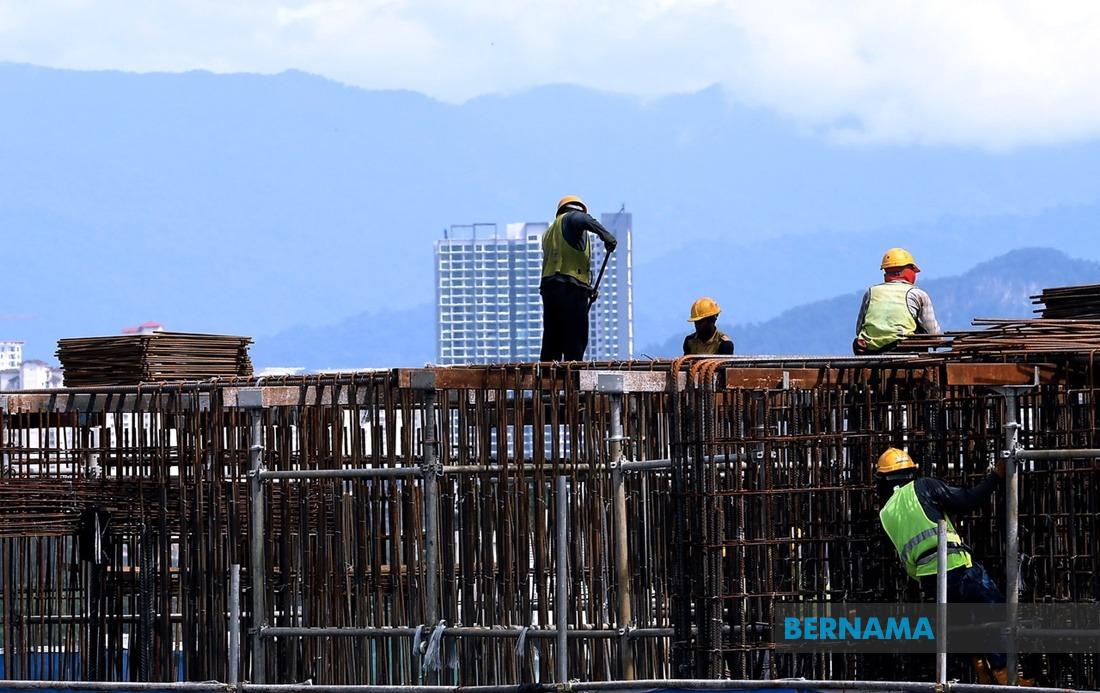
The Union Network International - Malaysia Labour Centre has emphasised the critical importance of the government's ongoing examination of the Minimum Wages Order 2024, arguing that the process must determine whether present wage levels remain appropriate for workers facing evolving economic circumstances. Datuk Mohamed Shafie BP Mammal, who heads the organisation, contends that this reassessment provides a timely opportunity to evaluate whether wages truly reflect current living conditions across the country.
At the heart of the union's position lies a fundamental distinction between nominal wage figures and actual purchasing power. Mammal stressed that wages are not simply abstract numbers appearing on a payslip; rather, they represent a worker's capacity to acquire goods and services necessary for survival and dignity. This distinction carries particular weight in Malaysia, where inflation and rising property costs have outpaced wage growth for many sectors over the past decade, creating a widening gap between earnings and essential expenses.
The cost of living has emerged as the central concern driving this wage review discussion. Housing, transportation, utilities, and food prices have climbed steadily, yet minimum wage rates have not kept pace uniformly across all sectors and regions. Workers earning statutory minimum wages often find themselves unable to cover rent, childcare, and healthcare simultaneously without accumulating debt or relying on government assistance. The union argues that periodic reassessment of wage levels represents a basic mechanism for maintaining the relevance and fairness of labour market policies.
Mammal articulated a vision of worker welfare that extends beyond subsistence into genuine security. He emphasised that workers should not be confined to a precarious existence where their earnings barely cover immediate needs while offering no cushion for education, unexpected medical costs, or retirement savings. This framing recontextualises the minimum wage debate from a technical economic question into a human welfare issue that affects millions of Malaysian families and, by extension, social stability.
The recognition of workers as fundamental contributors to national economic growth underpins the union's argument for prioritising their welfare in policy formulation. Malaysia's economy depends substantially on labour-intensive sectors including manufacturing, construction, hospitality, and agriculture. When workers lack sufficient income to maintain health, education, and financial security, productivity and economic potential suffer. The union suggests that governments and policymakers should view adequate wages not as a burden on business but as an investment in human capital and social cohesion.
Crucially, Mammal clarified that wage review does not automatically trigger wage increases, a distinction that may moderate employer concerns about the process. Instead, the review framework creates space for comprehensive analysis involving government bodies, employers, trade unions, and workers themselves to assess whether current rates remain suitable given factual changes in the economic environment. This tripartite approach, common in developed economies, allows for decisions grounded in evidence rather than ideology.
The union has signalled willingness to participate constructively in discussions with all relevant stakeholders, positioning organised labour as a partner in policy development rather than an obstinate adversary. This collaborative stance may facilitate more productive dialogue with employer associations and government agencies that sometimes view union wage demands with suspicion. By emphasising fairness, equity, and economic realities rather than simply pressing for higher numbers, the union attempts to shift the conversation toward substantive analysis of worker needs.
For Malaysian readers, this debate carries immediate implications. Workers in low-wage sectors, disproportionately including migrant workers and women, face genuine hardship when wages fail to cover basic necessities. Families split between multiple jobs, children withdrawn from school to contribute income, and housing insecurity remain common among minimum wage earners. The wage review represents one of few opportunities for systemic adjustment that might alleviate these conditions.
Regionally, Malaysia's wage structure influences competition and labour standards across Southeast Asia. If Malaysia maintains wages that consistently lag living costs, workers may migrate to neighbouring countries offering better conditions, while employers may increase reliance on migrant labour willing to accept lower compensation. Conversely, fair wage policies can enhance Malaysia's reputation as a responsible employer and support regional efforts to establish baseline labour standards.
The timing of this review reflects broader economic challenges facing the region. Post-pandemic inflation, currency fluctuations, and shifting global supply chains have created uncertainty that affects both workers and businesses. A wage review process that carefully evaluates current conditions rather than applying formulaic adjustments may produce more sustainable outcomes than reactive policies implemented in crisis periods. The union's emphasis on periodic reassessment suggests a preference for regular, evidence-based adjustments over dramatic interventions.
Implementing any wage changes will require careful calibration. Small businesses operating with tight margins may struggle with sudden increases, potentially leading to reduced hiring or automation. Conversely, maintaining inadequate wages creates false economy by externalising social costs onto government welfare systems and society generally. The review process should consider sector-specific variations, regional differences, and transitional support for affected businesses.

