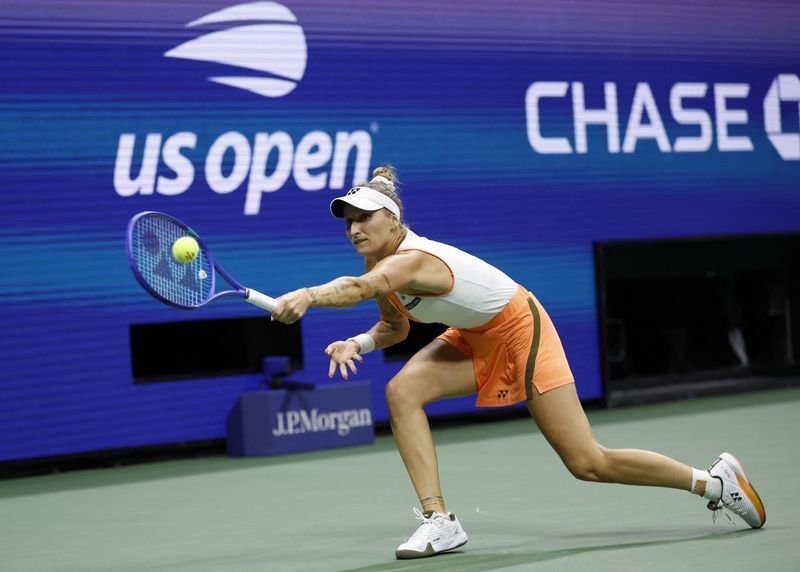
Former Wimbledon champion Marketa Vondrousova has escalated her battle against a four-year suspension by taking her case to the Court of Arbitration for Sport, the highest judicial authority in global athletics. The Czech player's appeal challenge marks a critical juncture in a saga that has effectively sidelined one of tennis's most accomplished recent performers and raised thorny questions about the balance between anti-doping protocols and athlete welfare.
Vondrousova received the suspension in June following a determination by the International Tennis Integrity Agency that she refused to provide a biological sample during an out-of-competition doping control visit to her residence in December. The incident has become emblematic of broader tensions within professional sports over testing procedures, athlete privacy rights, and mental health considerations during enforcement actions.
The 27-year-old athlete's response to her sanction revealed significant personal distress underlying the dispute. In statements made public in April, she disclosed that she had reached a psychological breaking point, citing months of accumulated physical and mental pressure that preceded the testing incident. When a doping control officer appeared at her home at 8:15 p.m. demanding immediate submission to testing, Vondrousova characterised the encounter as a serious violation of her privacy and domestic sanctuary, framing it as the culmination of mounting personal difficulties.
Crucially for her defence, a test administered just three days after the December 3 incident returned a negative result, providing direct biochemical evidence that she had not consumed any prohibited substances. This scientific finding forms a central pillar of her appeal, suggesting that her refusal to participate in the earlier test may have been driven by motivations other than concealment of doping violations. The negative result complicates the International Tennis Integrity Agency's position by demonstrating the absence of any actual doping infraction.
Despite her insistence on her clean record, Vondrousova has been rendered effectively inactive from competitive tennis for an extended period. She has not competed since withdrawing from the Adelaide International tournament in January, citing a shoulder injury that required medical management. This physical ailment compounded her difficulties during the period when the doping investigation was unfolding, creating a convergence of health crises that contextualised her mental health struggles.
Her competitive ranking has deteriorated dramatically during her absence from play. Once positioned at world number six, Vondrousova has plummeted to 153rd in the global rankings, a precipitous decline that reflects the accumulated effect of tournament withdrawals and extended inactivity. The ranking deterioration underscores how doping bans function as multi-dimensional penalties, extending beyond formal suspension periods to encompass loss of ranking points, sponsorship opportunities, and competitive momentum.
The Court of Arbitration for Sport confirmed receipt of Vondrousova's appeal filing on Tuesday but indicated that no hearing date has yet been scheduled. The absence of an imminent hearing suggests that resolution of her case may take considerable additional time, prolonging her enforced absence from professional competition. Her suspension is scheduled to conclude on June 21, 2030, when she will have reached age 30, meaning that even if her appeal succeeds, she will have sacrificed years at the peak of her athletic career.
Vondrousova's professional achievements prior to her current predicament establish her credentials as one of tennis's elite performers. She captured the 2023 Wimbledon championship, validating her status as a major tournament champion capable of winning on the sport's most prestigious stage. Her résumé also includes an appearance in the 2019 French Open final and a silver medal won at the Tokyo Olympics in 2021, demonstrating sustained excellence across multiple championship formats and surfaces.
The case carries implications extending beyond Vondrousova's individual circumstances. It exemplifies broader questions facing international sports about how strictly to enforce testing protocols when athletes claim extraordinary personal circumstances, and how seriously to weigh mental health considerations alongside anti-doping imperatives. The tension between rigorous testing enforcement and athlete protection has become increasingly prominent as sports organisations acknowledge mental health challenges more openly.
For Southeast Asian tennis observers and stakeholders, the Vondrousova situation resonates particularly given the region's emerging presence in professional tennis and growing awareness of athlete mental wellbeing issues. The case provides a real-world example of how international sporting governance structures operate and how athletes can challenge adverse decisions, offering instructive precedent for regional tennis development.
The appeal process at the Court of Arbitration for Sport represents Vondrousova's final realistic avenue for contesting her suspension, as few remaining formal mechanisms exist within international sports administration to overturn CAS decisions. The court's eventual ruling will establish important precedent regarding how testing refusals are adjudicated when athletes present credible evidence of negative tests and documented mental health distress.

