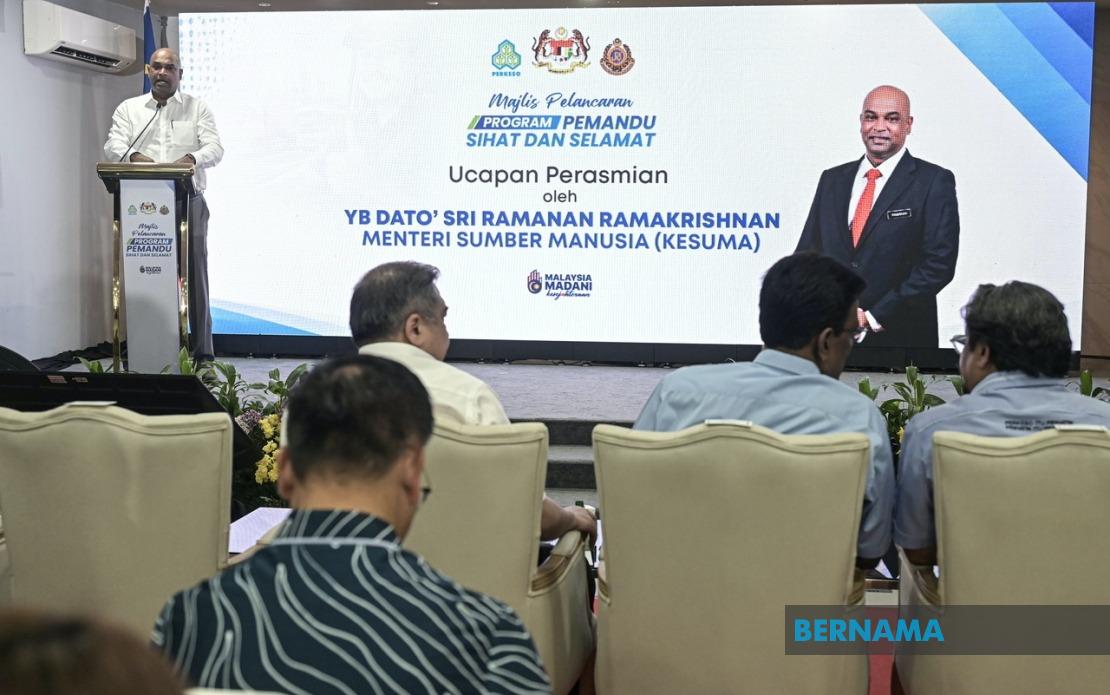
Professional drivers in Malaysia must now complete a comprehensive health evaluation before renewing their vocational licences under a new government initiative announced by Human Resources Minister Datuk Seri R. Ramanan. The Healthy and Safe Driver Programme, known locally as PSS, represents a significant shift in how the country monitors the fitness of commercial and professional drivers who form a critical backbone of the transport and logistics sectors.
The screening regime is currently available at 500 panel clinics distributed across the nation, with government plans to expand access to 3,000 facilities within the foreseeable future. This expansion will ensure that drivers in even remote areas can conveniently access testing without extensive travel, addressing potential equity concerns around the initial rollout. The comprehensive nature of the assessment reflects international best practices in occupational health and driver safety management.
The evaluation covers multiple dimensions of driver health and fitness. Physical examinations form the baseline, while vision and hearing assessments determine sensory capacity to operate vehicles safely. Critically, the programme includes screening for obstructive sleep apnea and other sleep-related disorders, conditions that transport authorities increasingly recognize as significant contributors to fatigue-related accidents. The screening also evaluates major physiological systems including cardiovascular, respiratory, and neurological function, providing a holistic picture of driver health status relevant to the demands of professional driving.
For drivers with relevant medical histories or risk factors, the programme includes glycated haemoglobin testing, which indicates average blood sugar levels and helps identify undiagnosed or poorly controlled diabetes. This tailored approach demonstrates evidence-based screening design, as diabetes substantially increases accident risk if not properly managed. The selective application of certain tests ensures efficiency while maintaining comprehensive coverage of the most significant health risks.
The cost structure reflects significant government investment in the initiative. Drivers pay only RM30 for the complete screening package, while the Social Security Organisation (Socso) subsidises the remaining RM55 per assessment. This represents a deliberate policy choice to minimize financial barriers to participation, acknowledging that affordability can otherwise deter drivers from seeking health evaluation. The government's willingness to bear two-thirds of costs signals the priority placed on road safety as a public health imperative.
Minister Ramanan framed the programme not as bureaucratic inconvenience but as a proactive health intervention mechanism. Early detection of medical conditions enables prompt treatment and management, potentially preventing acute health crises while drivers operate heavy or commercial vehicles. This preventive philosophy contrasts with reactive approaches that respond only to accidents or driver incapacity after incidents occur. The programme thus aims to intercede before unsafe driving situations develop.
The initiative emerges against a backdrop of alarming road fatality trends in Malaysia. In 2025, 115 workers died in road accidents, representing a concerning 22 percent increase from 94 fatalities the previous year. These figures encompass diverse professional driver categories including lorry, bus, van, and car operators, alongside motorcyclists who rely on roads for livelihood. The escalating toll suggests that existing safety measures have been insufficient to contain accident risks in the professional driving population.
Lorry drivers face disproportionate danger, accounting for 62 of the 115 work-related road deaths—roughly 54 percent of the total. This concentration reflects the inherent risks associated with operating heavy vehicles, longer driving hours, and exposure to challenging road conditions and traffic situations. The overrepresentation of lorry drivers in fatality statistics has prompted particular focus from transport safety authorities, with the PSS programme partly targeted at addressing risks within this vulnerable professional cohort.
The collaboration between the Ministry of Human Resources and the Ministry of Transport demonstrates inter-agency coordination on road safety objectives. By integrating health screening into the licence renewal process, authorities create a natural enforcement mechanism where drivers cannot simply ignore health assessments. The linkage to licence renewal provides tangible incentive structure for participation, as non-compliance becomes a direct impediment to continued professional practice.
For Malaysia's transport industry, the programme carries significant implications. Employers in logistics, delivery services, and public transport sectors may find their operational capabilities affected if substantial driver cohorts fail screening and require medical intervention or lose licence eligibility. Conversely, removal of unfit drivers from roads should reduce accident rates, with consequent benefits for insurance costs, cargo safety, and public confidence in transport services. The net economic impact will depend partly on how many drivers require medical attention versus outright exclusion.
The initiative reflects broader Southeast Asian trends toward stricter occupational health standards. Singapore and Thailand have implemented similar driver health assessment programmes with measurable reductions in fatality rates. Malaysia's adoption of this approach suggests regional convergence on evidence-based occupational safety practices. However, success depends heavily on programme implementation quality, clinic capacity, and whether identified health conditions receive adequate follow-up treatment and management.
For individual drivers, the screening requirement creates both obligation and opportunity. Professional operators gain access to preventive health assessment at subsidised cost, enabling early identification of manageable conditions. However, drivers with undiagnosed health issues may face licence suspension or medical restrictions affecting employment prospects. The transition period as drivers adjust to requirements and clinics process volumes will test government capacity to administer the programme smoothly without creating bottlenecks in licence renewals.
Longer-term success will require sustained funding for clinic network expansion, training of healthcare personnel in occupational health assessment, and integration with follow-up treatment systems. The programme's effectiveness cannot be measured solely by screening volumes but ultimately by whether identified health issues receive resolution and whether road fatality rates decline meaningfully. As the initiative matures and expands to the planned 3,000 clinics, data on safety outcomes and implementation challenges will provide crucial insights for other Southeast Asian nations considering similar approaches.

