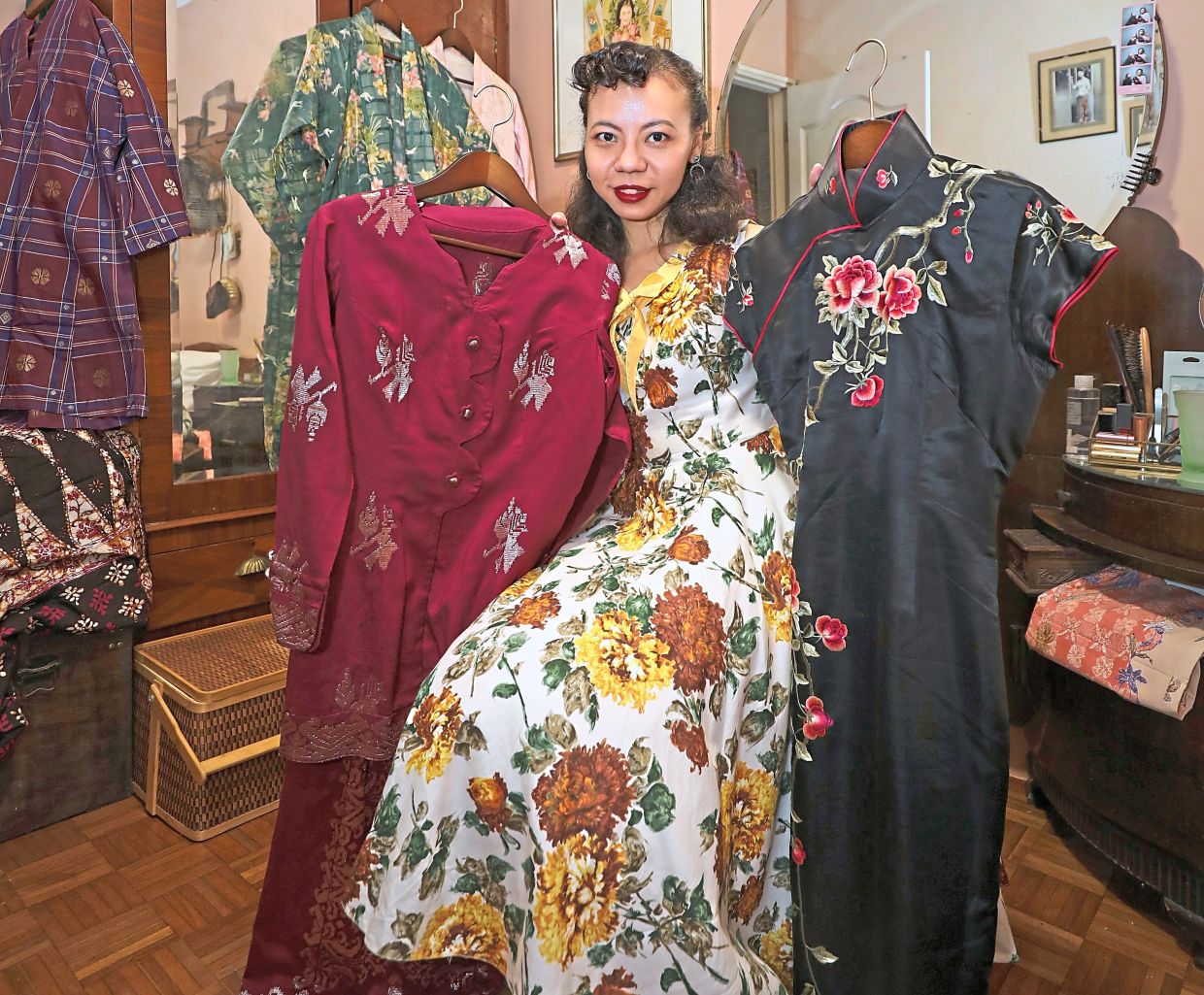
Suzanne Lim keeps a cherished photograph in her bedroom—a black and white image of her grandparents mid-dance in a 1950s hall, dressed impeccably and radiating an era's sophisticated style. That single image encapsulates the genesis of a passion that would eventually shape how the 33-year-old graphic designer relates to her own identity and Malaysia's cultural tapestry. The photograph represents more than nostalgia; it captures a moment when her grandparents embodied a particular vision of elegance and cultural expression that has since become her guiding inspiration.
Lim's early exposure to dance and formal movement created a natural pathway toward understanding garment construction and historical fashion. Her grandfather's enthusiasm for rock and roll and her grandmother's background as a taxi dancer created a household where movement, music, and dress were intimately connected. By age four, Lim was already learning to dance, eventually pursuing competitive Latin and ballroom training. This early kinetic engagement with performance inevitably drew her attention to the elaborate costumes that accompanied cultural performances, particularly during her secondary school years when membership in the cultural club exposed her to traditional Malay dance and its attendant sartorial traditions.
That adolescent exposure proved transformative. The intricate accessories and layered construction of traditional performance garments awakened something deeper than surface-level fashion interest. When Lim purchased her first piece of vintage Malaysian clothing years later, she discovered that what began as aesthetic appreciation had crystallized into genuine passion. Her growing collection now encompasses kebaya, cheongsam, batik pieces, and songket textiles—each garment functioning as a three-dimensional historical document. She began documenting these pieces on social media, positioning them against heritage backdrops and creating visual narratives about how Malaysians dressed across different eras and circumstances.
What distinguishes Lim's approach from casual vintage collecting is her explicit interest in the socioeconomic contexts embedded within historical textiles. She recognizes that fabric choices, construction techniques, and decorative elements reveal profound truths about the economic circumstances, social hierarchies, and cultural values of their time. A particularly elegant kebaya might signal access to fine imported materials; the prevalence of batik in a particular period reflects both artistic tradition and economic production; the complexity of songket work indicates available labour and valued aesthetic conventions. By studying these garments, she argues, one gains insight into lived experience that conventional historical texts often obscure.
Mohamad Alif Daniel Mohammad Nor, a 25-year-old recent graduate, approaches historical clothing through a different entry point but arrives at similar conclusions about its value as cultural evidence. His fascination began through familial storytelling—conversations with his late grandmother about Malaysian history—which eventually crystallized into an interest in historical uniforms and material culture from specific periods. His collecting journey commenced in his mid-teens with Japanese occupation-era currency notes, objects that physically embody a contested historical period. This initial interest expanded into participation with Persatuan Reka Ulang Sejarah (PRUS), where he became engaged in historical re-enactment work that demands meticulous attention to period authenticity.
For both collectors, historical garments function as bridges between abstract historical knowledge and embodied cultural understanding. Mohamad Alif articulates this compellingly, suggesting that engaging with historical clothing teaches lessons about culture, identity, and mentality that textbook learning cannot replicate. When one wears a garment designed and constructed for a particular historical moment, one gains intuitive understanding of how bodies moved, what was considered beautiful or appropriate, what resources were available, and how individuals positioned themselves within social hierarchies. This knowledge proves impossible to acquire through passive reading alone.
Lim recognizes a critical contemporary challenge: museums increasingly sit empty, and even digital access to heritage materials remains limited for many Malaysians who might lack reliable sources or institutional access. This reality has motivated her to position her social media platform as an alternative heritage archive. Rather than waiting for formal institutions to curate and present Malaysian cultural history, she has assumed the role of independent documentarian, attempting to provide accurate visual representations of how Malaysians dressed across generations. Her responsibility, as she frames it, extends beyond personal aesthetics to encompass educational obligation.
The tension between historical accuracy and creative reinterpretation shapes much of her curatorial practice. Lim readily acknowledges that not every outfit she wears achieves strict period authenticity, particularly when she applies contemporary styling to historical pieces. However, when authentic textiles and garments are available, she prioritizes fidelity to original construction and design. She views even simple acts of visibility—demonstrating that specific local textiles exist and were valued—as meaningful cultural work. Young Malaysians scrolling through social media might encounter visual evidence of heritage they had never considered, potentially sparking their own investigative curiosity.
Lim has observed a discernible uptick in vintage collecting among young Malaysians, a phenomenon she attributes partly to the psychological effects of digital saturation. In an age of immaterial digital interaction, physical objects possess particular allure. Vintage garments offer something tactile, something that demands engagement beyond passive consumption. For many young people, this collecting impulse reflects escapism from the frictionless but emotionally empty digital realm, a yearning for material authenticity and historical grounding. Yet she emphasizes that this revival need not involve slavish historical reproduction; instead, young collectors often synthesize historical inspiration with contemporary creativity, producing hybrid aesthetic practices.
Lim articulates an important caveat, however. Creative freedom in styling, she argues, requires structural constraints. Without maintaining fidelity to fundamental garment construction and cultural context, vintage fashion risks becoming superficial costume, potentially distorting cultural identity rather than reinforcing it. The boundary between respectful reinterpretation and appropriative misrepresentation remains porous and requires constant negotiation. This concern reflects broader debates about cultural ownership and representation, particularly acute in multicultural Malaysia where multiple communities maintain distinct sartorial traditions deserving protection from commercialization or careless aesthetic appropriation.
Mohamad Alif's experience illustrates the social dimensions of this heritage work. His social media documentation of traditional attire has created permission structures for others to wear cultural garments publicly, particularly individuals who previously felt stigmatized or ashamed of traditional dress in contemporary Malaysia. By modeling pride in heritage clothing, he has inadvertently catalyzed broader participation in cultural self-expression. This phenomenon suggests that individual creative acts carry cumulative social significance, potentially shifting collective attitudes toward Malaysian cultural identity.
The convergence of these individual practices points toward a significant cultural shift. Rather than treating heritage as something preserved in institutions or delegated to specialists, young Malaysians increasingly understand cultural continuity as an active personal practice. Vintage clothing becomes a vehicle for historical investigation, cultural connection, and identity formation—simultaneously aesthetic, educational, and political in its assertion that contemporary Malaysians have legitimate stake in their own historical narratives. As digital platforms democratize access to historical documentation, individuals like Lim and Mohamad Alif are rewriting the relationship between ordinary Malaysians and their cultural past.

