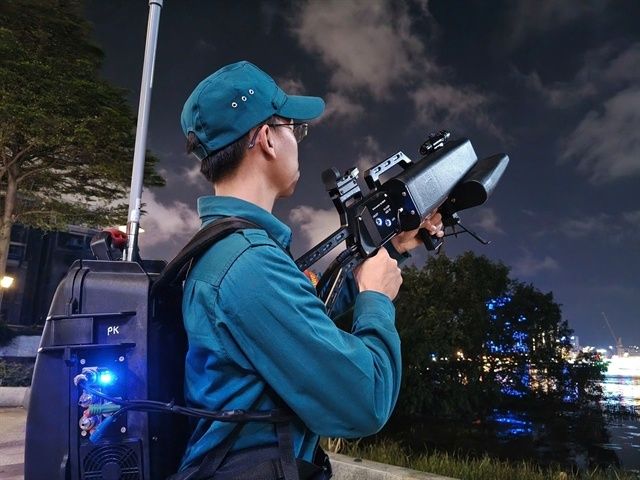
Vietnam is taking hardened action against unauthorised drone operations near airports, with officials issuing stern public warnings about the escalating threat to aviation safety and the mounting financial damage inflicted on carriers and airport operators. The Immigration Department, operating under the Ministry of Public Security, has flagged the surge in incidents as evidence of a critical vulnerability in the country's airspace security, prompting authorities to reinforce both deterrence and enforcement mechanisms against violators.
The scale of the problem has become impossible to ignore. Last year, Vietnamese airports recorded 34 separate cases of drones or other unauthorised aircraft breaching restricted airspace, a figure that intensified dramatically in the opening months of this year, with another 17 incidents occurring in just the first six months of 2026. Each of these incursions triggers a chain of operational disruptions, forcing air traffic controllers to activate emergency protocols that can halt takeoffs, suspend landings, or divert aircraft mid-flight to alternative airports, all to avert potential collisions.
The financial consequences of these disruptions have been staggering. Vietnam Airlines alone reported that drone-related incidents spanning just eight days between February 17 and 24 inflicted approximately VNĐ5.6 billion in losses—equivalent to roughly US$215,000—while simultaneously upending travel plans for approximately 9,200 passengers through cumulative delays and schedule changes. Danang International Airport quantified its direct losses from such incidents at over VNĐ10 billion, or approximately US$384,000, though airport officials cautioned that this figure represents only direct costs and does not account for the cascading indirect expenses absorbed by affiliated airlines, logistics operators, and travelling passengers whose itineraries were disrupted.
Beyond the economic ramifications lies a more sobering reality: the potential for catastrophic loss of life. Officials have emphasised that a drone collision during the critical phases of flight—particularly during takeoff or landing when aircraft are at their most vulnerable—could result in a serious aviation accident with fatal consequences for everyone aboard. This risk calculus explains why authorities are treating drone incursions not merely as operational inconveniences but as genuine threats to public safety.
Vietnam's regulatory framework governing drone operations is comprehensive, though compliance remains inconsistent. Under current law, drone owners are required to register their aircraft with authorities and obtain a flight permit before any operation commences. Critically, mere registration does not automatically confer the right to fly; instead, permits are issued with strict parameters delineating the geographical area, altitude, duration, and operational scope permitted for each individual flight. Operators who venture beyond these carefully defined boundaries face escalating consequences ranging from administrative penalties to civil liability or criminal prosecution, contingent upon the severity of the infraction.
The government's enforcement toolkit was significantly expanded through a decree issued in 2025, which empowers authorities to impose financial penalties, confiscate unmanned aircraft, and revoke an operator's flight privileges for violations. However, for the most egregious cases—those where a drone physically obstructs air traffic or poses a serious and imminent danger to aviation safety—the response transcends administrative remedies and enters the criminal justice system. Such prosecutions can result in fines coupled with non-custodial reform sentences, or prison terms extending up to 15 years in the most severe circumstances.
A particularly significant element of Vietnam's legal approach is that criminal liability does not require that an actual accident or collision occur. Rather, authorities can prosecute individuals for the mere act of flying a drone into an aircraft's approach path, takeoff corridor, or landing zone—situations that create a genuine and material risk of collision even if contact never materialises. Convictions for such dangerous conduct carry fines ranging from VNĐ10 million to VNĐ50 million, approximately US$384 to US$1,920, combined with either up to two years of non-custodial reform or imprisonment from three months to two years. Beyond these immediate penalties, convicted individuals face potential professional sanctions, including prohibition from holding certain occupational positions or offices for periods ranging from one to five years.
The Vietnamese approach to drone regulation reflects a recognition that aviation safety transcends the narrow interests of individual operators or even commercial entities; it is positioned as a matter of collective national concern. The Immigration Department has explicitly called upon all drone operators to strictly observe the temporal, geographical, and operational constraints specified in their individual permits, with particular emphasis on maintaining distance from airports and restricted airspace. Simultaneously, the department has launched a public awareness campaign appealing to citizens to report suspicious or unauthorised drone activity near airports directly to police, military personnel, or airport security personnel.
For Malaysia and other Southeast Asian nations grappling with similar drone-related aviation challenges, Vietnam's multi-tiered enforcement approach offers instructive lessons. The combination of robust administrative penalties, criminal liability with substantial prison terms, and professional disqualification creates a comprehensive disincentive structure targeting not only the operators themselves but also the broader ecosystem that might facilitate or encourage unauthorised flights. Vietnam's explicit messaging that aviation safety constitutes a shared societal responsibility underscores that the burden of protecting airspace cannot rest exclusively with government agencies; it requires active public participation in reporting and compliance.
The regulatory escalation in Vietnam also highlights the practical limitations of purely permissive regulatory frameworks. As drone technology becomes increasingly affordable and accessible to civilian populations across Southeast Asia, regulatory authorities face the challenge of balancing technological innovation and legitimate civilian applications against genuine security imperatives. Vietnam's solution—stringent pre-operation approval requirements, clear demarcation of permitted airspace, substantial penalties for violations, and criminal prosecution for the most dangerous conduct—represents a hardline approach that prioritises aviation safety over operational convenience or innovation promotion.
Looking forward, the success of Vietnam's crackdown will likely depend on consistent and visible enforcement. Regulatory frameworks possess deterrent value only insofar as potential violators believe that breaches will be detected and prosecuted. The country's authorities appear cognisant of this reality, having prominently highlighted both the legal penalties and the national security implications of drone incursions. Whether this intensified focus translates into a measurable reduction in incidents will become evident as subsequent incident data emerges, but the severity of the penalties and the frequency of official warnings suggest Vietnam is committed to treating drone intrusions as a priority aviation safety matter.

