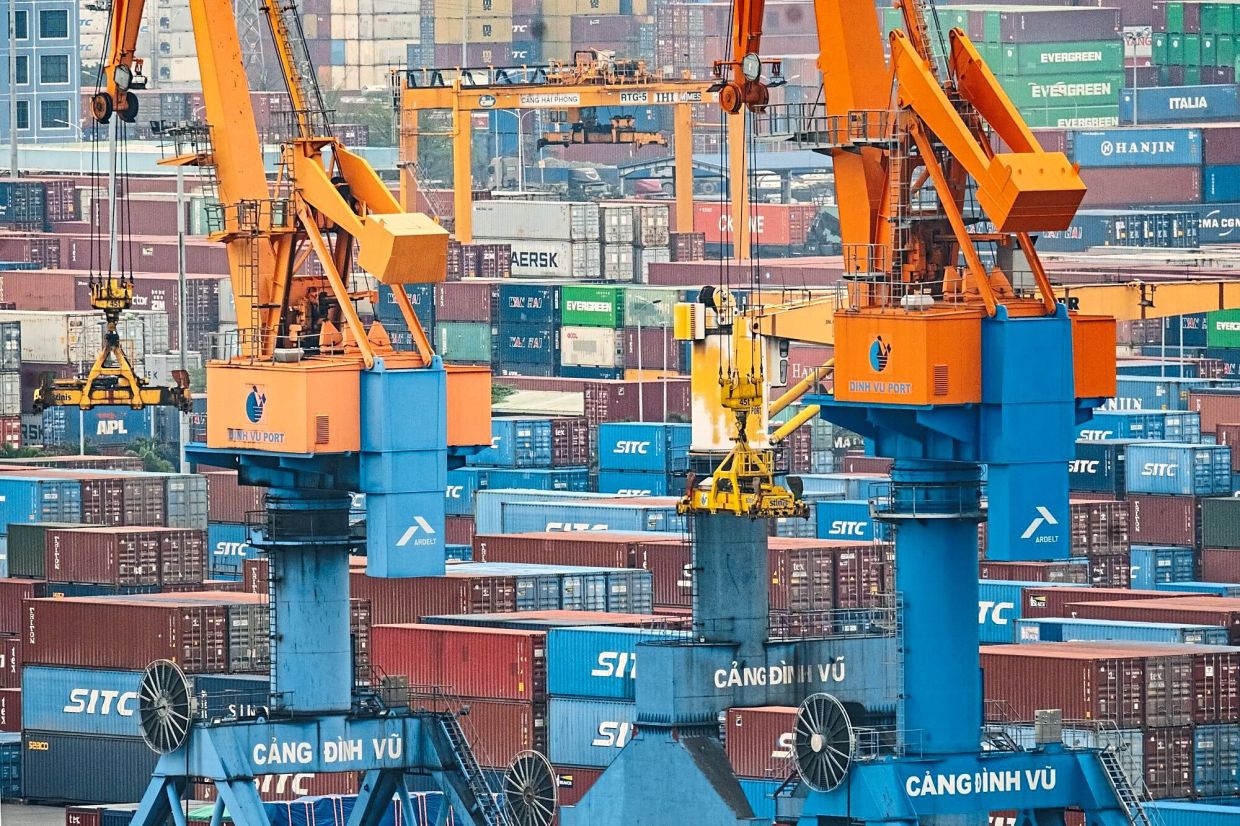
Vietnam is moving to break the impasse in its protracted trade negotiations with the United States, with Deputy Prime Minister Nguyen Van Thang indicating in Washington that Hanoi stands ready for substantive discussions aimed at resolving outstanding disputes between the two countries. The reassurance came during Thang's meeting with US Trade Representative Jamieson Greer, underscoring Hanoi's desire to push past months of deadlocked talks and secure a final agreement on mutual tariff reductions. Both sides have signalled urgency in concluding what would be a significant reciprocal trade pact, though deep differences remain on several contentious issues that have proven difficult to resolve.
Thang's visit to the American capital represents a high-level attempt to revitalise commerce and deepen investment flows into Vietnam's bustling manufacturing sector. The Deputy Prime Minister used the platform to underscore Vietnam's commitment to addressing long-standing American grievances, particularly regarding the movement of goods through Vietnamese ports and the country's ability to prevent illicit trade practices. By framing Hanoi's approach as open and collaborative rather than defensive, Vietnamese officials hope to create momentum that could accelerate the pace of formal negotiations and demonstrate political will on both sides to reach a workable compromise.
The negotiations have been proceeding in fits and starts since the two countries agreed on a framework in October, with various technical hurdles preventing the parties from translating that broad understanding into binding commitments on specific tariff schedules and trade rules. Central to the discord are concerns about transshipment—the practice of rerouting goods through intermediary countries to obscure their origin and evade tariffs—and other non-tariff barriers that the Trump administration views as obstacles to fair commerce. For Washington, Vietnam has become a flashpoint in efforts to prevent Chinese-manufactured products from circumventing American trade restrictions by transiting through Southeast Asian hubs before reaching US shores.
The scope of American scrutiny has widened considerably in recent months, with the Office of the US Trade Representative initiating three separate Section 301 investigations into Vietnamese trade practices. These concurrent probes examine different dimensions of the country's commercial behaviour, from its enforcement mechanisms against piracy and counterfeiting to its border control procedures. The investigations are not merely procedural formalities; they carry substantial consequences. If the findings, which are scheduled to be released in November, prove unfavourable, the administration possesses authority to impose punitive tariffs on Vietnamese exports, a prospect that would strike hard at Hanoi's export-dependent economy and disrupt supply chains serving major American corporations.
The urgency for Vietnam extends beyond trade relations. The country has emerged as a crucial manufacturing hub for American technology companies and consumer goods producers, with electronics and other products destined for US markets flowing through Vietnamese factories at record volumes. An escalation in trade tensions could force multinationals to reconsider their investment strategies and explore alternative production locations, potentially undermining Vietnam's competitive advantage and straining its growth prospects. This calculus explains why Hanoi is approaching negotiations from a position of diplomatic flexibility, attempting to signal accommodation on issues that earlier might have been treated as non-negotiable red lines.
In April, the Office of the US Trade Representative formally designated Vietnam a priority foreign country in its annual intellectual property report, citing persistent deficiencies in combating online piracy and counterfeit merchandise trafficking. The designation reflected American frustration with what Washington views as inadequate Vietnamese efforts to patrol its own borders and monitor the flow of illicit goods. More fundamentally, the report highlighted the vulnerability of Vietnam's regulatory infrastructure to exploitation by transnational criminal networks and unscrupulous traders seeking to disguise the true origin of their shipments. Addressing these concerns requires substantial institutional investment and sustained political commitment, not merely rhetorical pledges.
Vietnam's trade position relative to the United States has become increasingly asymmetrical, a fact that informs the current diplomatic tensions. In the first half of 2026, Vietnam registered the largest bilateral trade surplus of any country relative to the United States, exceeding the gaps generated by China, Mexico, and Taiwan. This lopsided arrangement has generated considerable political pressure on Capitol Hill, where lawmakers from both parties have grown impatient with what they perceive as structural unfairness in the relationship. The massive surplus reflects Vietnam's emergence as a preferred alternative to China for companies seeking to diversify their supply chains away from geopolitical risk, yet it simultaneously makes Vietnam a target for protectionist sentiment in Washington.
Paradoxically, much of Vietnam's export boom relies on imported inputs from China. As Vietnamese manufacturers have ramped up production of electronics and other goods for American consumers, their reliance on Chinese components and raw materials has intensified substantially. This dependency creates a complex dynamic where Vietnam's trade surplus with the United States coexists with a significant deficit with China, a reality that complicates policy responses. The Trump administration views this pattern as evidence of Vietnamese complicity in facilitating Chinese commercial expansion through transshipment arrangements, a concern that shapes American negotiating positions.
Thang's meetings with representatives from major technology and industrial companies including Qualcomm, Visa, Axon Enterprise, and Caterpillar reflected a parallel diplomatic track aimed at building American business support for continued Vietnamese engagement. By cultivating relationships with corporations that have substantial investments or supply chain interests in Vietnam, the Deputy Prime Minister sought to create political constituency in the United States supportive of constructive resolution of trade disputes. Corporate executives often advocate for negotiated settlements over escalating tariff wars, as the latter tend to disrupt operations and complicate supply chain management.
The challenge facing both governments involves crafting mechanisms that genuinely address American concerns about counterfeiting and transshipment while remaining acceptable to Vietnamese policymakers and businesses that depend on existing trade flows. Technical solutions such as enhanced border monitoring, improved product tracing systems, and stricter certification requirements could potentially bridge the gap, though implementation requires resources and bureaucratic capacity that Vietnam is still developing. The November deadline for the Section 301 investigations' completion adds urgency to reaching agreement, as a negative determination would trigger automatic tariff increases unless a deal is in place to preempt them.
For Malaysia and other Southeast Asian nations observing these negotiations, the outcome carries significant implications. Vietnam's willingness to accommodate American demands regarding transshipment and intellectual property protection could establish precedents that Washington will seek to replicate in broader regional trade arrangements. Conversely, if negotiations collapse and the United States imposes substantial tariffs on Vietnamese goods, the ripple effects would likely extend across Southeast Asia, disrupting multinational supply chains and potentially prompting other countries to adjust their own trade policies in response. The stakes extend well beyond bilateral relations to encompass the entire architecture of regional commerce and investment flows.

