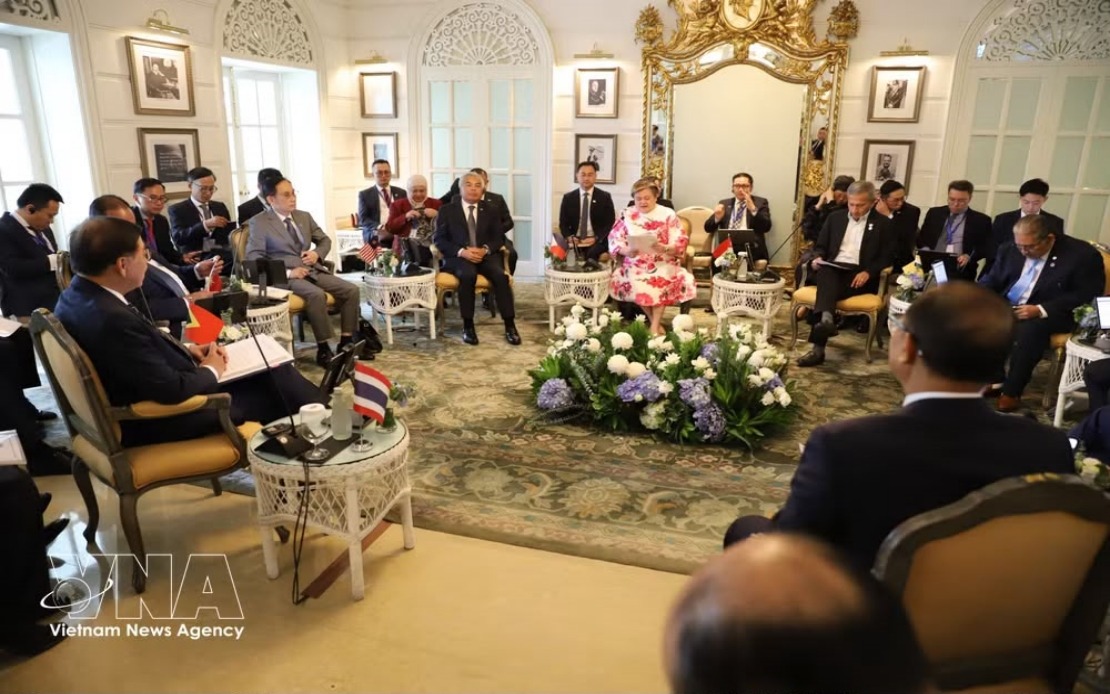
Vietnam has signalled its readiness to collaborate with ASEAN in supporting Myanmar's political stabilization and economic reconstruction, reflecting the regional bloc's determination to maintain dialogue with the military-led government despite persistent international scrutiny. Vietnamese Minister of Foreign Affairs Le Hoai Trung delivered this commitment at a landmark meeting in Bangkok involving ASEAN foreign ministers and Myanmar's top diplomat, underscoring Vietnam's role as a constructive player in addressing one of Southeast Asia's most pressing geopolitical challenges.
The gathering on July 12 represented a watershed moment in ASEAN's relationship with Myanmar, constituting the first high-level in-person engagement between the bloc's foreign ministers and Myanmar's administration since the 2021 military coup. Convened by Philippine Foreign Secretary Maria Theresa P. Lazaro under Manila's 2026 ASEAN Chairmanship, the meeting demonstrated the organisation's commitment to maintaining channels of communication with Myanmar despite the controversial nature of the government's seizure of power. This diplomatic opening carries particular significance for Malaysia and other Southeast Asian nations deeply concerned about regional stability and the spillover effects of Myanmar's internal turmoil.
Vietnam's position, articulated through Minister Trung, rests on the Five-Point Consensus—ASEAN's agreed framework for engagement with Myanmar since 2021. This consensus emphasises dialogue, humanitarian assistance, and Myanmar-led reconciliation without external interference, though its implementation has faced criticism from human rights organisations and Western governments. By reaffirming this approach, Vietnam signals that it views sustained engagement rather than isolation as the pathway toward Myanmar's eventual democratic transition and regional stability, a perspective increasingly shared across ASEAN despite mounting pressure from Western nations for stronger accountability measures.
The minister specifically acknowledged tangible steps taken by Myanmar's authorities in recent months, highlighting improvements in political stabilization, economic revival, governance reforms, and efforts against transnational criminality including narcotics smuggling and cybercrime. These acknowledgements carry weight within ASEAN's deliberative culture, where diplomatic recognition of progress, however incremental, can facilitate continued engagement. For Malaysia, Myanmar's efforts to tighten border controls and combat drug trafficking hold particular relevance given the nation's ongoing struggles with methamphetamine production and smuggling networks operating across the Myanmar-Thailand-Laos frontier.
Yet Vietnam's commitment extends beyond mere acknowledgement of existing measures. Trung articulated that ASEAN must move beyond symbolic gestures toward substantive implementation of the Five-Point Consensus, emphasising the necessity for sustained direct engagement and regular dialogue to monitor developments and catalyse tangible progress. This reflects growing recognition within the bloc that rhetoric without concrete action risks further eroding ASEAN's credibility both internally and internationally. The emphasis on practical measures suggests Vietnam's frustration with the pace of Myanmar's transformation and a desire to inject greater urgency into the engagement process.
Myansar's own delegation, led by Foreign Minister Tin Maung Swe, presented a detailed briefing outlining a 100-day action plan designed to advance peace, reconciliation, and stability while maintaining contacts with relevant stakeholders within the country. Though details of this plan remain opaque, its presentation to ASEAN signals the military government's desire to demonstrate commitment to the Five-Point Consensus framework, at least in rhetorical terms. For regional observers and governments including Malaysia's, the credibility of such plans ultimately depends on verifiable implementation rather than announcements.
Vietnam specifically committed to working alongside the Philippine ASEAN Chair and other member states to facilitate Myanmar's economic recovery, address mounting social challenges, and strengthen cooperation against transnational crimes. This offer of active partnership reflects Hanoi's strategic interests in maintaining stability on its western border and preventing Myanmar from becoming a failed state that could destabilize the entire region. For Malaysia, Vietnam's engagement matters because Bangkok and Jakarta cannot shoulder the burden of Myanmar stabilization alone; Hanoi's involvement signals that larger Southeast Asian powers recognise the existential importance of the Myanmar question to regional prosperity.
The ministers' discussions operated in what ASEAN describes as a frank and constructive spirit, suggesting candid exchanges beneath the diplomatic veneer. This language typically indicates that disagreements exist among member states regarding the pace, scope, and effectiveness of ASEAN's Myanmar strategy, though these differences were managed without fracturing bloc unity. The Philippines' upcoming chairmanship will test whether ASEAN can move beyond consensus statements toward coordinated action that addresses both Myanmar's governance deficits and the humanitarian crisis affecting millions of civilians.
The meeting directly responded to directives from ASEAN leaders at the 48th ASEAN Summit held in Cebu, Philippines, mandating continued discussion of how the bloc could sustain support for Myanmar aligned with Five-Point Consensus principles. This top-down reinforcement of Myanmar engagement demonstrates that ASEAN's strategic community views the country's recovery as integral to the organisation's credibility and the broader project of regional integration. For Malaysia, which occupies a middle position within ASEAN on Myanmar policy, Vietnam's activist stance provides useful diplomatic cover for maintaining engagement without appearing to condone military rule.
The reaffirmation that ASEAN will support Myanmar in achieving a Myanmar-owned and Myanmar-led solution represents both a commitment and a constraint. It acknowledges that external pressure, however well-intentioned, often proves counterproductive in Southeast Asian contexts where national sovereignty remains paramount. Simultaneously, it places responsibility squarely on Myanmar's military government to chart a credible path toward democracy and national reconciliation. The framework's success ultimately hinges on whether Myanmar's leaders will genuinely prioritise peace and stability over consolidating authoritarian control, a question that months and years of ASEAN engagement may help answer.
For Vietnam specifically, and indeed for all ASEAN members including Malaysia, the stakes extend beyond Myanmar's borders. The country's location at the intersection of South and Southeast Asian geopolitical competition means that Myanmar's instability could create vacuums that external powers might exploit. By reinforcing ASEAN's active engagement through figures like Minister Trung, Vietnam subtly positions the bloc as the primary arbiter of regional outcomes, a position that enhances Southeast Asian agency in an era of great power competition. This diplomatic initiative thus serves multiple constituencies simultaneously: Myanmar's government gains continued international legitimacy, ASEAN members demonstrate unity and purpose, and Vietnam advances its broader strategic objective of maintaining Southeast Asian centrality in regional affairs.

