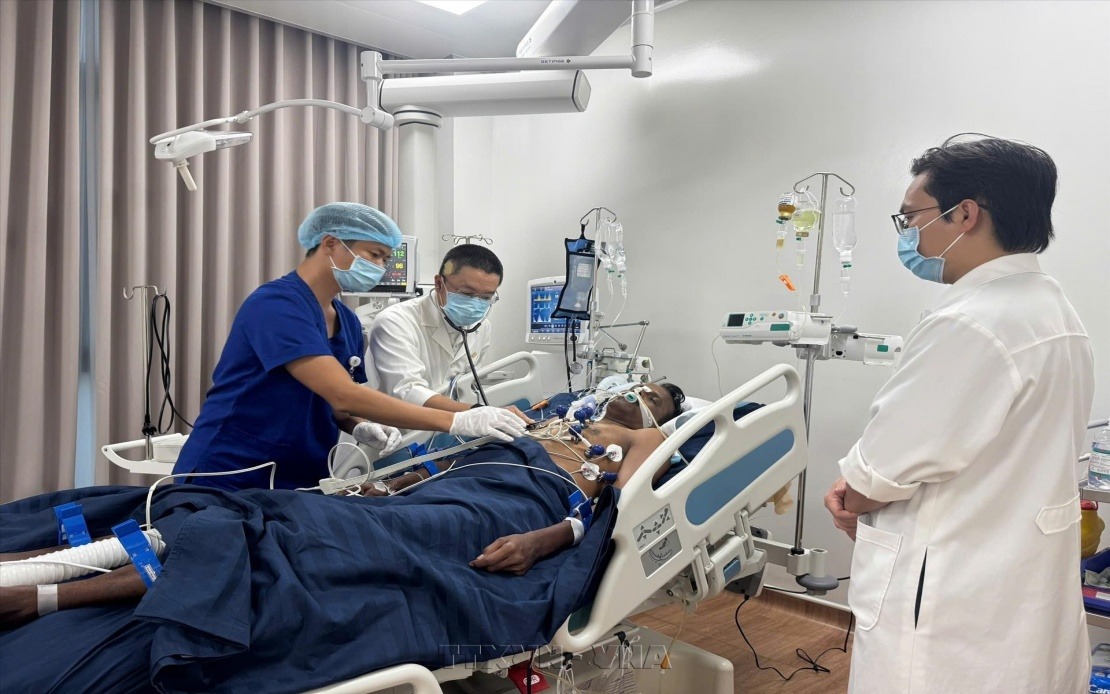
A speedboat accident in Vietnam's Phu Quoc Special Zone on July 11 triggered a comprehensive emergency response across multiple levels of government and private healthcare providers, with authorities in the Mekong Delta province of An Giang coordinating rescue operations and medical assistance for Indian nationals aboard the vessel. The incident underscores the region's vulnerability to maritime accidents and the capacity of local institutions to respond under pressure, though it also raises broader questions about passenger safety standards in Southeast Asia's booming tourism sector.
Upon receiving initial reports of the accident, Sun Group International Hospital in Phu Quoc immediately declared a code red emergency status, activating hospital-wide protocols designed to handle mass casualty incidents. The facility dispatched ambulances to the accident scene and deployed specialised medical teams while simultaneously preparing all available clinical staff to manage the influx of injured persons. This rapid mobilisation reflects established disaster management procedures within Vietnam's healthcare system, where private hospitals have become increasingly integrated into national emergency response infrastructure.
The most severely affected patients required intensive intervention. Within the first two hours following their arrival at the hospital, medical teams conducted prolonged resuscitation efforts on two critically injured individuals, eventually achieving haemodynamic stability. These patients were subsequently transferred to the intensive care unit where they regained consciousness and maintained stable vital signs, marking a crucial turning point in their treatment trajectory. The success of these early interventions likely prevented additional fatalities and demonstrated the technical capability of the medical teams involved.
Beyond the two critical cases, fifteen additional victims were admitted by 6:15 p.m. on July 11, all of whom remained conscious upon presentation. These patients underwent systematic medical examination, comprehensive trauma screening, and therapeutic interventions tailored to their specific injuries. The staggered admission pattern allowed the hospital to allocate resources efficiently across the patient population, preventing the complete overwhelm that can occur during simultaneous mass admissions.
Two of the hospitalised patients developed severe respiratory complications requiring advanced ventilatory support. According to Dr. Nguyen Quang Thang, the hospital's director, one patient successfully weaned from respiratory assistance and improved sufficiently to approach discharge, while the second required prolonged intensive care management due to pre-existing medical conditions that complicated recovery. To address the complex needs of this patient, Sun Group International Hospital established coordination protocols with Ho Chi Minh City's Cho Ray Hospital, Vietnam's largest public medical institution, ensuring access to specialised expertise and capacity should complications arise.
The incident prompted rapid governmental action on financial and administrative fronts. The vessel's operator agreed to provide initial compensation of 1,000 USD to families of deceased passengers and 500 USD to each injured survivor, establishing a baseline relief fund. The Phu Quoc Special Zone administration supplemented this through a local government allocation of 26 million Vietnamese Dong—approximately 1,000 USD—for each fatality, creating a dual-source compensation mechanism that provides immediate financial support while formal investigations proceed.
For Malaysian and broader Southeast Asian readers, this incident reflects persistent challenges within regional tourism infrastructure. Thailand, Indonesia, and the Philippines have experienced similar high-casualty maritime accidents in recent years, often involving inadequate safety equipment, insufficient crew training, or overcrowding. Vietnam's response—while appearing competent—occurs within a context where maritime safety standards remain inconsistent across the region. The willingness of authorities to provide rapid compensation and medical care sets a constructive precedent, yet the accident's occurrence suggests that preventive measures may need strengthening.
Phu Quoc's development as a premium tourist destination has accelerated dramatically over the past decade, with multiple international resort developments and high-speed ferry services catering to growing visitor numbers. This expansion has not always been accompanied by corresponding upgrades to maritime safety infrastructure or enforcement mechanisms. The accident serves as a reminder that tourism growth must integrate robust safety systems to protect the foreign visitors whose spending drives economic development.
Local authorities under Tran Minh Khoa, Chairman of the Phu Quoc Special Zone's People's Committee, prioritised victim assistance while acknowledging the diplomatic dimensions of managing an incident involving foreign nationals. Vietnamese officials coordinated with diplomatic authorities regarding the Indian victims, working to facilitate repatriation procedures and address civil registration requirements under Vietnamese law. This diplomatic coordination underscores how tourism-related accidents in Southeast Asia rapidly acquire international dimensions requiring careful management by host governments.
The investigation into the accident's cause remained underway, with authorities expediting civil registration and legal formalities necessary for formal proceedings. Vietnamese maritime authorities typically examine factors including vessel maintenance records, crew qualifications, weather conditions, passenger manifest compliance, and adherence to safety protocols. The outcomes of such investigations often inform regional safety discussions, particularly within ASEAN maritime forums focused on standardising passenger safety across member states.
The mobilisation of resources from both private and public sectors demonstrates institutional capacity within Vietnam's healthcare and administrative systems, yet it equally demonstrates the reactive rather than preventive orientation characterising much of Southeast Asian maritime governance. While hospitals can stabilise critical patients with increasing sophistication, preventing accidents remains the superior objective. Regional governments including Malaysia should examine this incident as reinforcing the urgency of harmonising maritime safety standards, establishing consistent training requirements for crew members operating commercial passenger vessels, and implementing robust inspection protocols across national waters.

