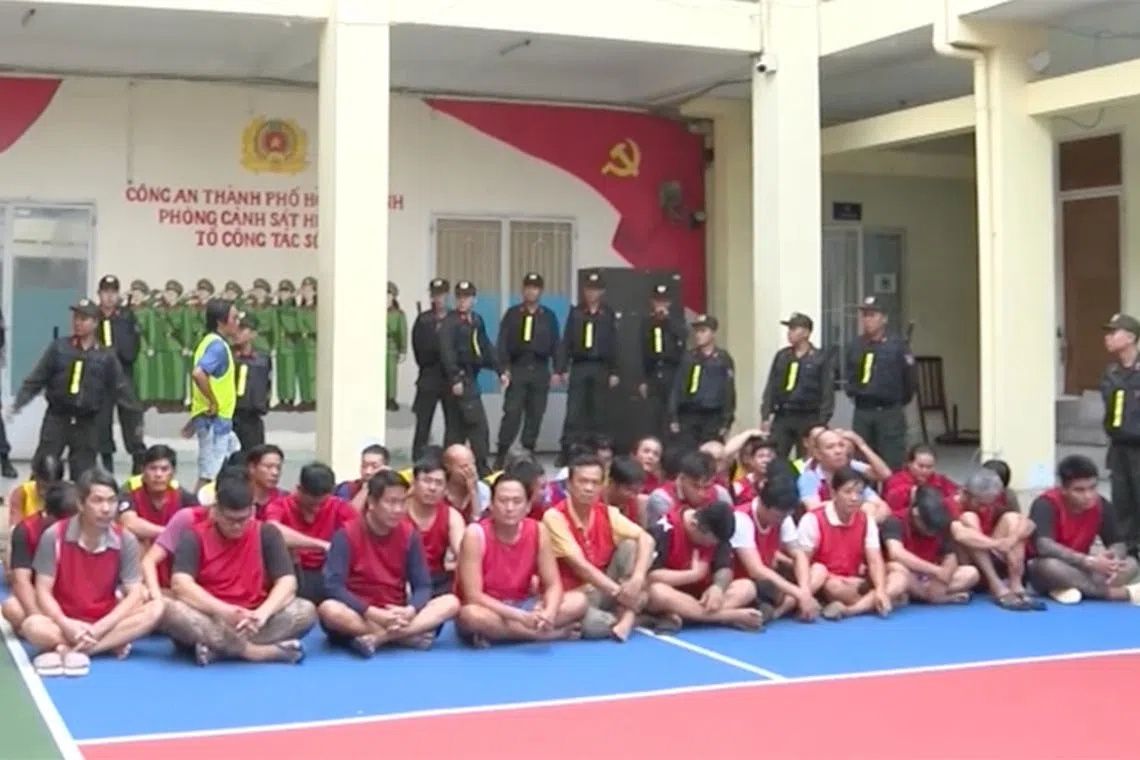
Vietnamese police have dismantled two exceptionally sophisticated betting syndicates operating across the country, arresting 85 suspects in connection with the networks that handled combined transactions worth US$133 million. The raids, conducted in late June, targeted operations described by Ho Chi Minh City police as among the largest and most tightly organized gambling rings the nation has encountered, underscoring the scale and professionalism that underground betting networks have achieved in Southeast Asia's communist economies.
The timing of these operations reflects a broader enforcement push during World Cup 2026, when betting activity invariably surges across the region. Although online gambling remains strictly prohibited under Vietnamese law, the lucrative nature of illegal wagering—particularly on international sporting events—ensures that organized crime groups continue to invest heavily in circumventing state controls. The government's intensified crackdown during major tournaments illustrates both the persistent appeal of illegal betting among Vietnamese consumers and the difficulty authorities face in stemming the flow of money through underground channels.
According to police statements, the two networks achieved their exceptional scale through sophisticated operational structures. Ring leaders had established relationships with suppliers based in Cambodia, where they obtained master-level betting accounts that could be subdivided and distributed through multiple layers of intermediaries. This hierarchical arrangement allowed the networks to reach thousands of individual gamblers while maintaining plausible deniability and insulating top-level operators from direct consumer contact. The Cambodia connection points to a broader regional infrastructure supporting illegal gambling, where looser regulatory regimes facilitate the provision of betting services to neighbouring countries.
The US$133 million figure represents transactions logged since October 2025, a period spanning less than nine months and covering primarily World Cup-related wagering. This volume underscores the extraordinary appetite for football betting within Vietnam's population and the enormous profits available to operators willing to accept the risks of law enforcement action. For context, the average monthly transaction value exceeded US$14 million, suggesting that individual bettors were placing substantial sums despite the legal prohibitions.
The arrests represent only a fraction of the broader crackdown across Vietnam during the World Cup period. The Ministry of Public Security reported that police had dismantled 73 separate gambling operations nationwide during the first 20 days of the tournament, resulting in 346 arrests. The cumulative transaction value across all operations discovered during this period totalled thousands of billions of Vietnamese dong—hundreds of millions of dollars—indicating that the two networks targeted in Ho Chi Minh City, while exceptionally large, were not isolated phenomena but rather exemplars of pervasive underground betting activity.
The operational sophistication revealed in these busts suggests that illegal gambling networks in Vietnam have evolved significantly beyond simple peer-to-peer wagering. The hierarchical structures, international sourcing of betting accounts, and technological infrastructure required to process millions of dollars in transactions demonstrate that these are not amateur operations but rather organized enterprises with substantial capital and expertise. This evolution poses unique challenges for law enforcement agencies attempting to disrupt the networks, as taking down individual operators or smaller rings addresses only the visible portions of much larger criminal ecosystems.
For Malaysian observers, the situation in Vietnam carries particular relevance given similarities in the region's approach to gambling regulation and the existence of comparable illegal networks operating across Southeast Asia. Like Vietnam, Malaysia maintains strict prohibitions on most forms of gambling while attempting to manage persistent underground operations. The scale of Vietnam's enforcement actions and the sophistication of the networks they target offer insights into the possible dimensions of similar operations within Malaysia and the broader challenge that unauthorised betting presents to regional governments.
The World Cup 2026, to be hosted by Canada, Mexico, and the United States with the final scheduled for July 19, will provide another opportunity for illegal gambling networks to generate substantial profits across Asia. The expansion of online betting technology and cryptocurrency payment mechanisms has made enforcement increasingly difficult, as money can flow internationally through channels that traditional banking oversight struggles to monitor. Vietnamese authorities' efforts represent part of a region-wide challenge rather than an isolated national issue.
The involvement of Cambodian suppliers in providing the betting infrastructure raises questions about cross-border cooperation in combating illegal gambling. While Vietnam has intensified domestic enforcement, the underlying supply chains that fuel these networks often operate across multiple jurisdictions, requiring coordinated regional responses that remain inconsistently implemented. The Cambodia connection also highlights how different regulatory approaches across Southeast Asian nations can inadvertently support criminal enterprises operating in neighbouring countries.
Looking forward, the scale and persistence of these operations suggest that Vietnamese police will face ongoing challenges in eliminating illegal gambling, particularly around major sporting events. The substantial profits available—evidenced by US$133 million in transactions from a single pair of networks—ensure that new operators will emerge to replace those arrested, provided the underlying demand from bettors remains undiminished. Meaningful reduction in illegal betting would likely require not merely increased enforcement but also addressing the factors driving demand, whether through regulated alternative betting channels or broader social interventions addressing gambling behaviour.

