Vietnamese law enforcement has intensified its grip on dissenting voices by targeting the publication and promotion of a controversial biography of Ho Chi Minh, the nation's revered Communist Party founder. The coordinated campaign, announced in mid-July, reveals the government's sensitivity around historical narratives and its determination to control how its foundational figures are portrayed in public discourse. The arrests mark a troubling escalation in Hanoi's ongoing suppression of independent thought and expression, affecting not only the original author but the entire ecosystem of publishers, journalists, and social media figures who engaged with the work.
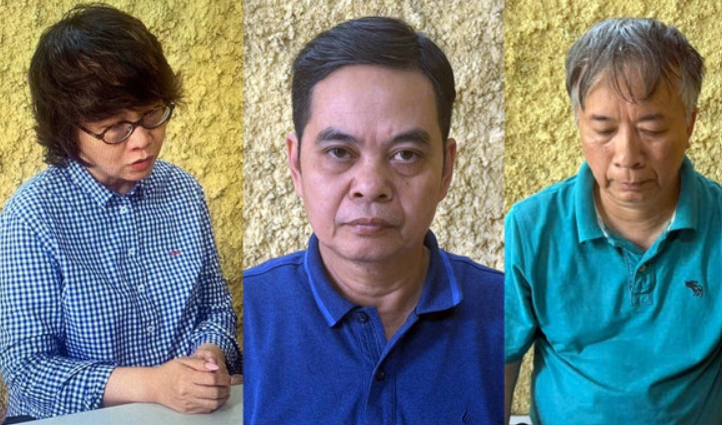
Three senior officials from the Vietnam Writers' Association Publishing House now face prosecution under sedition statutes, accused of editing, revising, and disseminating a book deemed hostile to state interests. Alongside them stands Nguyen Thanh Nam, the former telecommunications executive who authored "Stories with Thanh -- A New Account of Light", detained in early July on charges of producing materials designed to undermine the Socialist Republic of Vietnam. The timing of these simultaneous arrests suggests a carefully orchestrated response aimed at demonstrating state authority over cultural production and historical interpretation.
The book itself, published in May before authorities intervened, examines Ho Chi Minh's formative years abroad as he developed strategies to advance Vietnam's liberation struggle. Rather than presenting a hagiographic account, Nam's work apparently offered interpretations or details that diverged from official Party narratives, triggering concern among political leadership. Vietnamese state media subsequently forced the publisher to withdraw the book from circulation, effectively erasing it from public access and signalling to other cultural institutions the boundaries of acceptable historical scholarship.
Government statements explicitly accuse the publishers of distorting revolutionary history and misrepresenting Party doctrine and presidential legacy. This language betrays the rigid orthodoxy that constrains public discourse in Vietnam, where certain interpretations of history remain officially mandated and deviation invites criminal sanction. The crackdown demonstrates how historical narratives function as instruments of state control, with authorities viewing alternative accounts as inherently subversive regardless of scholarly merit or factual basis.
The repercussions extended well beyond the publisher's offices. An influencer who promoted the biography through social media channels was also arrested, reflecting state concern about digital dissemination and the democratic reach of online platforms. The authorities recognize that social media democratizes information flow in ways that traditional gatekeeping cannot contain, prompting them to pursue those who leverage these networks to circulate discouraged content. This dimension of the crackdown illuminates how Vietnam confronts the challenge of controlling narratives in an increasingly connected region where information flows across borders with ease.
Perhaps most concerning for media freedom across Southeast Asia is the government's decision to sanction 23 separate news organizations that had published articles endorsing or discussing the book. The culture ministry issued substantial fines totalling nearly US$2,500, though the financial penalty masks deeper consequences: journalists and editors involved faced reassignment, suspension, or termination from their positions. This mechanism of professional punishment chills editorial independence by making individual careers contingent on political compliance, transforming self-censorship into a rational career survival strategy.
The ministry framed these actions as corrective, suggesting that punished outlets had acknowledged "errors" and understood the importance of "source verification". This language obscures the reality that journalists were penalized not for factual inaccuracy but for insufficient political judgment in selecting which stories merited coverage. In Vietnam's mediascape, verification extends beyond fact-checking to encompass alignment with Party preferences regarding what truths may be publicly discussed.
Nguyen Thanh Nam's televised recantation provides a window into the coercive mechanisms underpinning these prosecutions. His public apology, clearly extracted under duress or threat of lengthy imprisonment, admits to factual errors and misrepresentations without specifying what these supposedly entailed. Such forced confessions serve multiple purposes: they delegitimize the original work retroactively, demonstrate state power over prominent individuals, and warn others contemplating similar intellectual ventures of the personal consequences awaiting them.
For Malaysia and other Southeast Asian nations navigating complex relationships with Vietnam, this episode raises important questions about regional trajectories regarding press freedom and human rights. Vietnam's approach represents one end of a spectrum where state control over historical narrative remains comprehensive and criminal penalties enforce compliance. The sophistication of Vietnam's crackdown—targeting not merely the author but publishers, editors, journalists, and digital promoters—suggests an institutional apparatus designed to police thought comprehensively.
Human Rights Watch reports that Vietnam currently detains more than 160 political prisoners, a figure that understates the broader climate of fear and self-censorship affecting millions. The Ho Chi Minh book case exemplifies how regimes prosecute not individual dissidents in isolation but entire chains of intellectual and communicative labor. Publishers, editors, writers, and journalists occupy a shared vulnerability, each knowing that professional judgment exercised independently rather than defensively invites official punishment.
The regional implications warrant attention as Southeast Asia experiences growing great power competition and domestic political consolidation. Vietnam's model demonstrates how modern authoritarian states employ criminal law, media punishment, and institutional pressure to maintain control over public discourse. For readers and journalists throughout the region, the case illustrates how historical interpretation remains a politically fraught arena where alternative accounts attract state surveillance and personal jeopardy.
Moving forward, the chilling effect will likely discourage publishers from undertaking serious historical work, discourage journalists from covering cultural controversies, and discourage authors from attempting nuanced reexamination of state-sanctified narratives. This self-imposed narrowing of intellectual space impoverishes public understanding and forecloses the democratic deliberation essential to healthy societies. Vietnam's leadership appears willing to accept these costs, viewing comprehensive narrative control as more important than the intellectual vitality their nation might otherwise achieve.

