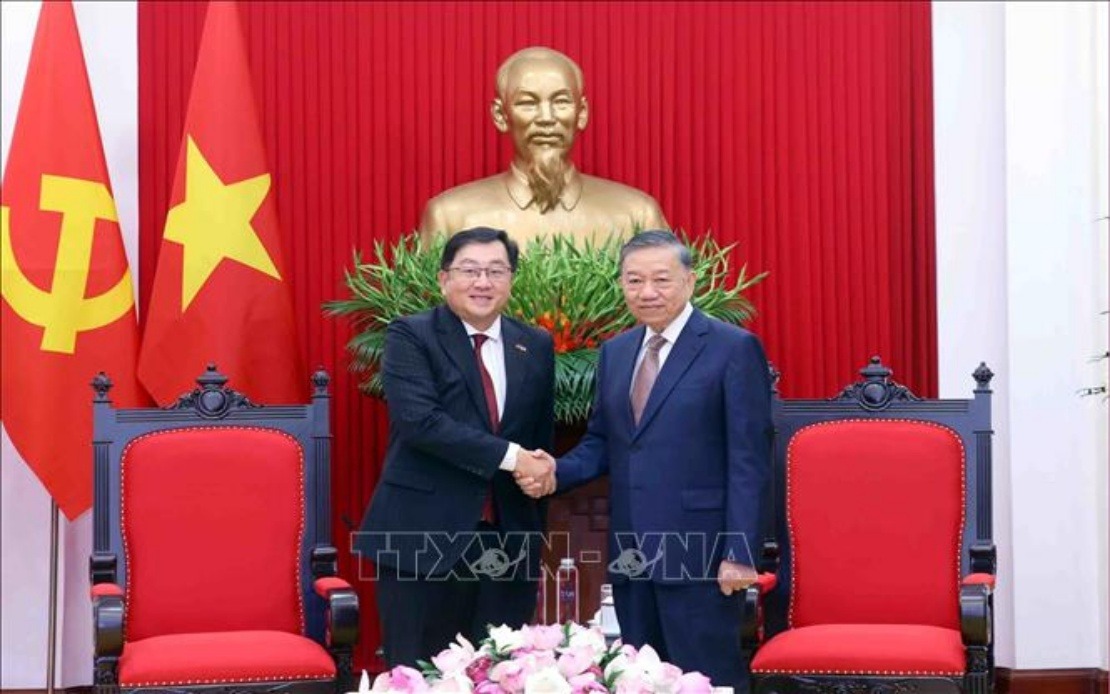
Vietnamese President To Lam has characterized the relationship between Vietnam and Malaysia as increasingly dynamic, emphasising that political trust and economic cooperation form the bedrock of a partnership gaining momentum across multiple sectors. During his reception of outgoing Malaysian Ambassador to Vietnam Datuk Tan Yang Thai on Wednesday, the Vietnamese leader outlined a vision of strengthened bilateral engagement that extends beyond trade into defence, technology and energy cooperation. The timing of this diplomatic recognition underscores Vietnam's broader regional positioning as it navigates great power competition while maintaining cohesion within ASEAN.
President Lam's remarks reflect the trajectory of a relationship that has accelerated notably in recent years. The two countries have established multiple channels for high-level dialogue, with regular exchanges through political parties, government bodies and parliamentary delegations demonstrating commitment to sustained engagement. This institutional framework proves particularly valuable in Southeast Asia, where formal mechanisms often distinguish strategic partnerships from transactional relationships. Malaysia's diplomatic presence in Hanoi remains consequential for both nations' regional diplomacy, and Lam's commendation of Tan's contributions acknowledges the ambassador's role in consolidating these gains.
The economic dimension of Vietnam-Malaysia ties has become especially significant for Malaysian investors and policymakers. Bilateral trade reached US$10.8 billion in the first half of 2026, representing a 40 per cent year-on-year increase that outpaces broader regional trade growth trends. This expansion reflects not only the recovery of supply chains following pandemic disruptions but also deliberate shifts by multinational firms seeking alternatives to China-dependent manufacturing. For Malaysian companies, Vietnam's lower labour costs and improving infrastructure present competitive advantages, while Vietnamese businesses benefit from Malaysian expertise in finance, palm oil processing and petrochemicals.
Malaysia's position as the third-largest investor among ASEAN nations in Vietnam, and tenth overall across 154 countries and territories, demonstrates the strategic weight of the bilateral economic relationship. This ranking places Malaysian capital ahead of many developed economies, suggesting that Malaysian firms possess particular confidence in Vietnam's investment environment and growth prospects. The scale of Malaysian investment anchors political relationships and creates constituencies within both countries invested in maintaining stable, predictable bilateral ties. For Malaysia, preserving favourable conditions for its enterprises in Vietnam ranks among the practical motivations underlying diplomatic efforts.
The shared emphasis on digital economy development, green energy transitions and renewable power connectivity reveals how both nations are aligning around future-oriented cooperation frameworks. Vietnam's rapid urbanisation and industrialisation create substantial demand for clean energy infrastructure, whilst Malaysia's experience in renewable energy deployment and green financing mechanisms positions it as a valuable partner in Vietnam's energy transition. The discussion of electricity connectivity implies potential regional power-sharing arrangements that could enhance energy security across mainland Southeast Asia, benefiting multiple economies.
Maritime cooperation constitutes another dimension with regional implications. Vietnam's extensive coastline and Malaysia's position controlling strategic sea lanes create natural convergence on issues ranging from fishing rights and resource management to navigation safety and security. Enhanced maritime coordination between Hanoi and Kuala Lumpur could contribute to stability in waters where competing claims and great power interests generate periodic tensions. The diplomatic language around maritime affairs suggests both nations are intent on preventing maritime disputes from undermining broader partnership objectives.
President Lam's invitation to Prime Minister Datuk Seri Anwar Ibrahim and His Majesty Sultan Ibrahim to visit Vietnam reflects standard diplomatic protocol whilst also serving substantive purposes. High-level visits generate media attention domestically and internationally, signal commitment to expanded engagement, and provide occasions for resolving outstanding issues or unveiling new cooperative initiatives. For Malaysia, reciprocal invitations to Vietnamese leaders serve similar functions, creating opportunities to showcase development achievements and articulate national priorities on the global stage.
Ambassador Tan's reciprocal comments emphasising Malaysia's valuation of cooperation and commitment to strengthening bilateral ties maintain diplomatic symmetry. His specific mention of the digital economy, green economy and renewable energy echoes President Lam's priorities, suggesting alignment between both nations' development strategies and regional positioning. Tan's pledge to leverage professional experience and personal affection for Vietnam acknowledges the importance of individual diplomats in maintaining relationship continuity through transitions in ambassadorial posts.
The Malaysian King's invitation to President Lam to visit Malaysia, conveyed through the ambassador, signals high-level reciprocal interest in deepening engagement. Such state visits carry symbolic weight in Southeast Asia's diplomatic culture, affirming that partnerships matter at the highest constitutional levels. For Vietnam, acceptance of such invitations enhances its profile within ASEAN and demonstrates that regional partners value Vietnamese participation in broader Southeast Asian community-building efforts.
For Malaysian observers and policymakers, the strengthening Vietnam-Malaysia relationship carries several implications. Economically, deepening ties promise continued investment opportunities and enhanced market access for Malaysian firms operating across industrial sectors. Diplomatically, a strong partnership with Vietnam supports Malaysia's ASEAN centrality agenda and provides channels for influencing regional positions on issues ranging from South China Sea management to development partnerships. As Vietnam continues its emergence as a major regional player, Malaysian engagement remains valuable for both preserving influence and ensuring that Vietnamese growth occurs within cooperative frameworks.
The emphasis on implementing high-level agreements and enhancing defence and security cooperation suggests that both nations intend to translate political trust into concrete institutional arrangements. This matters particularly given regional security challenges, including maritime disputes, transnational crime and emerging cyber threats. Bilateral defence cooperation frameworks allow personnel exchanges, joint training exercises and intelligence sharing that enhance both nations' security capabilities whilst signalling to other regional powers that Vietnam and Malaysia maintain sufficient cohesion to coordinate responses to common threats.
The reference to fostering a united and resilient ASEAN contextualises bilateral progress within the broader regional architecture. Neither Vietnam nor Malaysia benefits from ASEAN fragmentation, and both nations have interests in maintaining the association's centrality to regional diplomacy. By publicly affirming commitment to ASEAN cohesion through their bilateral partnership, both countries model the kind of responsible engagement that the association requires for effectiveness.
Looking forward, the trajectory of Vietnam-Malaysia relations appears oriented toward deeper integration across economic, political and security domains. The combination of complementary development needs, aligned regional interests and demonstrated political will creates conditions for sustained partnership deepening. For Malaysia, maintaining momentum in this relationship requires consistent diplomatic engagement and commercial strategies that allow Malaysian enterprises to benefit from Vietnam's continued growth. For the broader region, a strengthening Vietnam-Malaysia partnership contributes to the institutional thickening that ASEAN requires to manage great power competition effectively.

