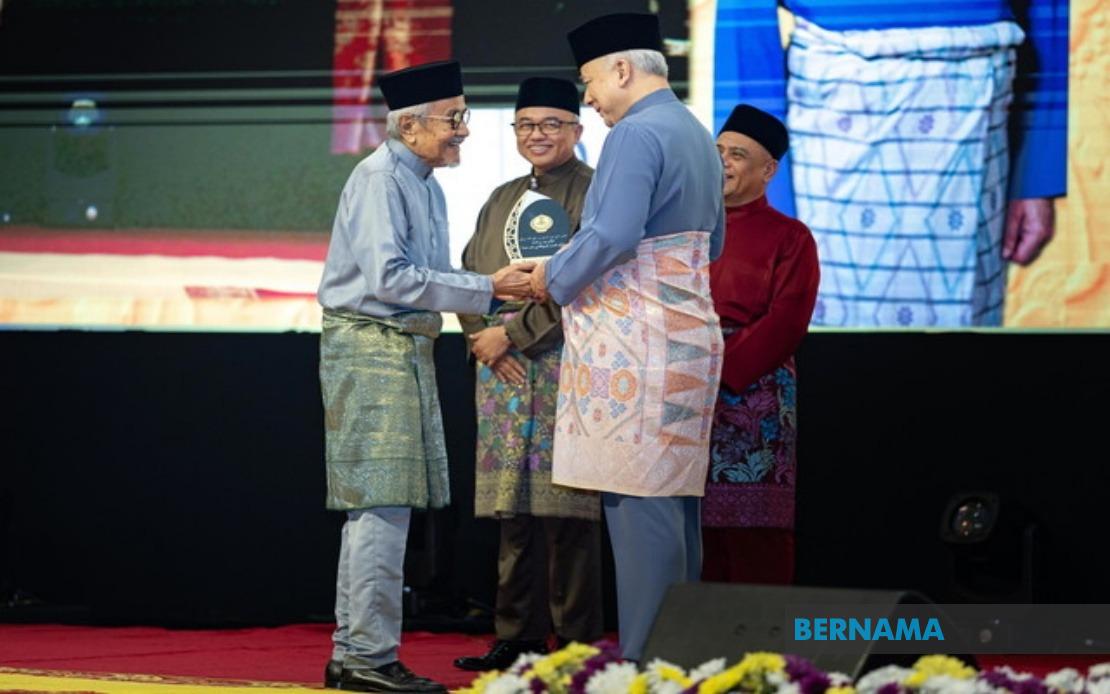
Datuk Rahim Razali, an 87-year-old filmmaker whose career has spanned half a century, received the 'Tokoh Zaid Bin Thabit' Media and Communications Practitioner Icon Award during the Perak state-level Maulidur Rasul celebration in Ipoh on August 25. The recognition, presented by Sultan Nazrin Shah, came with a monetary award of RM5,000 and a commemorative plaque, highlighting Razali's enduring influence on Malaysia's entertainment landscape and broadcasting heritage.
Razali, whose full name is Abdul Rahim Mohd Razali, hails from Batu Gajah in Perak, making the honour particularly significant as a homecoming recognition for the native son. His journey in the media industry began at RTM, Malaysia's pioneering broadcast network, where he worked as a broadcasting assistant before transitioning into more creative roles. This foundation in public broadcasting would shape his approach to storytelling and his commitment to building Malaysian cultural content during a formative era for the nation's media sector.
In 1981, Razali took a entrepreneurial leap by establishing Angkatan Seniman Abad XX Sdn Bhd, a production company that would become instrumental in developing homegrown dramatic and cinematic content. The venture reflected growing confidence among Malaysian creatives to move beyond being talent-for-hire and become producers with editorial control over their narratives. This transition coincided with Malaysia's broader economic expansion and rising middle-class demand for locally-produced entertainment reflecting Malaysian experiences and values.
Razali's filmography reveals the scope of his output and the diversity of his professional contributions. He helmed the feature films Abang and Abang 92, titles that became cultural touchstones for audiences seeking narratives rooted in Malaysian life. Beyond these, his production company generated 50 dramas for RTM and 15 feature films, demonstrating sustained productivity across multiple mediums and formats. The recognition that eight of his films reached the prestigious Tokyo Film Festival underscores the technical and artistic quality of his work and its resonance beyond domestic audiences.
The Tokyo Film Festival selections are particularly noteworthy for Malaysian cinema history. International film festival recognition, especially from a major Asian venue like Tokyo, typically signals that Razali's work met global standards in cinematography, narrative construction, and thematic depth. For a Southeast Asian filmmaker working largely within domestic industry constraints and budgets, such validation represented significant achievement and contributed to elevating Malaysia's profile in regional filmmaking circles during decades when production infrastructure and resources were considerably more limited than today.
Razali's recognition also encompasses his work as a sports commentator, revealing a versatility often overlooked in discussions of his primary filmmaking contributions. This dimension suggests someone deeply engaged with Malaysian public discourse across multiple registers—cultural production, sports culture, and likely national identity formation through media representation. Sports commentary in Malaysia's context carried particular weight during nation-building periods, when coverage of national athletes and sporting achievements intersected with narratives of national capability and pride.
The broader Maulidur Rasul awards ceremony contextualized Razali's recognition within a framework celebrating contributions to Islamic life and community values in Perak. Other recipients honored that day included Yang Walat, an 82-year-old single mother recognized for raising 15 children, who received RM10,000, an Umrah package, and a plaque. The inclusion of such varied recipients—media professionals, family leaders, preachers, mosque officials, and NGOs—reflects a holistic approach to recognizing societal contribution that extends beyond formal institutional roles.
For Malaysian audiences and media professionals, Razali's award carries implications about the value placed on long-term cultural institution-building. His five decades of work represent continuity through multiple phases of Malaysian development, from post-independence nation-building through economic transformation and digital disruption. At 87, he embodies a bridge between Malaysia's earlier broadcasting era and contemporary media consumption, offering perspective on how local content production has evolved, what has been preserved, and what may have been lost in transitions between formats and platforms.
The recognition also serves as reminder that Malaysia's media and film industries rest on foundations laid by pioneering figures like Razali, whose work established templates and demonstrated possibilities for locally-produced content competing for audience attention. In an era increasingly dominated by global streaming platforms and international production franchises, acknowledging such figures reinforces awareness of indigenous creative capacity and the importance of institutional support for homegrown storytelling that reflects Malaysian perspectives, concerns, and aspirations.
Razali's journey from RTM assistant to independent producer to award-receiving filmmaker also mirrors broader patterns in Malaysian entrepreneurship and creative sector development. His willingness to establish his own production company in 1981 reflected confidence in Malaysia's media market and his own creative vision, contributing to the ecosystem of independent producers that gradually challenged and supplemented state broadcasting monopolies. This historical arc remains relevant as contemporary Malaysian creators navigate similar decisions about institutional affiliation versus independent production in fragmented, algorithm-driven digital media landscapes.

