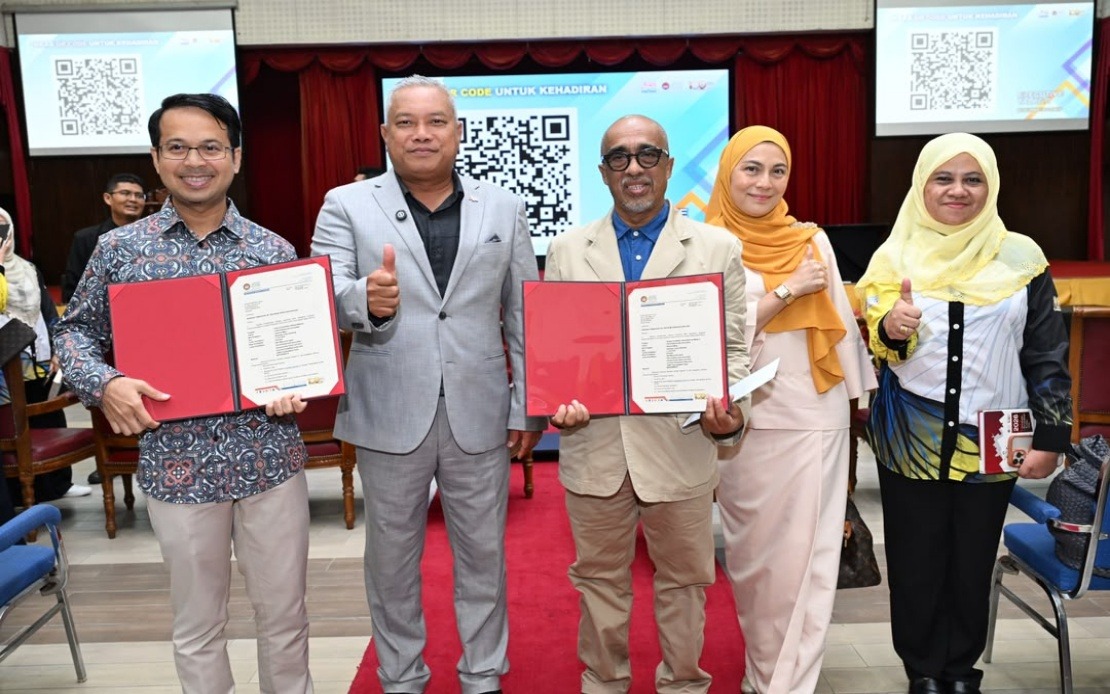
Mohd Sabri Yunus, the 65-year-old acclaimed actor and director, has realised a long-deferred educational ambition by gaining admission to Universiti Pendidikan Sultan Idris (UPSI) to study for a Master of Education in Malay Literature. His acceptance marks a significant milestone, coming more than four decades after he first aspired to pursue formal university education. The pathway enabling his enrolment is the Accreditation of Prior Experiential Learning for Award of Qualifications (APEL.Q), an increasingly important mechanism in Malaysian higher education that allows accomplished professionals to leverage their decades of real-world experience toward advanced qualifications.
Alongside Sabri Yunus, television presenter Ahmad Fedtri Yahya, aged 45, has similarly secured entry to UPSI's Master of Education programme, focusing on Malay Language rather than literature. Both individuals represent the inaugural cohort of students undertaking these specific postgraduate programmes through the APEL.Q route, establishing a notable precedent within the Faculty of Languages and Communication. The dual enrolment underscores growing institutional recognition that expertise accumulated outside traditional academic settings possesses genuine scholarly value, particularly within disciplines centred on cultural knowledge and linguistic proficiency.
Sabri Yunus's journey to university enrolment reveals the structural barriers that once constrained educational mobility for working professionals in Malaysia. During the 1980s and early 1990s, when he commenced employment at Dewan Bahasa dan Pustaka (DBP) as an illustrator, he attempted university entry on two separate occasions. Each attempt foundered on the practical impossibility of simultaneously maintaining full-time employment and pursuing formal study—a constraint that reflected the inflexibility of conventional undergraduate and postgraduate pathways during that era. Speaking at UPSI's Executive Talk 6.0 Cybersecurity programme in Tanjong Malim, Sabri Yunus reflected candidly on these thwarted aspirations, noting that career obligations rendered traditional enrolment untenable.
Despite never securing formal university credentials throughout his professional ascent, Sabri Yunus has maintained an intellectual trajectory characterised by continuous self-directed learning. He articulated a philosophy treating every individual encounter as an instructional opportunity, suggesting that his decades working within Malaysia's premier language and cultural institution cultivated substantive expertise complementing any conventional degree programme. This perspective aligns with the theoretical underpinnings of APEL.Q, which operates on the premise that rigorous professional experience, strategic reflection, and documented achievement constitute legitimate foundations for advanced academic credential attainment.
Fedtri Yahya's participation in the UPSI programme reflects distinct motivations rooted in linguistic and civilisational concerns. The television personality expressed enthusiasm regarding language studies specifically because he perceives language deployment as fundamentally expressive of societal development and intellectual sophistication. His decision to concentrate on Malay Language studies responds to perceived contemporary pressures threatening linguistic standards, particularly among younger demographics navigating transformations in communication patterns precipitated by social media proliferation and digital platform dominance. Fedtri articulated a conviction that systematic efforts to strengthen Malay language usage and consciousness must intensify generationally, positioning his own scholarly engagement as contributing to broader cultural preservation imperatives.
The implications of Fedtri's concerns resonate throughout Malaysia's educational establishment and cultural policy frameworks. Social media and digital technologies have fundamentally restructured how younger Malaysians communicate, often introducing linguistic shortcuts, code-switching patterns, and multilingual hybridity that orthodox language custodians view with ambivalence. By pursuing formal postgraduate study in Malay Language, Fedtri positions himself to engage these dynamics intellectually rather than dismissively, potentially developing pedagogical or communicative frameworks that acknowledge contemporary realities whilst maintaining linguistic rigour.
UPSI Vice-Chancellor Professor Datuk Dr Md Amin Md Taff emphasised the institutional significance of incorporating these high-profile figures into the university community. Beyond their personal credential acquisition, Sabri Yunus and Fedtri Yahya's presence ostensibly enriches the educational environment available to approximately 25,000 UPSI students, many of whom will transition into teaching careers shaping subsequent generations. The vice-chancellor framed their participation as strategically valuable for institutional efforts to reconstruct Malaysian cultural identity through direct knowledge transfer and experiential mentoring. This framing suggests institutional recognition that cultural renewal requires engagement from accomplished practitioners, not merely traditional scholars.
The APEL.Q pathway itself represents an important evolution within Malaysian higher education accessibility. By recognising substantial professional achievement and experiential learning as legitimate precursors to advanced study, the mechanism addresses a persistent challenge: highly accomplished individuals whose careers developed prior to widespread tertiary education expansion or whose professional trajectories diverged from conventional academic sequences often possessed formidable expertise yet lacked formal credentials validating their knowledge. APEL.Q creates institutional space for such individuals to formalise their learning, simultaneously enriching educational institutions through the inclusion of mature, experienced learners and enabling credential attainment that reflects genuine capability rather than merely chronological study duration.
For Malaysian audiences, Sabri Yunus and Fedtri Yahya's enrolment carries particular resonance given Malaysia's ongoing preoccupations with cultural transmission, linguistic preservation, and the intergenerational transmission of values amidst rapid social transformation. Their educational choices—deliberately concentrating on Malay literature and language respectively—signal that prominent cultural figures view formal academic engagement with these domains as strategically important. This messaging may subtly influence public perception regarding the prestige and relevance of language and literature studies during an era when technological and commercial disciplines frequently eclipse humanities-focused pursuits in attracting ambitious students.
The presence of accomplished entertainment and media personalities within UPSI's postgraduate community also symbolically challenges hierarchies between academic and non-academic expertise. Television presentation and film direction demand sophisticated linguistic knowledge, cultural awareness, and communicative sophistication, yet such competencies often remain undervalued within conventional credential hierarchies. Sabri Yunus and Fedtri Yahya's formal integration into advanced academic programmes implicitly acknowledges that cultural production constitutes legitimate intellectual work deserving scholarly formalisation and continued development.
Looking forward, the success of these pioneering APEL.Q cohort members may encourage broader adoption of alternative qualification pathways throughout Malaysian higher education. As demographic trends produce smaller school-leaver cohorts whilst simultaneously extending lifespans and career longevity, universities increasingly recognise that conventional full-time undergraduate models cannot sustain institutional viability. Alternative pathways accommodating experienced professionals, career-changers, and late-entry students represent essential diversification strategies. Sabri Yunus and Fedtri Yahya's high-profile participation potentially normalises such pathways, reducing social stigma occasionally surrounding non-traditional educational trajectories and demonstrating their legitimate capacity to produce accomplished graduates.
The UPSI enrolments ultimately illustrate contemporary higher education responding to emergent social realities. Educational credentials no longer represent primarily youthful accomplishments to be achieved before career commencement but increasingly constitute lifelong learning engagements interspersed throughout extended professional lives. Recognising and formalising knowledge acquired through decades of real-world practice represents pragmatic acknowledgment that expertise development occurs through multiple pathways, that cultural preservation requires sustained engagement from practising professionals, and that Malaysian higher education must evolve structurally to accommodate diverse learner populations and educational timelines.

