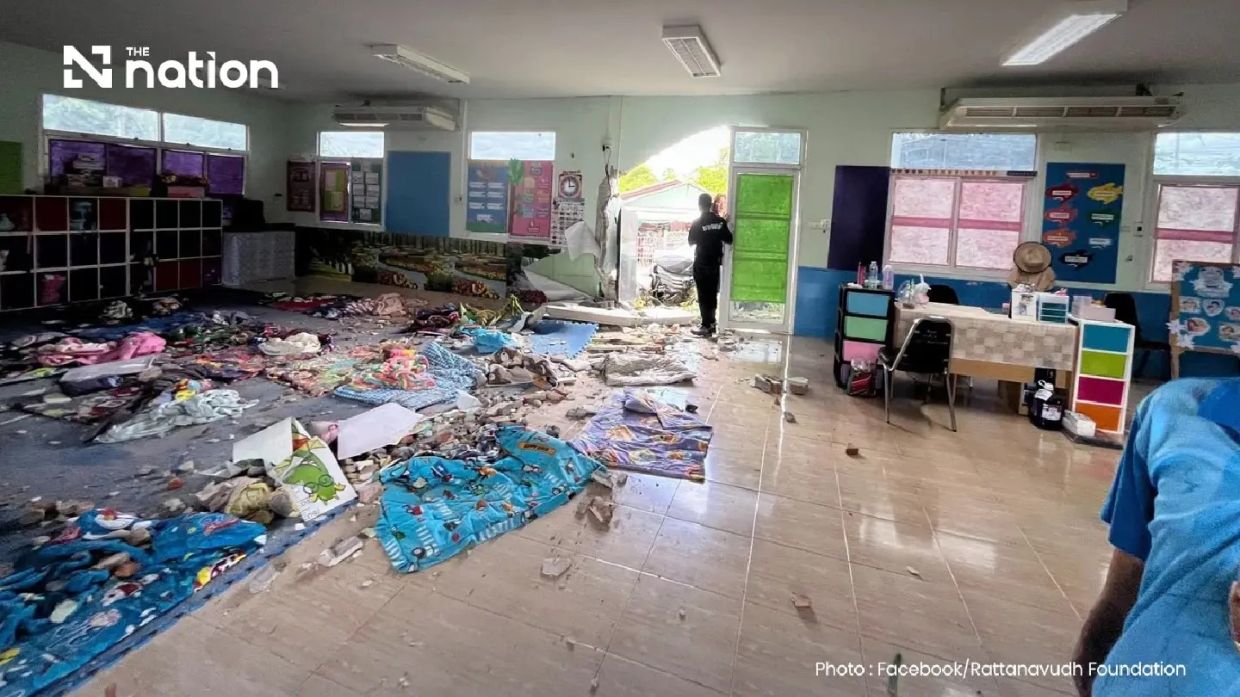
A private motor vehicle careened out of control and smashed through the Ban Nong Song Ton Child Development Centre in Mueang Kanchanaburi district on Friday (August 7, 2026), leaving 15 children with injuries ranging from head wounds to trauma. The collision, which occurred during the children's afternoon rest period, sent shockwaves through the local community and prompted an immediate emergency response from multiple rescue organisations across the province.
The incident unfolded when the saloon car penetrated the exterior barrier of the facility and struck directly into a classroom where approximately 34 children from the centre were napping. The impact caused substantial structural damage to the building and destroyed classroom fixtures and furnishings. Among the 34 children present that afternoon, 19 remained unharmed, though many were understandably distressed by the sudden and violent intrusion into their safe space.
Medical personnel responding to urgent distress calls found children suffering from a range of injuries sustained both from the direct force of impact and from broken glass, concrete fragments, and debris scattered across the classroom. Some younger victims were simply overwhelmed emotionally by the frightening experience, though these psychological effects were managed through supportive care and reassurance from trained staff. The Rattanavudh Foundation, which was alerted to the emergency, coordinated an immediate triage and medical assessment of all children on site.
Emergency responders worked with precision to remove the 15 injured children from the facility while maintaining their physical safety and emotional reassurance. The Phithak Kan Foundation joined rescue efforts to provide first aid treatments and facilitate rapid transport to Phaholpolpayuhasaena Hospital, where medical teams conducted thorough examinations to rule out serious internal injuries or complications. This multi-organisational coordination proved critical in ensuring that no child's condition deteriorated during the emergency phase.
The incident raised immediate traffic and safety concerns for residents living near the childcare facility. Authorities closed surrounding roads in Mueang Kanchanaburi district to allow emergency and rescue vehicles unrestricted access to the scene, a measure that local residents cooperated with fully. The rapid response protocols appeared to have prevented what could have been a significantly more tragic outcome, particularly given the vulnerability of the age group involved.
Following initial hospital admission, all 15 injured children were assessed and reported to be in stable condition with no life-threatening complications identified. Staff from the childcare centre worked closely with hospital personnel to provide continuity of emotional support and to document the incident thoroughly for investigative purposes. The children's parents were notified immediately and kept informed of their offspring's medical status throughout the evening and into the following days.
The accident reignited broader discussions in Thailand about vehicle control mechanisms and the security measures surrounding childcare facilities in residential and commercial districts. Safety experts have long emphasised the need for protective barriers, improved driver monitoring systems, and regular maintenance checks to prevent mechanical failures that could lead to loss of vehicle control. The incident at Ban Nong Song Ton Child Development Centre now serves as a sobering reminder of these persistent vulnerabilities.
For Malaysian readers and Southeast Asian observers, such incidents underscore the importance of reviewing safety protocols at early childhood development centres across the region. Many childcare facilities in Malaysia, Thailand, and neighbouring countries operate in premises not originally designed for their current use, potentially creating structural and security weaknesses. The incident illustrates how quickly an ordinary afternoon can transform into a crisis, emphasising the need for comprehensive risk assessments at all such facilities.
The broader implications extend beyond immediate safety measures. Questions surrounding vehicle owner responsibility, driver fitness certification, and premises liability insurance have become more acute following the Kanchanaburi incident. Insurance companies and facility operators across Southeast Asia are likely to review their coverage and risk mitigation strategies in response to this highly publicised accident. The incident demonstrates that even well-intentioned, properly managed childcare centres can face unexpected threats that require robust contingency planning.

