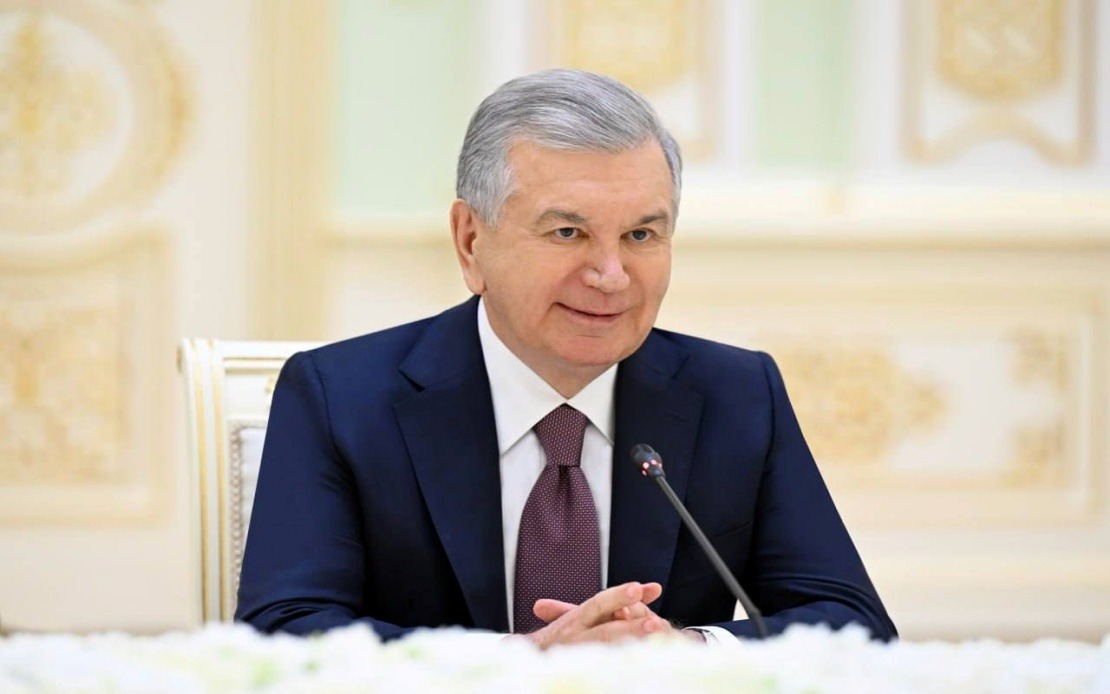
Uzbekistan's President Shavkat Mirziyoyev has made a compelling case for harnessing the historical contributions of Islamic civilisation as a pathway to global peace and mutual understanding. Speaking at the First International Islamic Civilisation Forum in Tashkent, he argued that the world faces unprecedented challenges from escalating conflicts, sectarian mistrust and deliberate efforts to fragment societies along cultural and religious lines. His intervention reflects a growing recognition among regional leaders that bridging civilisational divides requires more than diplomatic platitudes—it demands a coherent intellectual and educational framework grounded in shared heritage.
The Uzbek leader's emphasis on science and education as unifying forces carries particular weight in a region historically synonymous with intellectual advancement. Central Asia produced legendary scholars whose legacies transcend Islamic boundaries, including Muhammad al-Khwarizmi, whose mathematical innovations gave the world the term "algorithm," and Abu Ali ibn Sina, whose medical treatises influenced European universities for centuries. By invoking these figures, Mirziyoyev positions contemporary Central Asia not as a periphery seeking global relevance, but as a custodian of universal knowledge that fundamentally shaped human civilisation. This framing has implications for how the region asserts its cultural authority in international forums and educational exchanges.
The "Enlightenment Against Ignorance" initiative, which Uzbekistan introduced at the United Nations in 2017, represents an attempt to redefine the terms of civilisational dialogue away from simplistic "clash" narratives. Rather than presenting Islam and the West as inherently opposed, the framework suggests that enlightenment—scientific rigour, educational excellence, moral development—transcends sectarian boundaries and serves as common ground. For Southeast Asian nations navigating their own pluralistic societies, this approach offers a potentially useful model for promoting religious harmony without either suppressing religious identity or allowing sectarian extremism to take root.
The scale of the gathering underscores serious institutional commitment. Drawing approximately 300 scholars, religious figures, policymakers and cultural leaders from over 50 countries across five days of programming suggests this is not a one-off ceremonial event. The three-city itinerary spanning Tashkent, Samarkand and Termez—each laden with historical significance—transforms the forum into a pilgrimage through living heritage. Samarkand's restored Registan and Termez's archaeological sites serve as physical reminders that Islamic civilisational achievements are not abstract historical concepts but tangible, preservable legacies deserving contemporary investment.
The substantive programme demonstrates ambition beyond rhetorical celebration of past glories. Eleven plenary sessions, four international scientific conferences, and exhibitions of rare manuscripts create intellectual substance that attracts genuine scholarly participation. More significantly, presentations on digital heritage projects and artificial intelligence applications for preserving Islamic manuscripts indicate that Uzbekistan is not romanticising the past but actively engaging modern technology to ensure its accessibility for future generations. This forward-looking dimension distinguishes the forum from nostalgic historical commemoration.
Partnership with the Islamic World Educational, Scientific and Cultural Organisation (ICESCO) lends multilateral legitimacy to what might otherwise be perceived as a unilateral Central Asian initiative. By positioning the forum as a collaborative endeavour involving diverse international stakeholders—universities, research institutes, museums and libraries—Uzbekistan spreads ownership and reduces the possibility that detractors will characterise it as cultural propaganda. This institutional architecture matters for building sustained engagement beyond the initial gathering.
The anticipated Tashkent Declaration and the Islamic Civilisation Centre's 2027-2030 development roadmap suggest the forum is establishing a medium-term agenda rather than concluding with vague expressions of solidarity. Cooperation agreements among international organisations create contractual commitments that extend beyond political rhetoric. For Malaysian observers, the emphasis on institutional frameworks and measurable outputs provides a template for how regional initiatives can achieve tangible progress toward interfaith understanding and cultural preservation.
Mirziyoyev's framing of the Islamic Civilisation Centre as an "intellectual bridge linking the past and the future, East and West" captures an ambition that extends beyond religious communities. By positioning the institution as mediating between temporal and geographical divides, he suggests that understanding Islamic contributions to human knowledge serves not merely minority interests but enriches universal intellectual heritage. This inclusive framing may prove crucial for sustaining Western scholarly participation and preventing the initiative from being marginalised as a sectarian project.
The timing of this forum reflects broader geopolitical currents. Rising Islamophobia in Western democracies, coupled with extremist movements claiming Islamic legitimacy, creates a genuine vacuum for moderate, intellectually rigorous voices capable of articulating what Islamic civilisation has contributed beyond religious doctrine. By emphasising scholarship, scientific method and cultural production, Mirziyoyev positions Islamic identity as compatible with, rather than opposed to, Enlightenment values—a crucial counter-narrative for communities in Southeast Asia negotiating their own modernisation while maintaining religious conviction.
For Malaysia and the wider region, Uzbekistan's initiative carries both symbolic and practical significance. As a Muslim-majority nation seeking to establish itself as a centre for Islamic learning and scholarship, Malaysia might find valuable lessons in how Uzbekistan leverages historical legacy and institutional collaboration to project soft power. The emphasis on preservation of manuscripts and historical sites resonates with Malaysia's own efforts to document and celebrate Islamic intellectual heritage. Moreover, the forum's focus on preventing the weaponisation of civilisational identity against others offers a framework for addressing religious polarisation affecting Southeast Asian societies.
The expected outcome documents—the Tashkent Declaration and cooperation agreements—will provide concrete measures against which the forum's success can be assessed. Beyond immediate diplomatic achievements, the true test lies in whether international universities, research centres and cultural institutions sustain the collaborative momentum established at Tashkent. Should the initiative generate genuine scholarly networks, funded research projects and expanded educational exchanges, it could establish Uzbekistan as a consequential actor in shaping global discourse on civilisational identity and interfaith cooperation.

