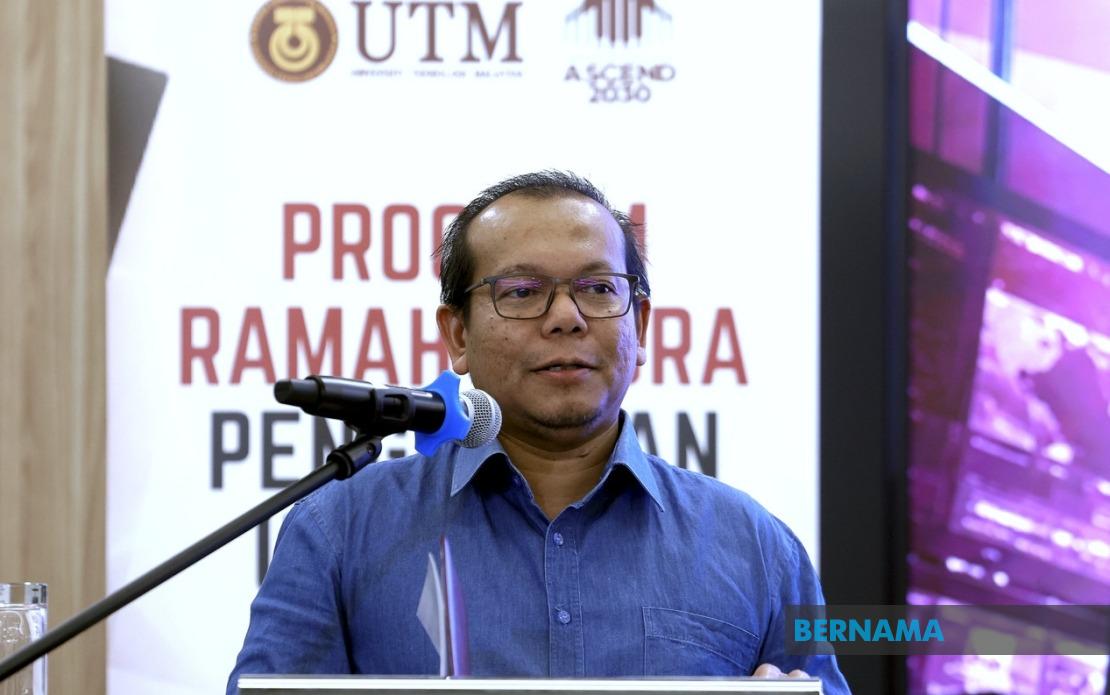
Universiti Teknologi Malaysia has embarked on an expanded collaboration with the media sector to ensure the public receives accurate information about the institution's research, academic achievements, and institutional developments. Vice-Chancellor Prof Dr Mohd Shafry Mohd Rahim stressed at a University Management's Media Networking Session that robust partnerships with journalists and news organisations are vital for countering false narratives and protecting the university's hard-earned reputation in an increasingly complex information landscape.
The urgency of this initiative reflects a wider concern within Malaysia's higher education sector regarding the speed and severity of reputational damage inflicted by unverified claims and misleading reports. Mohd Shafry articulated a fundamental paradox facing modern universities: whilst establishing institutional credibility and public trust demands decades of consistent performance and positive contribution to society, a single wave of inaccurate negative coverage can rapidly erode that carefully cultivated standing. This asymmetry has prompted UTM and similar institutions to invest heavily in strategic communication and direct engagement with media professionals who shape public perception.
The partnership represents a departure from the traditional distance universities have maintained from news media. Rather than merely responding reactively to journalistic inquiries, UTM is positioning itself as a proactive partner willing to invest resources in enhancing the quality of reporting about higher education. By doing so, the institution seeks to ensure that when its research findings, innovations, or institutional matters are covered, they are presented with contextual accuracy and supported by credible expert commentary rather than speculation or incomplete information.
Central to UTM's strategy is the planned introduction of training programmes targeting media practitioners, with artificial intelligence emerging as a flagship subject. As newsrooms across Malaysia and the region grapple with integrating AI tools into their operations, university-led professional development offers journalists practical knowledge whilst simultaneously positioning the institution as a thought leader in emerging technologies. This approach serves dual purposes: it elevates media literacy and reporting standards whilst creating ambassadors within the journalism community who understand UTM's capabilities and contributions.
The presence of Malaysian National News Agency (Bernama) Chief Executive Officer Datin Paduka Nur-ul Afida Kamaludin and Acting Deputy Editor-in-Chief (Economic News Service) Harlina Samson at the networking session underscores the significance of the initiative. As Malaysia's national news agency with extensive distribution networks and editorial influence, Bernama's participation signals institutional commitment to accurate dissemination of information across government and private sectors. The collaboration potentially establishes UTM as a key reference source for economic, technological, and scientific reporting, broadening the university's influence beyond academic circles.
Mohd Shafry emphasised that UTM intends to develop formalised mechanisms for sharing research innovations and findings through media channels. This structured approach addresses a persistent challenge in science communication: research of considerable public importance often remains confined within academic journals and conferences, inaccessible to broader audiences. By creating dedicated pathways for journalists to access university researchers and latest developments, UTM aims to enhance public understanding of scientific progress and technological advancement emerging from Malaysian institutions.
The initiative also addresses the growing challenge of distinguishing reliable information from misinformation in an era of social media amplification and algorithmic distribution. Universities possess substantial repositories of verified knowledge, trained researchers, and institutional accountability mechanisms. By positioning itself as a credible information source for journalists, UTM contributes to raising overall information quality within the Malaysian media ecosystem. This matters particularly in domains involving complex technical or scientific matters, where inaccurate reporting can mislead policymakers and the public alike.
For Malaysian readers and the broader Southeast Asian context, this collaboration carries implications extending beyond one institution. As universities across the region grapple with competition for international rankings, student recruitment, and research funding, reputation management has become strategically vital. UTM's proactive approach may establish a model that other Malaysian institutions adopt, collectively strengthening the sector's capacity to communicate its value to society. In an environment where misinformation spreads rapidly across borders, coordinated institutional communication through professional media channels represents a necessary counterweight.
Mohd Shafry's expressed hope that the partnership would strengthen Malaysia's higher education ecosystem whilst enhancing UTM's global standing reflects interconnected institutional and national interests. Universities are increasingly recognised as critical infrastructure for economic competitiveness and social development. When their contributions are accurately communicated, they command greater public support, attract higher-quality students and researchers, and gain greater influence over policy discussions affecting science, technology, and education.
The commitment to expand access to university professors and subject-matter experts as reference sources for journalists represents significant operational commitment. Media organisations operating under time and resource constraints often default to commenting sources readily available and willing to engage quickly. By actively promoting its experts and facilitating timely access, UTM increases the likelihood that its perspectives and research inform major stories, whilst simultaneously ensuring that information provided to the public reflects academic rigour and institutional credibility rather than speculation or partial understanding.

