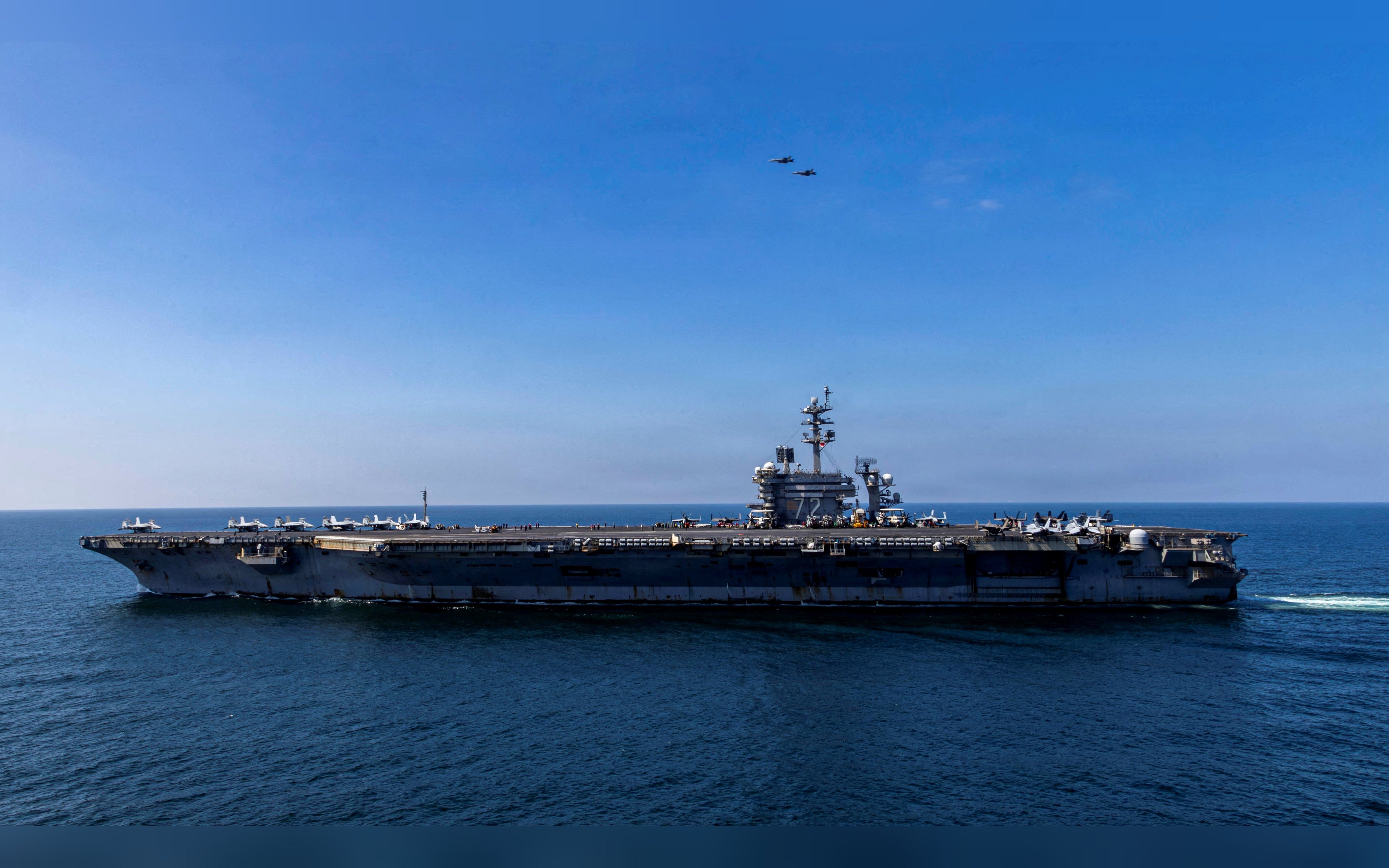
The USS Abraham Lincoln aircraft carrier will be rotated out of West Asia operations following an extended deployment that has raised concerns among families of American sailors aboard the vessel. President Donald Trump confirmed the replacement on Friday, stating that the carrier is being moved and will be succeeded by a similarly-equipped naval asset as part of standard military rotation protocols.
Trump told reporters that "that ship is moving right now, or very shortly, and it's being replaced with another very similar ship" when questioned about the concerns raised by relatives of service members serving on the Lincoln. His remarks came in response to inquiries regarding the strain of prolonged deployment conditions on personnel stationed aboard the carrier. However, when asked whether the deployment period had extended too long, Trump suggested otherwise, declaring "No. Not nearly long enough," a comment that underscores the military priorities driving the vessel's operational schedule in a region of strategic importance to American interests.
The US Navy plans to deploy the USS George Washington to assume the Lincoln's responsibilities in West Asia, according to reports from The Wall Street Journal. This transition aligns with previously scheduled carrier rotation cycles that the Pentagon maintains to ensure continuous maritime presence in critical global regions. The swap represents a standard operational procedure designed to manage the demanding cycle of aircraft carrier deployments across world's oceans.
The Abraham Lincoln has maintained an exceptionally demanding operational tempo during its current deployment cycle. The vessel has been underway for more than 250 days, with the most recent 200 days occurring without a port call, according to maritime sources. This extended period at sea without reprieve represents significant strain on the approximately 5,000 sailors and Marines aboard, affecting both morale and living conditions. The carrier's deployment commenced in November and was redirected toward West Asia in January as regional tensions escalated.
Concerns about deteriorating conditions aboard the carrier prompted formal intervention from US lawmakers. Senator Richard Blumenthal submitted a letter to Defence Secretary Pete Hegseth and acting Navy Secretary Hung Cao, detailing reports of systemic challenges affecting crew welfare. These challenges included inadequate supplies of essential provisions, contamination of the ship's water systems, serious plumbing malfunctions, documented declines in mental health among personnel, safety concerns related to flight deck operations, and substantial delays in mail delivery that prevented care packages from reaching sailors for extended periods.
Acting Navy Secretary Hung Cao formally announced Friday that the USS Abraham Lincoln would return home, framing the decision within operational parameters. "The USS Abraham Lincoln crushed their deployment and will return home soon as part of a planned rotation," Cao stated, emphasizing that "the safety and security of our Sailors and Marines always comes first." His statement attempted to balance acknowledgment of crew hardship against military mission accomplishment, positioning the return as both earned and strategically planned rather than reactive to welfare complaints.
Cao attributed the extended deployment to operational necessity, explaining that the Lincoln's deployment was prolonged "because the mission demanded it." The acting secretary acknowledged the inherent difficulties of sustained naval operations, noting that "deployments are hard. Combat operations make them harder. War is hell and normal routines are disrupted." This characterization provides context for understanding why military leadership maintained the vessel in theater despite deteriorating conditions, prioritizing strategic objectives over immediate crew comfort.
Operational statistics released by Cao underscore the intensity of the Abraham Lincoln's contribution to regional military operations. The carrier completed 266 days of deployment, including 200 days operating within designated combat zones. Aircraft launched from the vessel conducted more than 10,000 sorties, dropping more than 1.5 million pounds of ordnance in support of military operations. These figures reflect substantial combat activity that, from military leadership's perspective, justified extended personnel commitment despite mounting welfare concerns.
While acknowledging deployment challenges, Cao reported that a small number of sailors and Marines received mental health treatment during the extended mission. Notably, he emphasized that no deaths resulted from these mental health cases, suggesting that despite documented psychological strain, the situation did not reach critical levels requiring emergency intervention. This disclosure represents cautious acknowledgment of crew distress while attempting to contextualize the situation as manageable within existing support systems.
For Southeast Asian observers, the USS Abraham Lincoln rotation carries significance beyond routine military logistics. The carrier's extended deployment reflects American strategic prioritization of maintaining robust naval presence in West Asian waters amid regional instability. The replacement cycle demonstrates Washington's commitment to sustained power projection in the region, with the USS George Washington's deployment ensuring uninterrupted carrier strike group operations. This operational continuity affects regional security calculations and signals American determination to maintain freedom of navigation and military influence despite internal pressures regarding personnel welfare.
The situation highlights tensions inherent in military operations between mission requirements and personnel wellbeing. While Trump's dismissive comment about deployment duration reflects one perspective on military priorities, lawmakers and families have advocated for greater consideration of sailor health and living conditions. The formal announcement of replacement indicates that military leadership has calibrated its response to balance both imperatives—maintaining operational commitments while eventually rotating exhausted personnel and equipment for essential maintenance and crew rest.
The rotation also carries implications for broader military readiness. Sustained deployment of carrier strike groups requires careful management of maintenance cycles, crew training, and personnel rotation to sustain long-term operational capability. By rotating in the USS George Washington, the Navy signals understanding that even advanced naval platforms require periodic relief from intense operational tempos to maintain peak effectiveness. This rotation sequence reflects institutional learning about sustainable military operations across the global maritime domain.

