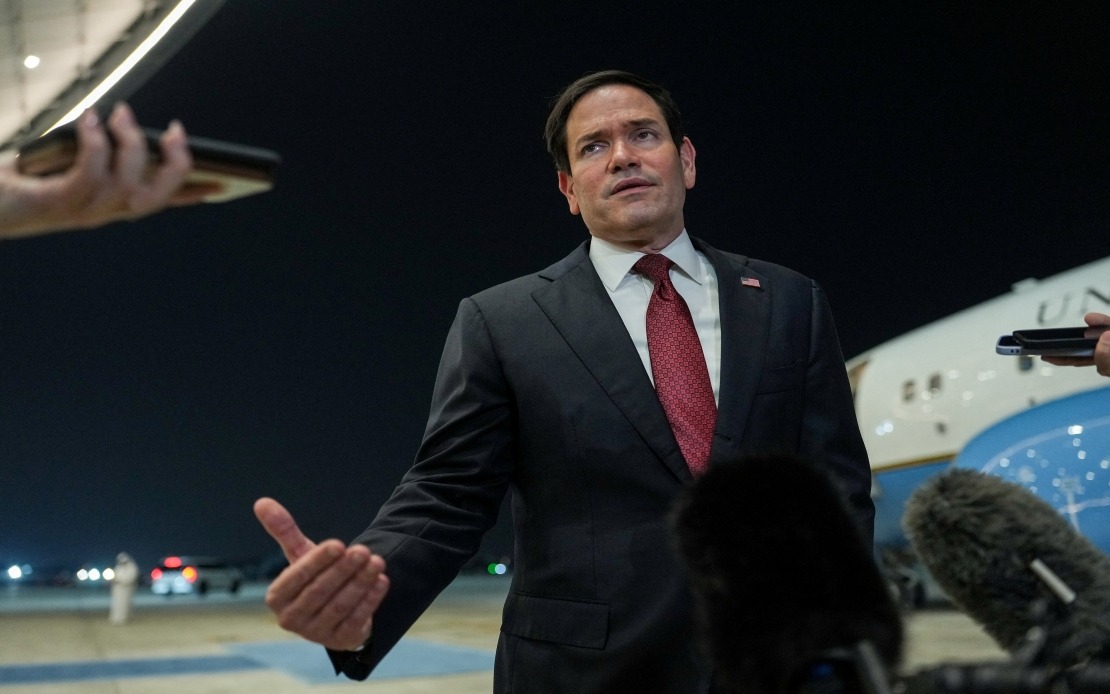
United States Secretary of State Marco Rubio has made clear that the American government will not be part of any financial reconstruction initiative for Iran, even as discussions continue about potential contributions from other nations. In remarks to reporters this week, Rubio rejected suggestions that Washington would bankroll such efforts, emphasising instead that any economic revitalisation would depend on Tehran's own choices and broader geopolitical developments in the region.
The clarification comes amid reports circulating about a possible reconstruction fund that could channel substantial resources toward Iran's economy following recent diplomatic breakthroughs. Rubio's statement effectively separates American policy from what might emerge as a regional or international effort, signalling that the Trump administration intends to remain on the sidelines of any financial commitment. The secretary of state explicitly told the media that neither private American investment nor government funds would be directed toward such initiatives.
Potential involvement from Gulf Cooperation Council states remains on the table, however. Rubio suggested that if countries in the region choose to invest in Iranian economic opportunities, that would be their decision to make independently. The qualified nature of his remarks indicates that any such contributions would likely face conditions and linkages to other considerations, rather than being straightforward reconstruction assistance.
The diplomatic context for these discussions emerged from recent high-level negotiations between Washington and Tehran. Last Sunday, representatives from both nations met in Burgenstock, Switzerland, with Qatar and Pakistan serving as mediators in what proved to be substantive talks. The American delegation was led by J.D. Vance, while Iran's parliamentary speaker Mohammad Bagher Ghalibaf headed the Iranian team. Both sides subsequently announced that meaningful progress had been achieved during these discussions.
More significantly, Iran and the United States reached a memorandum last week that provides a framework for ending the military conflict that erupted on February 28. This agreement represents a substantial shift in bilateral relations and establishes concrete timelines for major steps forward. The United States has committed to lifting its naval blockade, while Iran has pledged to restore shipping operations through the strategically vital Strait of Hormuz, one of the world's most important waterways for global energy trade.
The accord also includes nuclear dimensions that will require further negotiation. Iran has committed not to pursue nuclear weapons acquisition, with the separate resolution of its broader nuclear programme to be hammered out through additional discussions within a 60-day window. This phased approach suggests that negotiators recognised the complexity of the issues involved and built in time for technical and political deliberation on this particularly sensitive topic.
Rubio's framing of reconstruction support as contingent on "progress made on a host of other security issues that have to be confronted in the days to come" indicates that Washington sees any economic assistance as leverage for broader strategic objectives. In other words, the pathway to meaningful economic revitalisation for Iran remains tied to its compliance with security agreements and its behaviour across multiple domains of international relations. This conditionality reflects longstanding American strategy toward Iran and suggests that economic benefits will flow gradually as trust is built through demonstrated commitment to the agreed frameworks.
The dismissal by President Trump last week of reports about a $300 billion reconstruction fund had raised questions about the scale and viability of any such initiative. By clarifying that the United States will not be a participant, Rubio has further narrowed the scope of what might be achievable. Nevertheless, the existence of ongoing discussions about reconstruction underscores that the diplomatic breakthrough has created space for conversations about revitalising Iran's sanctions-ravaged economy, even if American capital will not be directly involved.
For Malaysia and other Southeast Asian nations, these developments carry significance on multiple fronts. The Strait of Hormuz remains critical to regional energy security and global trade flows that affect Malaysian commerce and energy supplies. Restoration of normal shipping through this chokepoint would provide stability that benefits all maritime trading nations. Additionally, any broader stabilisation in Iran's regional behaviour could have implications for shipping security in the Indian Ocean and beyond, affecting Malaysian maritime interests and regional stability more broadly.