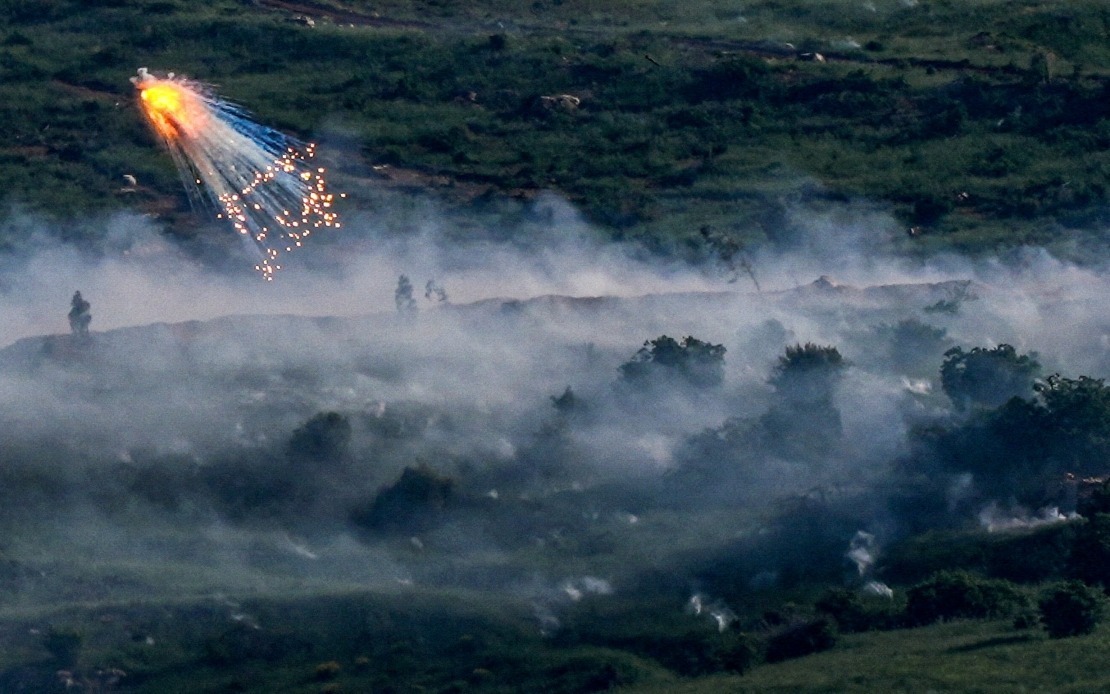
The United States has issued formal travel advisories warning its citizens against journeys to Lebanon and the northern regions of Israel, citing the deteriorating security situation across West Asia. Both the American Embassy in Beirut and the embassy in Jerusalem released coordinated statements on Saturday, July 18, highlighting the complex and unpredictable nature of the current security environment in the region.
In its Beirut statement, the US Embassy characterized the prevailing conditions as marked by "high tensions" and emphasized that the security landscape remains inherently unstable with significant potential for unforeseen escalation. This language reflects American concerns about the cascading effects of ongoing regional conflicts and the possibility that localized tensions could rapidly spread across international boundaries, affecting civilian populations and foreign nationals.
The Jerusalem embassy expanded the scope of its advisory beyond Lebanon, instructing American nationals to refrain from travelling to Gaza, the northern sections of Israel, and areas bordering Egypt, with the sole exception of the Taba crossing point. The embassy simultaneously urged Americans to reconsider any travel plans involving movement to or through West Asia more broadly, signalling that the threat assessment extends far beyond the immediate conflict zones.
For Malaysian readers and businesses operating across the region, these American advisories carry significant implications. Many Malaysian nationals work throughout Lebanon, Israel, and surrounding territories in various sectors including finance, tourism, education, and international organizations. The US travel warning typically precedes similar advisories from other Western governments, potentially triggering a cascade of travel restrictions that could strand workers or complicate business operations.
The timing of these warnings coincides with an escalation in regional hostilities that have persisted despite diplomatic efforts. In June, Pakistan facilitated a memorandum of understanding between the United States and Iran intended to halt their military exchanges and establish a framework for sustained peace negotiations. However, that agreement has proven fragile, with both powers conducting retaliatory attacks in recent weeks, undermining confidence in the ceasefire mechanism.
This cycle of escalating tensions reflects the deeper structural instabilities that characterize West Asia's geopolitical landscape. The region hosts competing interests from multiple global powers, sectarian divisions that complicate diplomatic resolution, and numerous non-state actors with their own strategic objectives. For Malaysian policymakers and businesses seeking to maintain engagement with West Asian partners, this volatility presents a significant challenge to regional stability and economic cooperation.
The proliferation of American travel warnings also influences international confidence in the security situation. Malaysian government agencies, financial institutions, and corporations typically monitor US State Department advisories when making decisions about personnel deployment and business continuity. When Washington elevates threat assessments, it often triggers similar evaluations by other governments, potentially creating a self-reinforcing pattern of withdrawal from affected regions.
Historically, such comprehensive travel warnings have preceded major security incidents or represent official acknowledgment that security conditions have deteriorated beyond manageable thresholds. The breadth of the current American advisory—encompassing Lebanon, Gaza, northern Israel, and broader West Asian travel—suggests assessment of systemic rather than localized risk, indicating that conflicts in one location may readily spread to neighboring territories.
Malaysian citizens and entities with interests in the region should carefully monitor developments and consult official advisories from their own government. The Ministry of Foreign Affairs typically issues its own travel recommendations based on ground assessments and coordination with Malaysian missions abroad. Given the current trajectory, Malaysian businesses should review their operational footprints and consider contingency planning for potential disruptions to supply chains, personnel movements, and commercial activities.
The situation underscores the fragility of diplomatic mechanisms in a region characterized by deep historical grievances and competing strategic interests. While the Pakistan-brokered June agreement represents genuine diplomatic effort, its limited effectiveness highlights how difficult sustained peace negotiations have become in West Asia. External powers like Malaysia, which maintain relatively balanced relationships across regional divides, may find opportunities to contribute constructively to de-escalation efforts, though the immediate security environment requires heightened caution.
Regional observers note that the current instability reflects not merely immediate tactical conflicts but fundamental disagreements about regional order, sphere of influence, and resource control. American travel warnings, while pragmatic security measures, also implicitly signal that Washington has limited confidence in the near-term stabilization of conditions. This assessment carries weight beyond immediate traveller safety, suggesting that international actors should prepare for prolonged volatility rather than imminent resolution.
For the Southeast Asian region more broadly, West Asian instability creates indirect consequences including potential disruptions to energy supplies, maritime security concerns affecting shipping through critical chokepoints, and broader geopolitical repositioning that affects regional alignments. Malaysia, as a significant maritime trading nation and energy consumer, maintains substantial interests in West Asian stability that extend beyond direct bilateral relationships.

