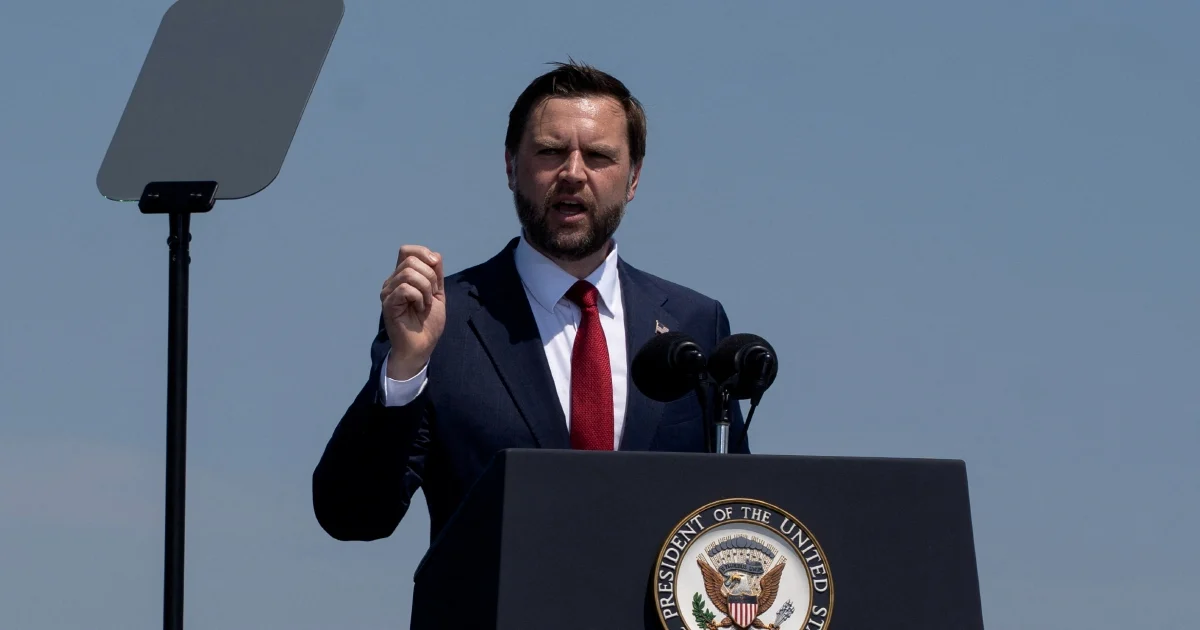
The United States Vice President JD Vance delivered pointed criticism of Britain's political establishment during a recent visit to London, asserting that the nation's governance has disappointed citizens over an extended period. His remarks come at a pivotal moment in UK politics, with the country preparing for a transition in its highest office and facing mounting public demands for fundamental reform across multiple sectors.
Vance's comments represent a direct intervention in British domestic politics by a senior American official, reflecting the Trump administration's willingness to engage openly with foreign political developments. The Vice President articulated a conviction that structural change, rather than incremental adjustments, represents the solution to Britain's accumulated governance challenges. His perspective aligns with broader populist critiques gaining traction on both sides of the Atlantic regarding the effectiveness and responsiveness of traditional political institutions.
Britain's recent political history provides substantial context for Vance's assessment. The nation has experienced extraordinary turbulence in executive leadership, with multiple prime ministerial transitions occurring within compressed timeframes. This instability has coincided with persistent economic challenges, including inflation pressures, industrial relations difficulties, and questions surrounding public service delivery. Citizens have expressed visible frustration through electoral shifts and declining confidence in established parties to address fundamental concerns about living standards and national direction.
The incoming prime minister will inherit a complex inheritance of accumulated policy challenges and public dissatisfaction. Energy costs remain a concern for many households, while the National Health Service continues facing capacity constraints despite significant investment. Regional inequality persists as a persistent feature of the British economic landscape, with divergent prosperity levels between London and the Southeast compared to other areas. Infrastructure modernization debates remain unresolved, and educational outcomes continue sparking policy discussions across the political spectrum.
Vance's emphasis on structural transformation reflects American conservative thinking about institutional reform. The Vice President appears to be signalling that Washington expects substantive policy shifts rather than cosmetic leadership changes. This observation carries implications for the transatlantic relationship, as US officials traditionally maintain diplomatic distance from domestic UK political matters. The directness of Vance's criticism suggests the Trump administration may take a more interventionist approach to commenting on allied governments' internal affairs.
For Malaysian and Southeast Asian observers, Vance's intervention illustrates how major geopolitical players increasingly view governance effectiveness as intertwined with broader strategic interests. Britain's capacity to address domestic challenges influences its international engagement capacity and reliability as a partner in regional and global initiatives. Political stability and institutional effectiveness directly affect a nation's ability to maintain diplomatic commitments and international leadership roles. This principle applies universally across democratic systems, making Britain's governance challenges relevant to understanding broader patterns of political adaptation in developed democracies.
The Vice President's remarks also underscore American interest in ensuring Britain remains a dependable partner within Western alliance structures. Political paralysis or leadership instability in London complicates coordination on defense matters, intelligence sharing, and foreign policy alignment. Washington has substantial interest in seeing Britain stabilize politically and achieve the kind of institutional clarity that permits consistent engagement with partners across the Indo-Pacific region and beyond. Britain's role as a permanent UN Security Council member and NATO member creates implications extending far beyond its domestic sphere.
British voters have signalled through successive electoral cycles that they seek alternative approaches to persistent national challenges. Multiple consecutive governments have promised transformation but delivered only modest progress on publicly identified priorities. This pattern of unfulfilled expectations creates both opportunity and danger for incoming leadership. The incoming administration possesses a mandate for change, yet faces the reality that complex institutional problems rarely yield to short-term solutions. Vance's comments implicitly acknowledge this paradox while expressing optimism that serious structural reform remains possible.
The timing of Vance's remarks carries particular significance given American domestic political transitions and their potential implications for transatlantic relations. The incoming US administration will shape the character of the British-American relationship during a period of significant international uncertainty. Europe faces security challenges emanating from its eastern flank, regional economic pressures, and questions about the future of established multilateral frameworks. Britain's capacity to navigate these challenges effectively depends substantially on domestic political stability and the successful implementation of coherent policy frameworks.
Vance's intervention reflects deeper questions about how the next British prime minister will approach both domestic and international challenges. The incoming leader must balance demands for substantial policy change against the practical constraints of implementing significant institutional reforms. Success requires not only clear strategic vision but also the capacity to build coalitions capable of sustaining change through inevitable political obstacles. The Vice President's statement suggests Washington will be watching closely to assess whether British leadership can move beyond rhetoric to deliver tangible improvements in governance and policy outcomes that address citizen concerns.

