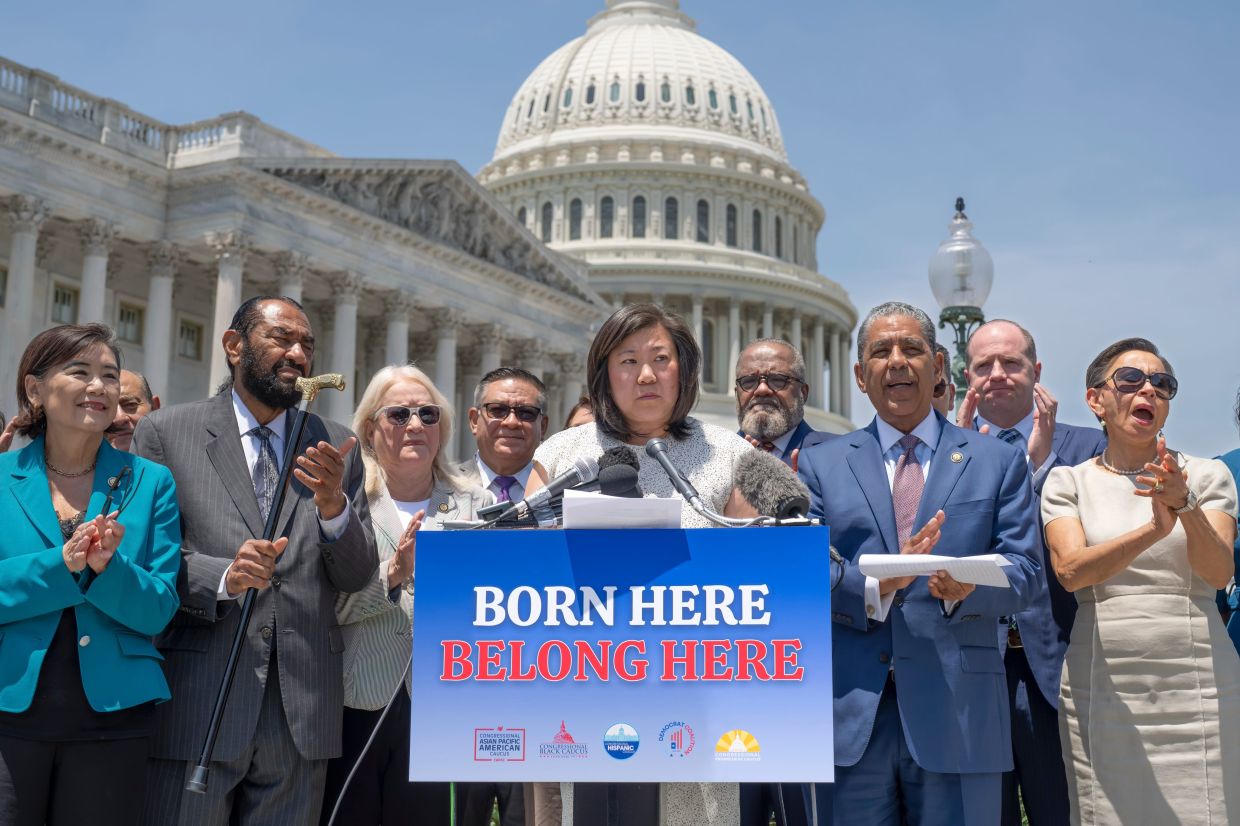
The US Supreme Court has dealt a significant blow to one of President Donald Trump's signature immigration policies, striking down his executive order that would have denied automatic citizenship to children born in the United States to undocumented parents or those on temporary visas. The 6-3 decision represents a major setback for the administration's second-term immigration agenda and revives constitutional protections that have existed since the aftermath of the Civil War.
Trump's executive order, signed in early 2025, was designed to end citizenship for children of non-citizen parents and those on temporary legal status. The policy was set to take effect within weeks of its signing, but the Supreme Court's intervention halted implementation. The ruling underscores the judiciary's reluctance to fundamentally reshape citizenship law through executive action, a position that has broader implications for immigration policy across the Western world and Southeast Asia's diaspora communities.
Chief Justice John Roberts articulated the majority's reasoning by anchoring the decision in historical principle. In his opinion, Roberts emphasised that citizenship represents the foundational right to participate fully in political and civil society. He invoked the promise made by the framers of the 14th Amendment, noting that the principle of birthright citizenship extends to every person born freely on American soil. This language deliberately connects modern jurisprudence to the amendment's original purpose, which was protecting the rights of formerly enslaved people and other minorities in the aftermath of the Civil War.
The legal foundation for birthright citizenship dates to 1898 and the landmark case United States v. Wong Kim Ark. Wong Kim Ark was the son of Chinese immigrants who had been denied re-entry to America after travelling to China, with authorities claiming his parents' status disqualified him from citizenship under the Chinese Exclusion Act. The Supreme Court ruled against the government, establishing that nearly all children born on US soil possess automatic citizenship rights regardless of parental origin. More than a century later, that principle proved decisive in defeating Trump's order.
Trump's initiative actually targeted a broader population than public debate often acknowledges. While much political discourse surrounds undocumented immigration, the executive order would have stripped citizenship rights from children of parents lawfully present in the United States. This included families where parents held highly skilled work visas such as H-1B visas for specialised professionals or L-1 visas for intra-company transfers, along with holders of dependent visas, student visas, temporary labour visas, and achievement visas. Only when at least one parent possessed US citizenship would children automatically gain that status under the order's framework. The policy would have effectively created a two-tier system of Americans based on parental immigration classification.
For Malaysia and other Southeast Asian nations, the ruling carries particular relevance given the significant numbers of citizens working temporarily in the United States on professional visas. Malaysian expatriates employed by multinational corporations, technology firms, and financial institutions frequently hold the exact visa categories that Trump's order targeted. A successful challenge to birthright citizenship would have forced difficult choices for these families, potentially discouraging talent migration or creating legal uncertainty for second-generation Americans of Southeast Asian heritage.
The Trump administration and conservative proponents of the executive order attempted to reframe the birthright citizenship debate around so-called birth tourism rather than undocumented immigration. This strategy involved allegations directed particularly at Chinese nationals, who the administration claimed operated sophisticated schemes to exploit American citizenship through childbirth. The Department of Justice highlighted a 2024 prosecution involving Michael Wei Yueh Liu and Jing Dong, who received 41-month prison sentences for operating a birth tourism operation that charged Chinese clients tens of thousands of dollars to facilitate deliveries in the United States. The litigation strategy emphasised this criminal dimension to build political support for restriction.
Yet the Supreme Court's majority rejected the notion that isolated instances of birth tourism justified eliminating a constitutional right enjoyed by millions of Americans. The decision implicitly acknowledges that addressing fraud and abuse can occur through targeted criminal prosecution without dismantling the citizenship framework itself. This distinction matters considerably for international relations and immigration policy, as it suggests that American law can address specific abuses without wholesale elimination of longstanding rights.
In response to the ruling, Trump deployed social media to signal continued determination on the issue. He congratulated China on what he characterised as their victory and claimed that Congress could accomplish through legislation what the executive branch could not achieve unilaterally. Trump explicitly rejected the need for a constitutional amendment, asserting that ordinary legislation could suffice. He called for congressional action, promising complete support for any legislative initiatives to restrict birthright citizenship and characterising existing policy as expensive and unfair to the nation.
The invocation of congressional action carries significant weight given Republican control of both chambers. Should Congress attempt to legislate restrictions on birthright citizenship, such efforts would likely require clarification or reinterpretation of the 14th Amendment's Citizenship Clause through the legislative process. The Supreme Court's rejection of executive action does not necessarily preclude congressional intervention, though any such legislation would face its own constitutional challenges and potential future judicial review.
American civil rights organisations and Asian-American advocacy groups emphasised the decision's historical resonance. Descendants of Wong Kim Ark stressed that his case, initially involving one restaurant worker defending his individual rights, ultimately benefited entire communities. Organisations including Stop AAPI Hate noted that birthright citizenship enabled Asian-American communities to grow in size and political influence across generations. The ruling's preservation of this right thus carries symbolic weight beyond its immediate legal effect, representing continuity with principles that shaped American diversity and democratic participation.
For international observers monitoring American immigration policy, the Supreme Court's decision demonstrates judicial constraints on executive power in this domain. It signals that while significant immigration reform remains possible through legislation, the courts will not countenance unilateral executive elimination of constitutional citizenship rights. This equilibrium between executive initiative and judicial constraint provides a framework for understanding America's immigration trajectory and its implications for skilled workers, students, and families from Southeast Asia and throughout the world.

