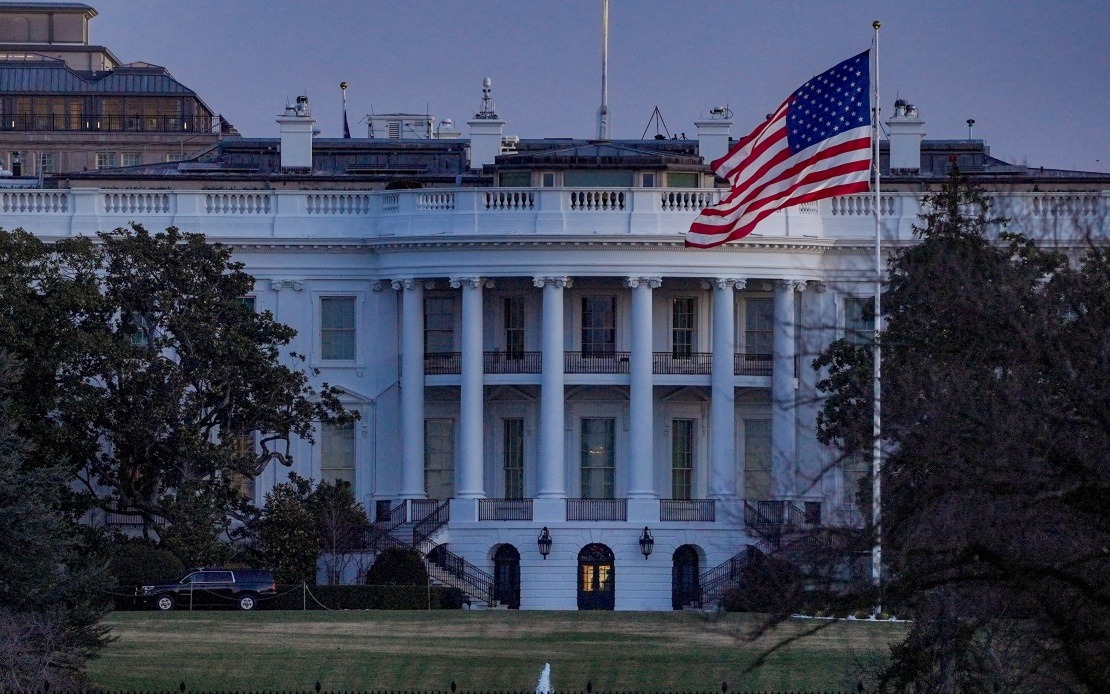
The United States Secret Service is grappling with an unprecedented security challenge, with agency director Sean Curran publicly confirming that his personnel are managing what he described as a "heightened level of threat environment" affecting everyone from the sitting president to former leaders and other high-ranking officials. The candid assessment, delivered at a briefing preceding the White House Correspondents' Association dinner on July 23, reflects the sobering reality facing America's principal protection agency as it juggles unprecedented demand for its services across multiple protective assignments.
President Donald Trump has become the focal point of this elevated threat landscape, having survived three separate assassination attempts within a two-year span. The first incident occurred during a campaign rally in Pennsylvania in July 2024, when an assailant opened fire and struck Trump in the ear. The brazen attack at what was supposed to be a routine political event shocked the nation and marked a significant escalation in political violence. Just two months later, a second attempt materialised at Trump's private golf club in Florida, demonstrating that threats extended beyond public campaign settings into spaces the president frequented for leisure.
The pattern of threats intensified further in April 2026 when violence erupted during the White House Correspondents' Association Dinner itself, an event Trump was attending. The shooting prompted authorities to reschedule the prestigious gathering—originally interrupted by the incident—to July 24. The suspect involved in that incident faced multiple serious charges, including attempted assassination of the sitting president, underscoring the judicial system's recognition of the severity of the threat.
Iranian involvement in alleged assassination plots has emerged as a significant concern. Earlier in July, Trump publicly stated that he believed Iran had him in its crosshairs as the number-one target, claiming the statistical likelihood of a sitting president failing to survive their tenure stood at approximately 5.2 per cent. Despite these alarming claims, Trump expressed confidence in his safety, saying he saw no compelling reason to feel threatened. His apparent equanimity stands in contrast to the palpable concern evident in official security channels.
The menace extends beyond individual assassination plots. In June 2026, the Federal Bureau of Investigation uncovered what it characterised as a potential attack scheme involving a UFC event scheduled at the White House. The Department of Justice subsequently classified this discovery as another assassination attempt targeting Trump, suggesting that threat actors were exploring unconventional venues and events as potential attack opportunities. This expanded conception of threat vectors has forced the Secret Service to expand its protective perimeter and analytical frameworks.
For Malaysian and Southeast Asian observers, the instability gripping American political security carries several implications. The United States has long positioned itself as a beacon of democratic stability and institutional resilience. The successive assassination attempts against a sitting president, coupled with the security establishment's public acknowledgment of a deteriorating threat environment, signal vulnerability in systems long considered robust. This undermines American credibility when it advocates for democratic norms and institutional integrity in regional forums.
Moreover, the patterns evident in these attacks—from targeted violence at campaign events to plots uncovered through intelligence channels—mirror concerns that regional governments have confronted regarding political violence and extremism. The methods and sophistication displayed by those targeting Trump provide a troubling case study for how threats evolve and adapt. Intelligence agencies across Southeast Asia are undoubtedly studying these incidents for insights into emerging threat methodologies and the gaps that permitted multiple attacks to reach their execution phase.
The economic and diplomatic ramifications merit consideration as well. A US president operating under severe security constraints faces limitations on his ability to engage in the kind of fluid international diplomacy that characterises productive bilateral and multilateral relationships. Trump's attendance at events like the White House Correspondents' Association dinner, though requiring extraordinary security measures, represents an attempt to maintain some semblance of normal presidential function despite the threat environment. However, the operational burden of providing protection at this intensity level diverts resources and constrains the spontaneity that often characterises high-level diplomatic engagement.
Secret Service Director Curran's public acknowledgment, rather than attempting to minimise the threat landscape, suggests that official Washington has decided transparency serves the broader security interest. By openly discussing the elevated threat environment, authorities can justify enhanced protective measures to the public and prepare the nation's leadership for the operational realities they face. This approach contrasts with historical tendencies toward secrecy in discussing threats to national leadership.
The implications for presidential governance extend to decision-making processes themselves. When a sitting president faces recurring assassination threats, the psychological and logistical burdens inevitably influence how leaders prioritise their time and exposure. High-risk public appearances become calculus exercises balancing political benefit against security vulnerabilities. The need for extraordinary protective measures at routine governmental functions represents a historic departure from the relative accessibility Americans have traditionally expected from their elected leaders.
Looking forward, the Secret Service faces the challenge of sustaining protective operations at this intensity level indefinitely. The agency must balance its traditional protective mission with the expanded threat landscape while managing fatigue among personnel tasked with round-the-clock vigilance. The precedent set by multiple successful breaches—or near-breaches—in the protective perimeter suggests that adversaries have identified vulnerabilities and will continue probing for weaknesses.
The broader security implications extend throughout the American political system. If a sitting president requires the level of protection now acknowledged as necessary, questions arise about the vulnerability of other high-ranking officials, candidates for national office, and members of Congress. The Secret Service's struggle with the current threat environment may foreshadow institutional capacity challenges that could affect American political stability more broadly.

