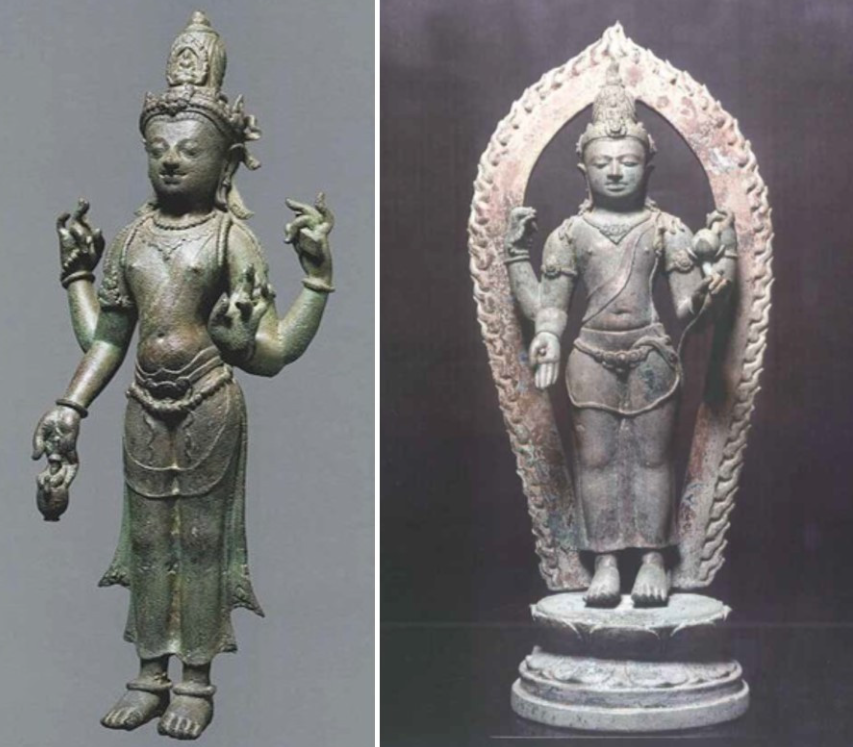
Indonesia has recovered two precious eighth-century bronze sculptures that vanished from its archaeological heritage following their looting decades ago and subsequent trafficking through one of Asia's most notorious antiquities dealers. The statues were formally returned during a repatriation ceremony at the Indonesian Consulate in New York last week, marking another milestone in the ongoing international effort to reclaim Southeast Asia's plundered cultural treasures from illicit art networks.
The two sculptures depict Avalokiteshvara, a four-armed bodhisattva revered in Buddhist tradition as the embodiment of compassion and mercy. Their recovery traces back to investigations into Douglas Latchford, a British antiquities dealer based in Bangkok whose career became inseparable from the large-scale looting of Cambodian and Southeast Asian archaeological sites. Though Latchford died in 2020 before charges against him could proceed to trial, his criminal enterprise—which prosecutors alleged had operated for decades—left a trail of stolen artefacts distributed across international markets, private collections and museums worldwide.
According to the Office of the US Attorney for the Southern District of New York, Latchford systematically trafficked the Indonesian bronzes and other antiquities into American channels between 2003 and 2007, selling them to a US-based collector. Crucially, Latchford deliberately obscured the objects' illicit origins by withholding information about their provenance and fabricating false documentation of their history. This deliberate deception allowed the stolen pieces to circulate through the international art market with apparent legitimacy, a common tactic in the antiquities trafficking world that allows buyers to maintain plausible deniability about acquiring looted items.
The breakthrough in recovering these particular sculptures came through an unexpected avenue. In 2021, a US collector who had previously acquired the statues from Latchford voluntarily surrendered 34 Cambodian and Southeast Asian antiquities as part of the broader investigation into the dealer's network. This voluntary cooperation proved instrumental in reconstructing the provenance of the Indonesian pieces and enabling their return to their country of origin. Such voluntary surrenders remain relatively rare in antiquities trafficking cases, making this collector's decision a significant gesture toward rectifying the damage wrought by the illicit art trade.
US Attorney Jay Clayton, speaking at the repatriation ceremony, emphasised the broader significance of returning these works. "Today, we celebrate the return of Indonesia's cultural heritage to the Indonesian people," he stated, framing the recovery as a matter of national patrimony rather than merely individual objects. Clayton also highlighted his office's commitment to dismantling the financial networks that enable art trafficking, emphasising partnerships with federal agencies like Homeland Security Investigations to pursue dealers and dealers' networks that profit from stolen cultural property.
The exact locations within Indonesia from which the eighth-century statues were originally taken remain unclear, reflecting a broader challenge in heritage recovery work. When archaeological sites are looted, records documenting the precise removal of objects are often deliberately destroyed or never created, making it difficult to establish the complete provenance trail. This information gap has become a hallmark of organised antiquities trafficking, where the elimination of documentary evidence serves to obscure the chain of custody and complicate efforts by source countries to reclaim their heritage.
Latchford's prominence in the illicit antiquities trade is particularly significant for understanding Southeast Asian cultural heritage losses. Before his criminal network unravelled in 2019, he had cultivated a reputation as a leading collector and dealer of Khmer art, operating with relative impunity across Thailand and Cambodia. His operation demonstrated how a single well-connected dealer could orchestrate the systematic plunder of an entire region's archaeological legacy, distributing looted objects to wealthy collectors and prestigious museums across the globe. The subsequent exposure of his activities revealed that even respected institutions had unknowingly acquired looted property through his networks.
The fallout from Latchford's operation continues to reverberate. After his death, his daughter negotiated the return of his entire collection—valued at more than US$50 million—to Cambodia, a step that required navigating complex legal and financial considerations. Subsequently, dozens of Khmer artefacts have been repatriated from museums and private collectors across the United States, Europe and Australia as institutions reviewed their acquisitions and investigators traced the provenance of Latchford-sourced objects. This cascading effect demonstrates how prosecuting major dealers can trigger broader accountability throughout the international art market.
Indonesia's experience with cultural heritage recovery extends beyond the Latchford network. Just last year, US authorities returned three Indonesian artefacts valued at approximately Rp6.5 billion that had been trafficked by a separate smuggling operation involving Indian-American dealer Subhash Kapoor and American dealer Nancy Wiener. Those objects, which included a Majapahit-period stone relief and bronze sculptures of Buddha and the Hindu deity Vishnu, illustrated how multiple trafficking networks simultaneously target Southeast Asian heritage. The Kapoor investigation proved even more expansive, with Homeland Security and Manhattan prosecutors recovering over 2,500 antiquities with an estimated combined value exceeding $143 million between 2011 and 2023.
The persistence of these large-scale trafficking operations underscores the economic incentives driving the illicit antiquities trade. A single bronze sculpture from Southeast Asia's classical periods can command six or seven-figure prices on the international market, creating powerful motivation for looters, middlemen dealers and corrupt officials to participate in systematic heritage theft. Source countries like Indonesia, despite possessing legal frameworks prohibiting the export of antiquities, struggle to enforce these restrictions at porous borders and ports where corruption enables smuggling.
For Malaysian and regional observers, Indonesia's experience offers both cautionary and encouraging lessons. The cautionary element reflects the vulnerability of Southeast Asian archaeological sites to organised looting networks that exploit porous borders and inadequate site security. The encouraging aspect involves the increasing success of international law enforcement cooperation, particularly with US authorities who possess significant resources for tracing looted objects through American art markets and financial systems. Malaysia, which possesses its own rich archaeological heritage from periods including the Srivijaya and Majapahit eras, faces similar challenges in protecting sites from looting and recovering stolen objects.
The repatriation ceremony itself carries symbolic weight beyond the return of two sculptures. It represents a counterforce to decades of cultural extraction, acknowledging that archaeological objects removed without consent constitute violations of national sovereignty as well as theft. As Southeast Asian countries increasingly assert claims to their dispersed heritage and demand accountability from institutions and dealers who profit from looted property, cases like this repatriation establish precedents that strengthen future recovery efforts. The involvement of multiple US federal agencies and the cooperation of private collectors signals an evolving consensus that the costs of participating in antiquities trafficking are rising significantly.

