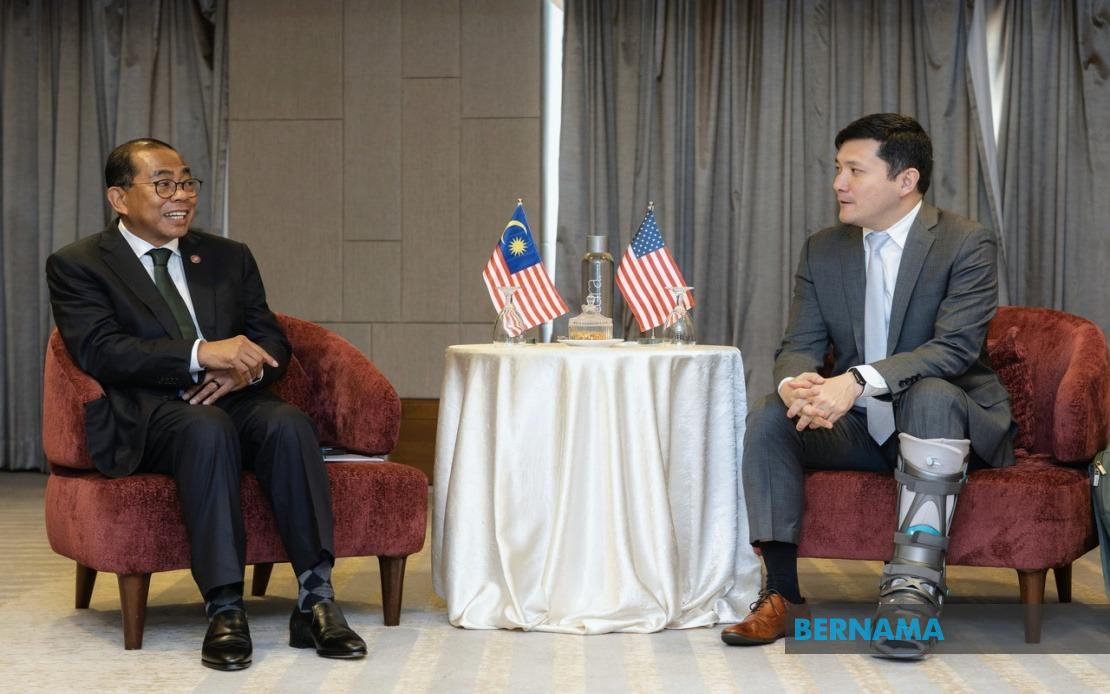
Malaysia's defence sector is set to benefit from renewed American commitment to deepening strategic cooperation, as the United States signalled its continued focus on bolstering bilateral military relations during high-level diplomatic engagements in Kuala Lumpur this week. Defence Minister Datuk Seri Mohamed Khaled Nordin received US Ambassador to ASEAN Kevin Kim for a courtesy call, during which both nations reaffirmed their shared interest in expanding defence ties as part of a broader partnership framework.
The timing of these discussions proved significant, coinciding with the 37th Annual Military Law and Operations Conference (MILOPS) — a major gathering that drew government officials and military representatives from more than 30 countries to Malaysia from August 3 to August 6. This conference underscores Kuala Lumpur's role as a regional hub for defence dialogue, positioning Malaysia at the centre of contemporary discussions surrounding military operations and international defence law across Asia-Pacific and beyond.
While Mohamed Khaled characterised the meeting with Ambassador Kim as focusing primarily on relationship-building rather than specific policy discussions, the reaffirmation of US commitment carries substantial implications for Malaysia's defence architecture. The United States remains one of the most significant external powers shaping regional security dynamics, and sustained American engagement with Malaysian defence institutions signals continuity in a partnership that has evolved significantly over recent decades.
Beyond the bilateral engagement with Washington, Mohamed Khaled's diplomatic calendar revealed the multifaceted nature of Malaysia's defence partnerships. ASEAN Secretary-General Dr Kao Kim Hourn also paid a courtesy call, providing an opportunity for both officials to examine the regional challenges confronting the bloc and to discuss how the defence sector might contribute to preserving ASEAN Centrality — a cornerstone principle that emphasises Southeast Asia's agency in managing its own security affairs amid great-power competition.
The defence minister and ASEAN's top official concluded that military institutions across member states possess a critical function in supporting the bloc's overarching objectives of maintaining peace, stability, and prosperity. This perspective reflects a broader recognition that in an era marked by maritime disputes, terrorism concerns, and strategic rivalries, defence cooperation at the ASEAN level must evolve to address transnational security threats while respecting the sovereignty and non-interference principles that bind the organisation together.
Simultaneously, Singapore's newly appointed Permanent Secretary for the Ministry of Defence, Joseph Leong, met with Mohamed Khaled to underscore Singapore's commitment to deepening defence cooperation with Malaysia across both bilateral and multilateral channels. This development carries particular weight given Singapore's outsized influence in regional military affairs and its central role in various security frameworks, most notably the Five Power Defence Arrangements (FPDA) — a Cold War-era alliance that continues to shape defence dynamics across the region.
The FPDA framework merits particular attention for Malaysian and regional observers, as it represents a structured mechanism through which Malaysia, Singapore, Australia, the United Kingdom, and New Zealand coordinate military exercises, intelligence sharing, and strategic planning. Joseph Leong's emphasis on strengthening Malaysian-Singaporean cooperation through both this arrangement and broader ASEAN channels suggests that the two largest Southeast Asian economies recognise the interconnected nature of security challenges that transcend bilateral boundaries.
For Malaysia specifically, the convergence of these diplomatic overtures during a major defence conference illustrates the country's significance within regional and global security architectures. Malaysian policymakers navigate a delicate balancing act, maintaining strategic partnerships with the United States and other developed democracies whilst simultaneously fostering deeper intra-ASEAN cooperation and managing relationships with China and other regional powers. The emphasis on strengthening defence ties with multiple partners simultaneously reflects this nuanced approach to security engagement.
The 37th MILOPS conference itself deserves consideration as more than a mere diplomatic gathering. By hosting this multinational forum, Malaysia demonstrates its capacity to convene serious discussions on military law and operational standards — technical domains that prove essential for preventing misunderstandings and managing escalation in an increasingly militarised region. The participation of representatives from over 30 nations underscores the universal relevance of these conversations and Malaysia's contribution to establishing common standards for responsible military conduct.
Moving forward, the commitments articulated during these encounters will require substantiation through concrete actions — whether through enhanced training exercises, technology transfers, interoperability improvements, or increased personnel exchanges. The rhetoric of deepened partnerships must translate into institutional mechanisms that allow defence establishments to operate with greater coordination and mutual understanding, particularly as regional security dynamics continue evolving in response to geopolitical shifts and emerging technologies.
For Malaysian defence analysts and policymakers, the principal challenge lies in calibrating these multiple partnerships to serve national interests without becoming entangled in great-power rivalries or undermining ASEAN cohesion. The defence minister's careful articulation that meetings focused on relationship-strengthening rather than policy disputes reflects this sensitivity — a recognition that Malaysia must deepen practical cooperation whilst preserving strategic autonomy in an increasingly contested region.

