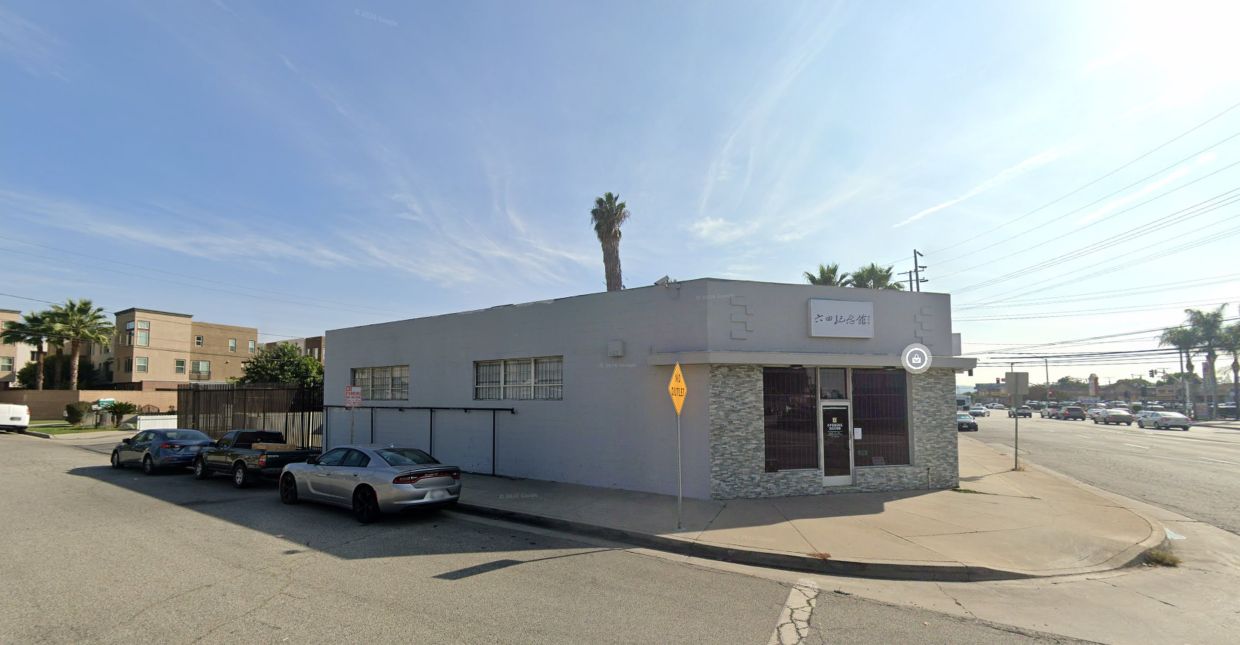
Two prominent US Congressional figures have formally requested that the Justice Department and FBI conduct a thorough investigation into a recent break-in and vandalism incident at a California museum dedicated to commemorating the 1989 Tiananmen Square crackdown. The three-page letter, delivered on Thursday to federal authorities, underscores growing concerns among American lawmakers about potential efforts to suppress commemoration and free expression within Chinese diaspora communities inside the United States.
The June 4th Memorial Museum in El Monte, California, experienced a security breach on May 31 when unidentified intruders forcibly entered the facility, spray-painted walls and exhibits, damaged property, and deliberately disabled the museum's surveillance equipment. The timing of the incident—occurring just days before the sensitive June 4th anniversary marking the three decades-old crackdown—prompted the museum management to suggest a calculated targeting rather than random criminal activity. Local police have since opened an investigation and the museum says it has uncovered certain leads and inconsistencies that authorities are actively pursuing.
The signatories of the letter are John Moolenaar, a Michigan Republican chairing the House Select Committee on China, and Christopher Smith, a New Jersey Republican serving as co-chairman of the Congressional-Executive Commission on China. Their joint appeal signals bipartisan concern within Congress that the vandalism may constitute more than simple criminality, with lawmakers specifically requesting federal investigators determine whether individuals connected to or sympathetic towards the People's Republic of China or the Communist Party orchestrated, encouraged, supported, or carried out the attack.
The museum itself, established in 2023 as a non-profit entity under American tax law, has occupied a precarious financial position since its inception. Originally established in New York, the institution relocated to the Los Angeles area to reduce operational expenses, a decision reflecting the resource constraints facing such commemorative ventures. Funding has relied primarily on grassroots mechanisms including independent fundraising initiatives and crowdsourced donations from civil society organisations. An online artist collective reported in 2023 that approximately US$500,000 had been raised toward an ambitious US$2 million target, suggesting the project remains substantially under-resourced.
In its public statement addressing the incident, museum leadership expressed determination to maintain its mission despite the disruption. Officials strongly condemned both the perpetrators and any parties instigating the break-in, pledging to pursue appropriate legal avenues while emphasising that intimidation tactics would not deter the institution's work. The museum's management explicitly framed the incident as potentially constituting "transnational repression"—a term increasingly applied to efforts by foreign governments to suppress dissent or commemoration activities targeting vulnerable populations living abroad. However, specific evidence supporting this characterisation was not detailed in available public statements.
For Malaysian and broader Southeast Asian observers, this incident illustrates the intensifying geopolitical dimensions of historical memory and diaspora politics in democracies with significant Chinese populations. The tensions surrounding Tiananmen commemoration have periodically surfaced across the region, with various communities seeking to preserve historical narratives while facing pressure from diplomatic and state-level actors. The American response through Congressional oversight mechanisms demonstrates how liberal democracies increasingly treat such incidents as matters of national security rather than purely local law enforcement concerns.
The Congressional-Executive Commission on China, which co-sponsored the letter, was established in 2000 specifically to monitor human rights and rule of law developments following Beijing's entry into the World Trade Organization. The House Select Committee on China, by contrast, represents a more recent legislative innovation created in January 2023, reflecting heightened American institutional focus on economic and security competition with Beijing. While neither body possesses authority to propose legislation independently, both retain investigative powers and regularly submit policy recommendations to Congress, positioning them as influential voices in American China policy formation.
Previously, Beijing has characterised such Congressional bodies and their activities as "political tools with zero credibility," dismissing oversight mechanisms as products of "Cold War mentality" and "ideological bias." The Chinese embassy in Washington has not yet responded to inquiries regarding the museum incident, maintaining a pattern of limited engagement with such allegations. This diplomatic silence contrasts with the proactive stance adopted by American lawmakers, who appear determined to ensure federal resources are mobilised toward understanding potential foreign involvement.
The broader implications of this incident extend beyond the immediate criminal investigation. The willingness of Congressional leadership to escalate the matter through formal correspondence to justice authorities suggests that commemoration of sensitive historical events has become integrated into wider strategic competition between the United States and China. For diaspora communities throughout Southeast Asia and globally, the incident serves as a reminder of the persistent salience of Tiananmen within broader narratives about authoritarianism, commemoration rights, and the reach of state pressure across borders.

