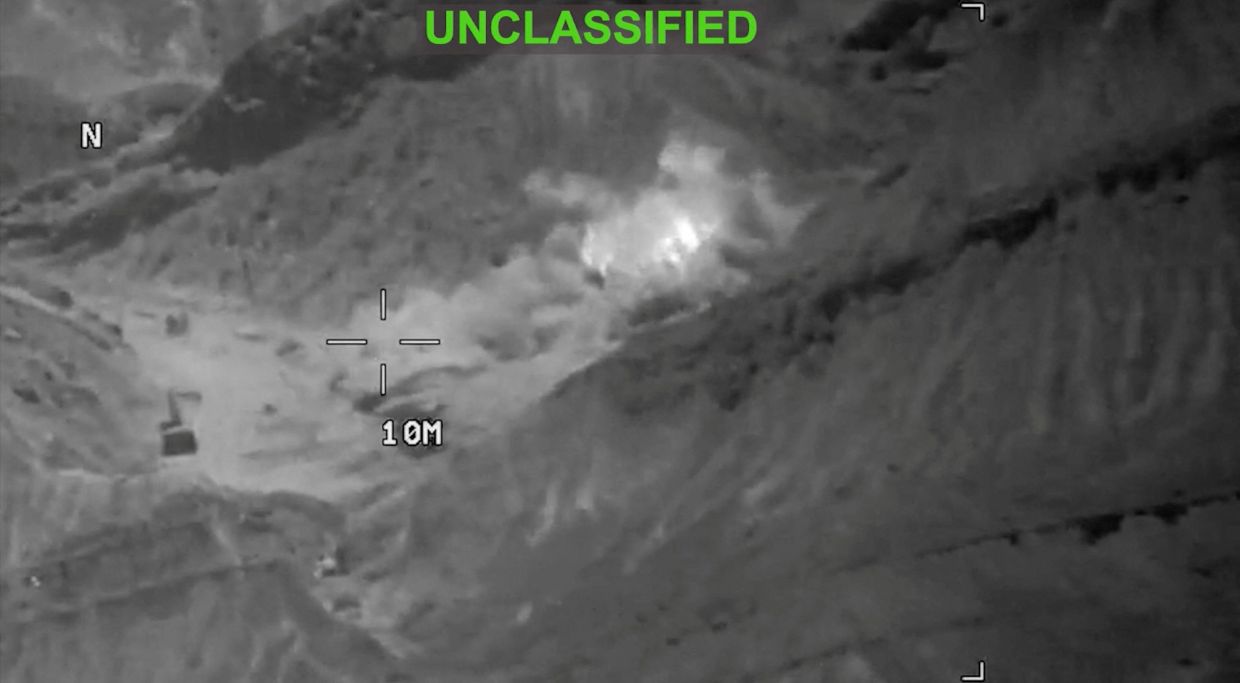
Escalating tensions in the Middle East have reached a critical juncture as the United States and Iran exchange intensive military strikes following the breakdown of diplomatic efforts just days earlier. The US Central Command confirmed Saturday evening that it had completed another round of airstrikes directed against Iranian military infrastructure, acting on orders from President Donald Trump. These operations mark the eighth successive night of bombing campaigns, demonstrating the unprecedented intensity of the current confrontation and raising serious concerns about regional stability that could affect global oil markets and international shipping.
The immediate trigger for this latest round of American military action involves the loss of two US service members stationed in Jordan, with a third reported missing following an Iranian attack. Central Command disclosed that these deaths occurred on Friday, prior to the weekend airstrikes. The announcement increases the overall toll among American military personnel to 16 killed since hostilities began, with an additional 420 or more personnel wounded across the wider conflict. Defence Secretary Pete Hegseth characterised the losses as sacrifices that would strengthen American determination to continue operations in the region.
The stated objectives of the US strikes reveal Washington's strategic priorities in the confrontation. American officials have announced that the attacks aim to degrade Iran's capacity to threaten international commerce through the Strait of Hormuz, one of the world's most critical maritime chokepoints responsible for approximately one-fifth of global oil transit. Simultaneously, the strikes are intended to deliver swift punishment to elements of the Islamic Revolutionary Guard Corps responsible for the earlier attack on American personnel. This dual focus on degrading military capability while inflicting costs on Iranian forces reflects the broader American strategy of attrition.
According to Iranian reports, the latest American strikes targeted several locations within Iran's territory. The Mehr news agency indicated that the Sirik area in southern Iran experienced bombardment, while the Tasnim agency reported that locations near Shadegan, positioned close to the Iraqi border, also came under fire. Most controversially, Iran's Atomic Energy Organization condemned what it characterised as an attack on a nuclear facility at Darkhovin that remains under construction, though specific details about timing and extent of damage remain unclear. These claims underscore how the conflict now threatens critical infrastructure extending beyond purely military installations.
Iran responded to the latest American strikes with immediate counterattacks of its own. Iranian state television reported that the country's armed forces had launched a drone assault targeting American military positions and equipment at two key locations in Kuwait: the Al-Adiri camp and Ali Al Salem Air Base. These facilities host substantial American military presence and serve as important logistical hubs for regional operations. The Iranian attacks represent the continuation of a pattern established over the past week in which both nations have targeted the other's assets and those of regional allies, creating an escalating cycle of retaliation.
Defence systems across the Gulf region continue to intercept Iranian projectiles, though the frequency of attacks suggests some capability to penetrate air defence networks. Kuwait reported that it had again intercepted Iranian missiles and drones on Sunday following similar successful interceptions the previous day, indicating the persistence of Iranian attempts to strike targets throughout the Gulf despite technological disadvantages. Bahrain's air defence systems also engaged incoming Iranian attacks on Sunday. Notably, neither Kuwait nor Bahrain reported casualties or significant material damage from these encounters, suggesting that existing air defence systems, likely American-supplied technologies, maintain reasonable effectiveness against Iranian weapons.
The conflict has expanded beyond direct military engagement to encompass maritime commerce and infrastructure security. The US maintains what it describes as enforcement of a naval blockade against Iran, while Tehran claims authority to regulate shipping through the Strait of Hormuz according to its own rules. This maritime dimension carries profound implications for global energy security and economic stability. The Iranian Revolutionary Guard Corps claimed Sunday that four commercial vessels attempted to transit the strait using an unsafe route following American encouragement, with two abandoning the attempt and two others reportedly encountering an unspecified accident. The lack of elaboration raises questions about whether these vessels experienced Iranian interference or genuine maritime hazards.
Jordan has also become drawn into the crisis, with the US embassy there announcing Sunday that Aqaba's international airport and seaport had been evacuated due to what embassy officials described as a specific and credible threat. This action reflects heightened security concerns throughout the region, though Jordanian authorities subsequently stated they had detected no potential threats in recent hours and had issued no evacuation order themselves. This discrepancy between American and Jordanian threat assessments illustrates how the conflict creates uncertainty and complicates regional coordination even among allied nations.
Iran's leadership has responded to the American strikes with defiant rhetoric that questions American credibility and resolve. Supreme Leader Ayatollah Mojtaba Khamenei, through a statement carried by state media Saturday evening, declared that the signature of President Trump was utterly worthless and devoid of credibility, seemingly referencing the collapse of the interim ceasefire agreement. Khamenei's statement warned of far heavier costs and further humiliation awaiting the United States, effectively rejecting any prospect of near-term de-escalation. The reference to Khamenei's continued concealment, as he has not appeared publicly since the original February 28 strikes that killed his predecessor Ali Khamenei, adds another layer of uncertainty to Iranian leadership and decision-making.
The humanitarian toll of the intensifying conflict continues mounting according to Iranian sources. Iran's Health Ministry reported Saturday that 50 people had been killed and more than 500 wounded specifically from American strikes conducted over the past three weeks alone, suggesting civilian casualties alongside military losses. These figures, if accurate, demonstrate how the conflict extends beyond military-to-military engagement and affects broader populations. For Malaysia and other regional trading nations, the deterioration in the Gulf situation poses direct economic consequences through potential oil price volatility and disruption to shipping routes serving Southeast Asian trade networks.
The broader trajectory of the conflict traces back to February 28, when the United States and Israel initiated coordinated strikes against Iran purportedly designed to disable its nuclear and missile programmes while degrading its network of regional proxy forces. Rather than achieving conflict termination, these operations triggered escalatory cycles that have persisted across months. The recent collapse of an interim ceasefire agreement signed approximately one month ago removed the primary mechanism for preventing renewed all-out warfare. Analysts now warn of serious risks that the current pattern could devolve into comprehensive regional conflict involving multiple state and non-state actors across the Gulf.
For Malaysian policymakers and regional observers, the US-Iran conflict presents complex challenges. The potential for further disruption to maritime commerce through the Strait of Hormuz threatens the energy security and trade routes upon which Malaysia's economy depends. Additionally, any broader regional conflict could destabilise Southeast Asian security arrangements and draw neighbouring powers into the confrontation. The diplomatic failure represented by the ceasefire collapse suggests that current mechanisms for managing great power competition remain inadequate, with implications extending well beyond the immediate combatants to affect countries throughout Asia and globally.

