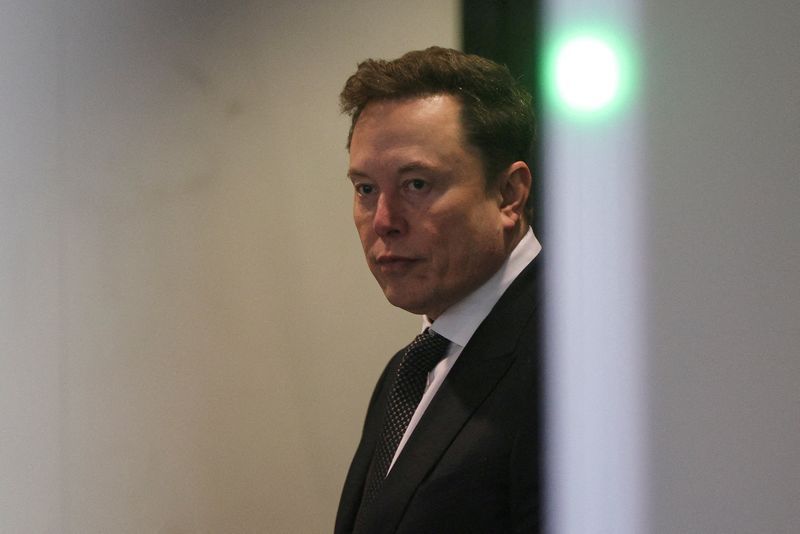
A federal judge in Washington, D.C. has granted approval to the US Securities and Exchange Commission's settlement with Elon Musk regarding his acquisition of Twitter shares, though not before registering substantial reservations about the arrangement. U.S. District Judge Sparkle Sooknanan issued her decision on Wednesday while making clear that she harboured doubts about whether the settlement adequately addressed potential wrongdoing or instead amounted to an overly lenient accommodation of a powerful figure.
The case centred on Musk's failure to promptly disclose his early purchases of Twitter stock during March and April 2022. According to the SEC's allegations, Musk delayed the mandatory disclosure for eleven days beyond the required timeframe, a window that enabled him to purchase shares at depressed prices before the market became aware of his intentions. The regulator calculated that this timing advantage generated approximately $150 million in financial benefit for Musk. The billionaire has maintained that the delay was unintentional rather than a calculated strategy.
Under the settlement terms, a trust established in Musk's name will pay $1.5 million to resolve the SEC's claims. For context on Musk's financial scale, he controls wealth valued at approximately $927.2 billion according to Forbes, making the penalty amount proportionally modest. He proceeded to acquire Twitter entirely for $44 billion in October 2022, subsequently rebranding the platform as X. The social media company now operates as part of his broader business empire alongside SpaceX and Tesla.
Judge Sooknanan's written opinion articulated frustration with several aspects of the regulatory approach. She questioned why the SEC had abandoned its typical demand for disgorgement—the recovery of ill-gotten gains—that would have compensated investors harmed by the delayed disclosure. While acknowledging the SEC's argument that disgorgement has not historically been pursued in comparable cases, the judge expressed scepticism about whether precedent should excuse remedial action in this instance. Her questioning suggested that the settlement's structure may have prioritised regulatory expediency over substantive accountability.
A particularly vexing issue for the judge was the decision to settle through a trust arrangement rather than directly with Musk himself. This technical distinction allowed the billionaire to publicly claim vindication and maintain that he had been exonerated of wrongdoing, a narrative that troubled the court. Sooknanan noted that during a prior hearing in May, SEC lawyers appeared genuinely surprised when Musk's legal team mentioned that settlement discussions were already underway—suggesting potential communication breakdowns within the regulatory agency itself.
The judge articulated her central concern with striking directness: whether Musk received exceptional treatment unavailable to other alleged securities violations. She wondered aloud whether other defendants could expect similar accommodating handling from the regulator, or whether this represented a singular arrangement tailored specifically for Musk. This formulation raised uncomfortable questions about differential treatment based on an individual's wealth and prominence.
Contextual factors surrounding the settlement's timing warrant examination. The agreement was announced in May, following the departure of Margaret Ryan, the SEC's enforcement chief, in March after a tenure of merely six months. Ryan had reportedly clashed with senior SEC leadership over enforcement priorities and strategy, suggesting internal disagreements about how aggressively to pursue cases against prominent figures. Her departure preceded the settlement announcement by approximately two months, raising questions about institutional resolve.
Despite her misgivings, Judge Sooknanan possessed limited statutory authority to reject the settlement outright. She articulated this constraint by noting that while a court reviewing a consent judgment is not merely a rubber stamp passively approving whatever negotiators present, neither is it empowered to function as an independent ombudsman investigating settlement propriety. She positioned the ultimate judgment about whether the Trump administration's SEC had adequately held Musk accountable as properly residing with voters rather than the judiciary.
The SEC's defence of the settlement centred on its characterisation as the largest monetary penalty of its type and on an injunction binding Musk's investment trust. Agency lawyers argued that the public benefit derived from regulatory restraints on Musk's financial manoeuvres through this investment vehicle, which apparently channels a substantial portion of his wealth. However, this argument glossed over the limited practical impact of constraining activity through a trust structure when Musk maintains ultimate beneficial ownership and control.
For Malaysian and Southeast Asian observers, this settlement carries implications beyond the immediate corporate governance question. It illustrates tensions within American regulatory frameworks when addressing violations by extraordinarily wealthy individuals, particularly those with political connections. The Trump administration's apparent willingness to settle aggressively with Musk—a former informal adviser to the President—contrasts with how the SEC might approach similar disclosure violations by less prominent business figures. This disparity in regulatory treatment reflects broader questions about whether legal systems genuinely apply standards uniformly or whether wealth and political proximity create alternative pathways through enforcement.
The case also demonstrates how settlement negotiations occur largely beyond public scrutiny, with judicial review arriving only after agreements are substantially concluded. The surprise expressed by SEC litigating attorneys upon learning of settlement discussions suggests insufficient institutional coordination within the regulator itself. For investors and market participants across the region, such opacity raises concerns about whether disclosure violations receive consistent consequences or whether prominent figures can negotiate favorable terms through back channels.
Musk's acquisition of Twitter and its subsequent transformation into X represented a pivotal moment in global media and technology governance. That the regulatory response to his share disclosure violation appeared to prioritise settlement over accountability sets a precedent that may influence how securities violations are treated going forward. Whether international regulators and Malaysian authorities cite this precedent when addressing local corporate disclosure matters remains to be seen, but the apparent leniency serves as a data point in global conversations about regulatory capture and differential treatment based on wealth.

