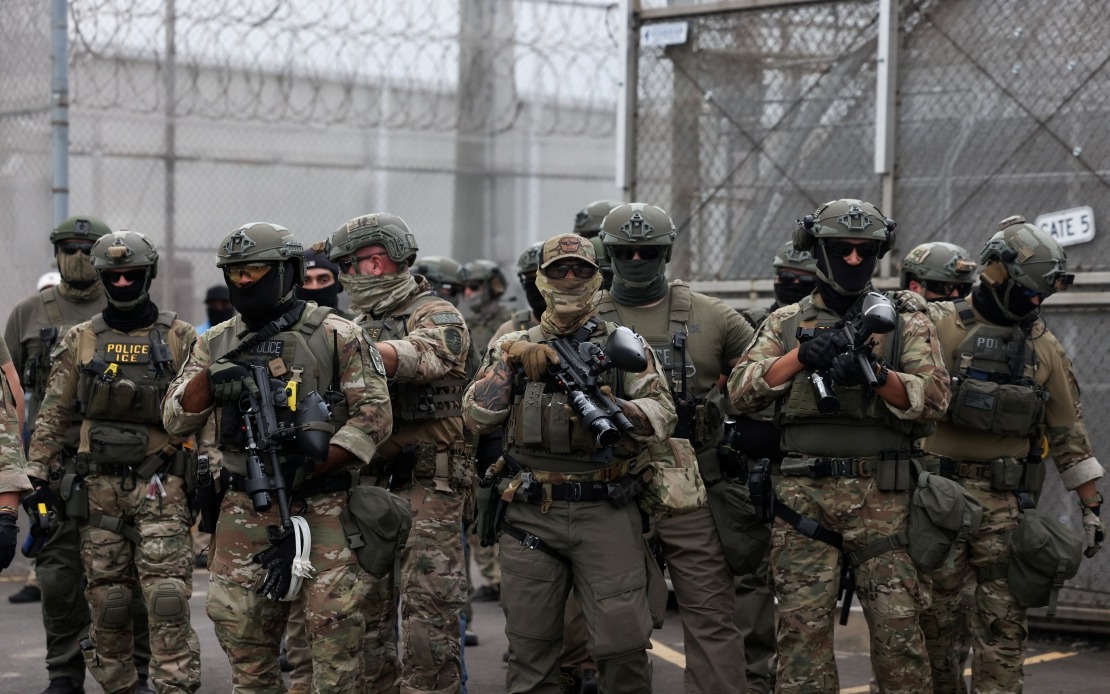
A California-based federal judge has issued a sweeping nationwide injunction preventing Immigration and Customs Enforcement officers from apprehending migrants within immigration courthouses or their immediate surroundings, dealing a significant legal setback to the Trump administration's aggressive deportation enforcement agenda. The ruling marks a substantial constraint on a controversial detention practice that has generated intense debate over balancing immigration enforcement with constitutional protections and access to justice for vulnerable populations.
The immigration court system in the United States handles thousands of cases annually involving non-citizens facing potential removal proceedings. These specialized courts represent a critical juncture where migrants—many of them unrepresented and facing significant language barriers—confront the legal machinery that will determine their immigration status and potential deportation. The judicial decision therefore has profound implications for how the immigration enforcement apparatus can operate at this sensitive intersection of law and individual rights.
ICE had expanded its courthouse arrest operations significantly beginning with President Donald Trump's second term in office, implementing revised enforcement protocols that positioned such arrests as a strategic priority for immigration control. The agency introduced new guidelines emphasizing the operational advantages of apprehending migrants at courthouses, where enforcement officials could gain access to individuals who might otherwise prove difficult to locate. This represented a marked shift in practice, as such courthouse arrests had previously been conducted more sporadically and with greater restraint.
Human rights advocates and immigrant rights organizations had long objected to the courthouse arrest strategy, arguing that it fundamentally compromises the judicial process by creating an atmosphere of intimidation that discourages migrants from exercising their legal rights. When individuals fear arrest upon entering a courthouse for their scheduled hearing, they may choose to forgo representation or fail to appear, effectively denying themselves the opportunity to contest deportation through legitimate legal channels. This dynamic transforms the courthouse from a neutral forum for justice into a potential trap, undermining the basic premise of due process.
The federal judge's decision centered on procedural and constitutional deficiencies in how ICE had implemented its revised approach. The court found that the agency had failed to adequately analyze the negative consequences that might flow from intensified courthouse arrests, nor had it provided sufficiently reasoned justification for departing from prior practice. In administrative law, agencies must explain the reasoning behind policy changes and address legitimate concerns raised during any deliberative process—failures the court determined ICE had committed.
From a legal standpoint, the ruling underscores the principle that executive branch agencies, even those responsible for law enforcement, remain bound by procedural requirements and must ground their actions in reasoned analysis. The decision prevents ICE from simply declaring a new enforcement priority without confronting the substantive implications and offering a coherent explanation for why the benefits of such a policy outweigh its drawbacks. This reflects ongoing judicial skepticism regarding Trump administration immigration policies that critics view as unnecessarily aggressive.
The implications extend beyond the courthouses themselves, affecting broader questions about how immigration enforcement intersects with judicial independence and individual rights. Immigration courts, unlike traditional federal courts, operate under the administrative rather than judicial branch, a distinction that has long raised concerns about whether immigration judges enjoy sufficient independence from enforcement-focused pressures. Courthouse arrests by ICE further blur this line, creating scenarios where enforcement agents can directly intercede in judicial proceedings.
For migrants and their advocates across the region and internationally, the decision provides significant legal protection during a period when immigration enforcement in the United States has entered a more aggressive phase. The ruling acknowledges that constitutional safeguards and due process rights do not simply disappear at the courthouse door, and that enforcement objectives, however vigorously pursued, must accommodate fundamental fairness principles embedded in American constitutional law.
The decision will likely face legal challenges from the Trump administration, which may appeal and argue that immigration enforcement considerations should take precedence over concerns about courtroom intimidation. The administration could attempt to develop more detailed justifications for the policy or seek legislative solutions that might circumvent judicial restrictions. This ruling therefore represents one skirmish in a broader ongoing contest over the scope and character of immigration enforcement in the United States.
For Southeast Asian nations monitoring American immigration policy, including Malaysia, the case illustrates tensions between enforcement efficiency and procedural fairness that transcend borders. Many countries in the region also grapple with balancing immigration control with protection for vulnerable populations, and judicial decisions in major democracies often influence thinking among policymakers elsewhere. The California court's emphasis on rational explanation and consideration of negative consequences provides a framework that resonates with international human rights standards increasingly recognized in the region.
The practical effect of the injunction means that ICE agents cannot conduct the kind of courthouse sweep operations that had become more common during the initial months of Trump's second term. Migrants can now attend immigration hearings with substantially reduced fear of immediate detention, allowing them to exercise their legal rights more fully and engage with the judicial process. This restoration of minimal security at the courthouse represents a meaningful protection for individuals already facing significant power imbalances in removal proceedings.